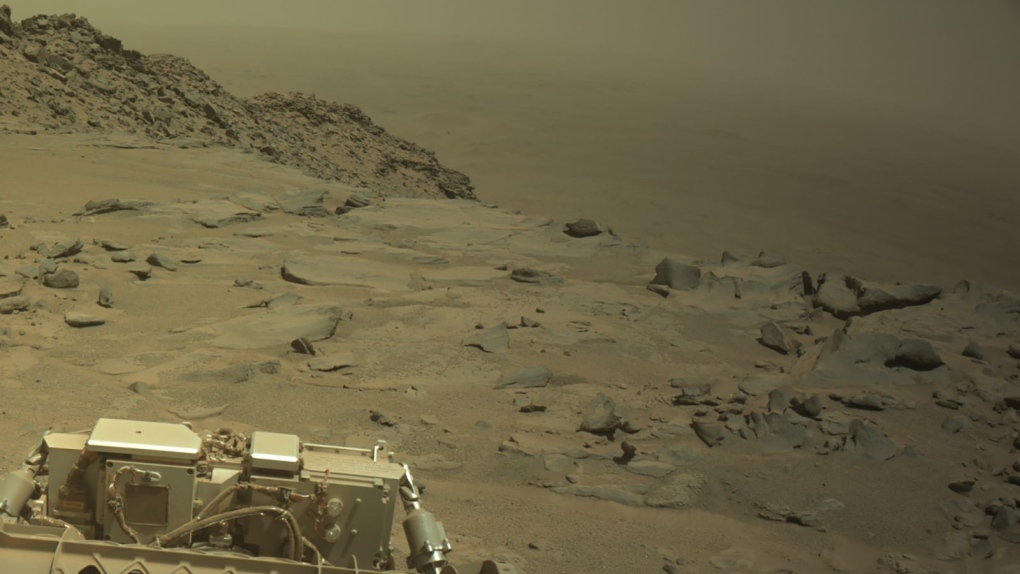
The book "A City on Mars" by Kelly and Zach Weinersmith, which won the 2024 Royal Society Trivedi Science Book Prize, argues that Elon Musk's plan to settle Mars within 30 years is unrealistic due to the planet's harsh environment and numerous unresolved challenges. The authors, initially optimistic about space colonization, became skeptical after researching issues like reproduction, radiation, and ecological sustainability on Mars. They suggest that while research and exploration are feasible, establishing a self-sustaining human settlement on Mars is unlikely in the near term.
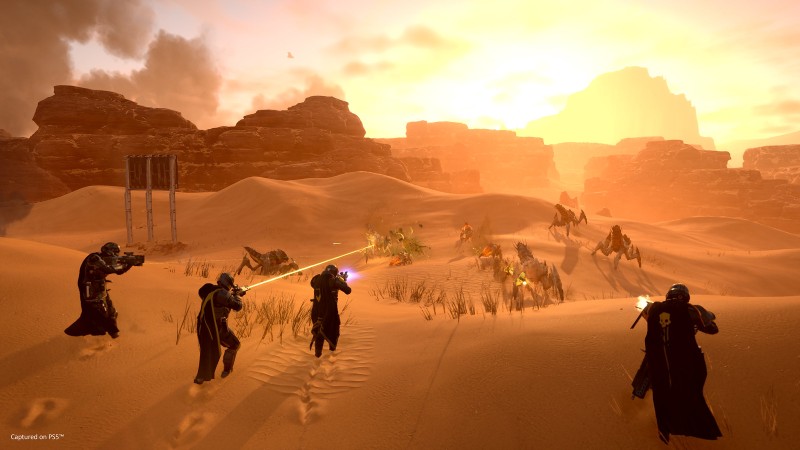
Arrowhead Game Studios releases the first major patch for Helldivers 2, introducing new environmental challenges like fire tornadoes and meteor showers, alongside mission changes, updates to weaponry, bug fixes, and more. The patch also includes adjustments to various weapons, such as decreased magazine capacity and increased recoil for the Breaker, decreased armor penetration for the Railgun, and increased damage per second for the flamethrower. Additionally, the update teases the arrival of Mechs, with the official Helldivers 2 X account hinting at their deployment soon.
Erle Ellis, a leading scientist investigating the Anthropocene, synthesizes interdisciplinary research to illustrate how human cultural practices have historically enabled the transformation of ecosystems, emphasizing the need to leverage society's social and cultural capabilities towards sustainable coexistence with nature. He argues for reimagining our relationship with the environment for a better future, highlighting the importance of cooperation and the extension of social and cultural capabilities to life beyond human societies. Ellis emphasizes that the societal capabilities to shape a much better future have existed for decades and can be implemented successfully through the unprecedented planetary power of shared human aspirations to live in a better world.
In a study published in Philosophical Transactions of the Royal Society B: Biological Sciences, Erle Ellis, a professor of geography and environmental systems, explores the Anthropocene, the current geological age defined by human impact on the planet. While human societies have developed the capabilities to reshape the planet and improve human lives, the unintended consequences, such as climate change and species extinctions, have been negative for the rest of life on Earth. Ellis emphasizes the need for cooperative efforts and the extension of social and cultural capabilities to address environmental challenges and create a better future for both people and nature.
Pope Francis has arrived in Mongolia for his 43rd international Apostolic Journey. The visit to Mongolia, a predominantly Buddhist country with a small Christian population, aims to strengthen the Catholic Church's presence and address issues such as religious freedom and visa regulations for missionaries. The Pope's visit also highlights Mongolia's commitment to being a nuclear-weapon-free zone and the country's environmental challenges, including pollution caused by mining and poor air quality in the capital city.