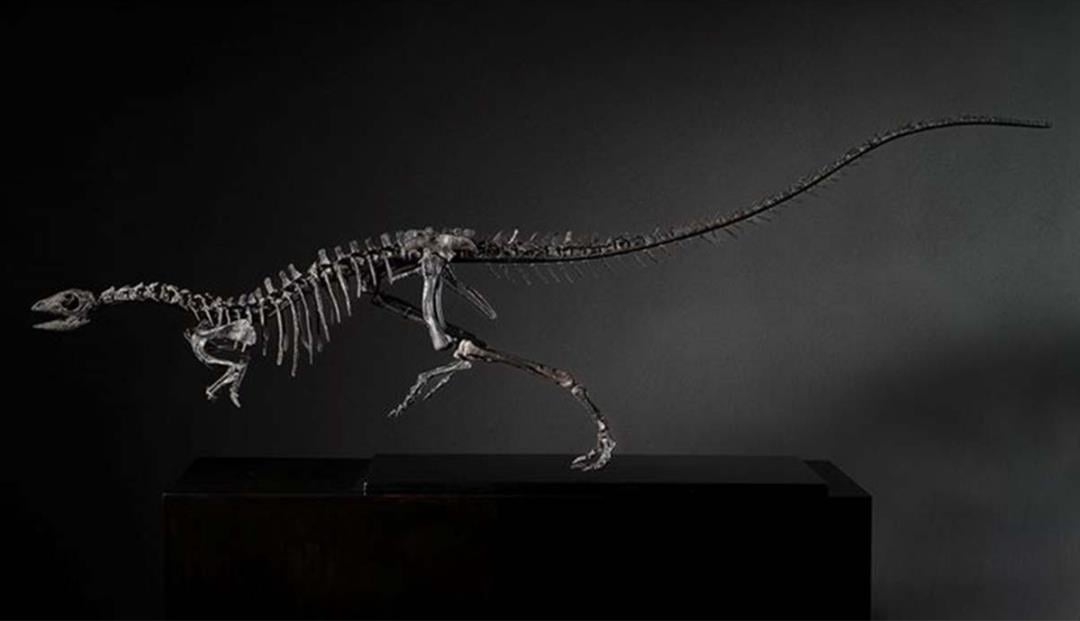
A new small, fast-running dinosaur species named Enigmacursor mollyborthwickae was discovered in Colorado, helping clarify the diversity of small herbivores in the Jurassic Morrison Formation and highlighting the importance of digitization and detailed taxonomy in paleontology.
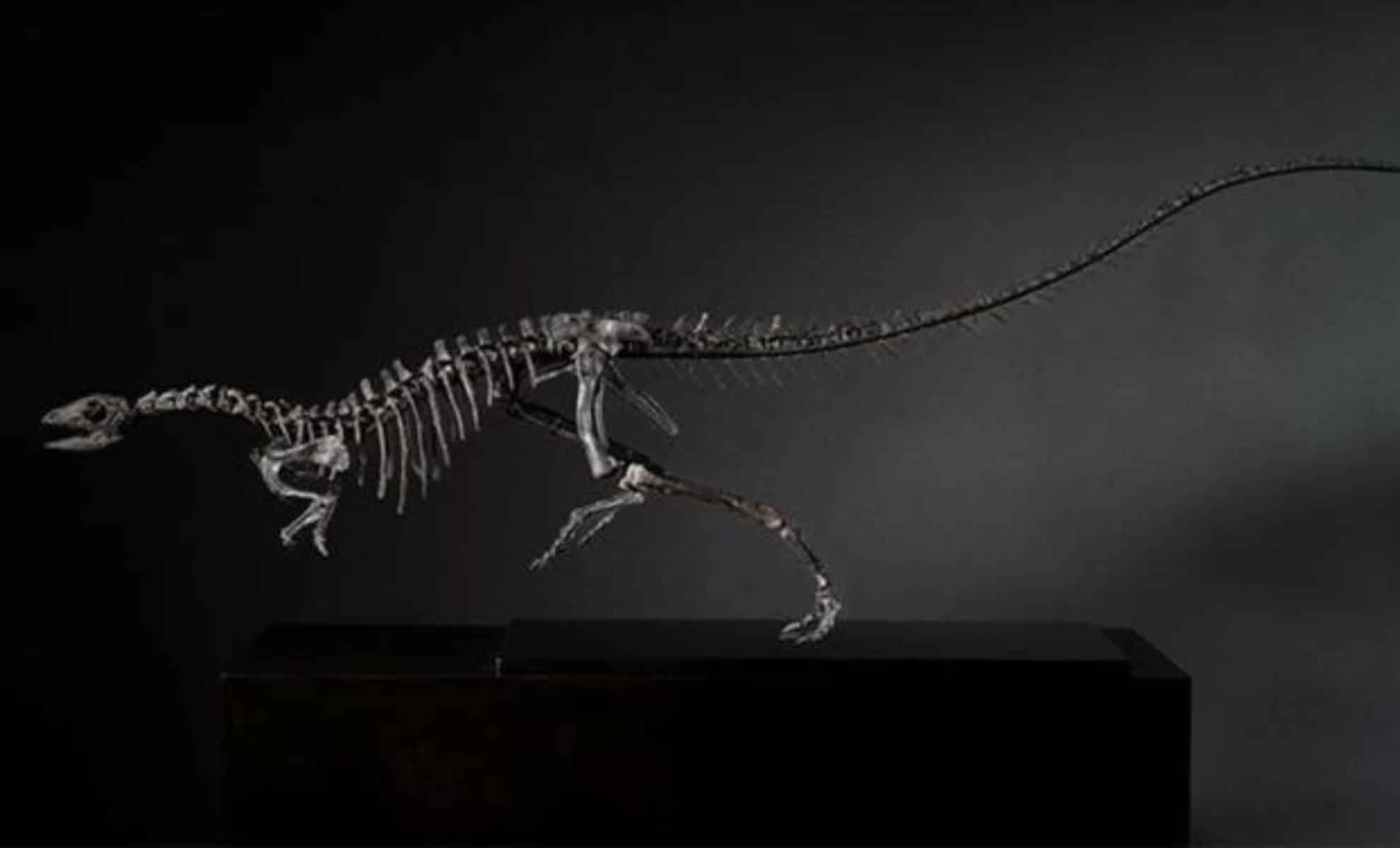
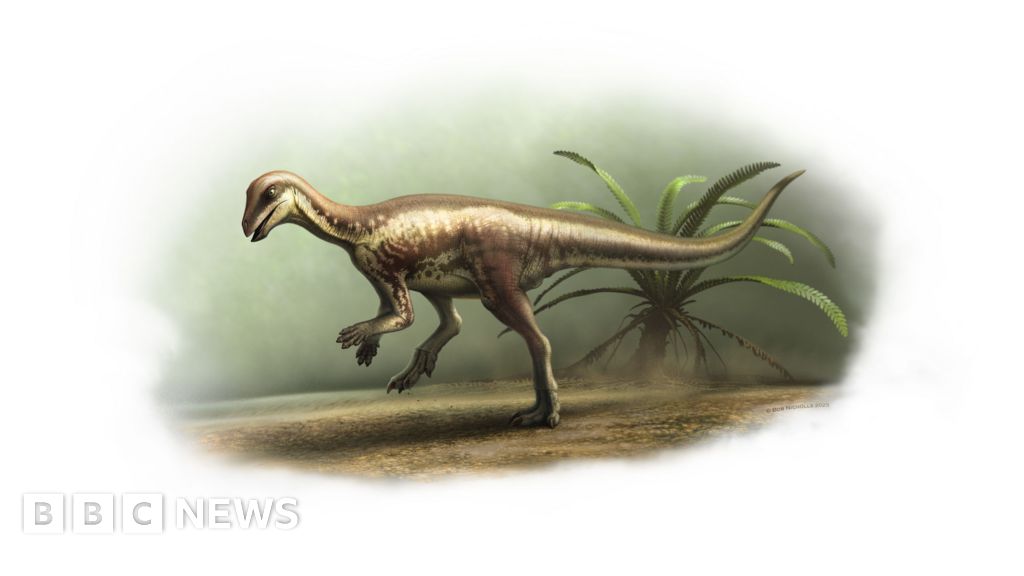
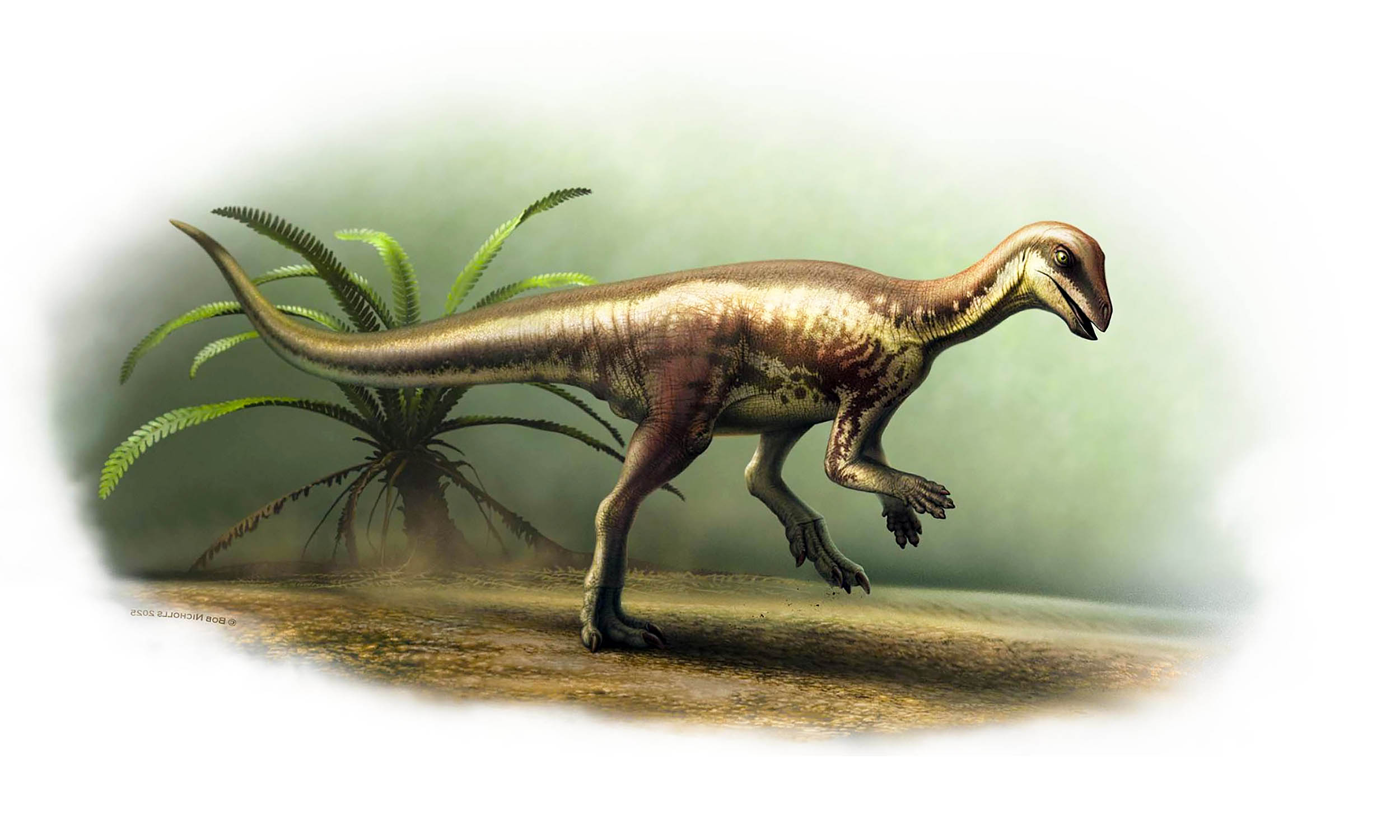
A new small dinosaur species called Enigmacursor mollyborthwickae, about the size of a dog, was discovered in the Jurassic period, revealing new insights into the diversity and ecology of that era. Its agility, long tail, and large feet suggest it was a fast, nimble herbivore that coexisted with larger dinosaurs, challenging previous understanding of Jurassic ecosystems.
A fossil previously misidentified as Alectrosaurus was reclassified as a new species, Khankhuuluu mongoliensis, revealing insights into Tyrannosaurid evolution and migration between Asia and North America. Additionally, a fossil once labeled Nanosaurus was reclassified as Enigmacursor, highlighting how museum collections can still yield significant discoveries after decades of storage. These findings underscore the potential for new paleontological insights from existing museum specimens.
A nearly complete skeleton of a new dog-sized dinosaur species, Enigmacursor mollyborthwickae, has been discovered in the Jurassic-era deposits of the Western United States. This small herbivore, about the size of a Labrador, provides rare insights into the diversity of small dinosaurs that coexisted with larger species like Stegosaurus, and is now displayed at London's Natural History Museum.
Scientists at the Natural History Museum in London have unveiled a new small dinosaur species, Enigmacursor mollyborthwickae, which was previously misclassified as Nanosaurus. This tiny, fast-running dinosaur lived about 150 million years ago and is now the first new dinosaur on display at the museum since 2014, shedding light on the evolution of small to large dinosaurs.