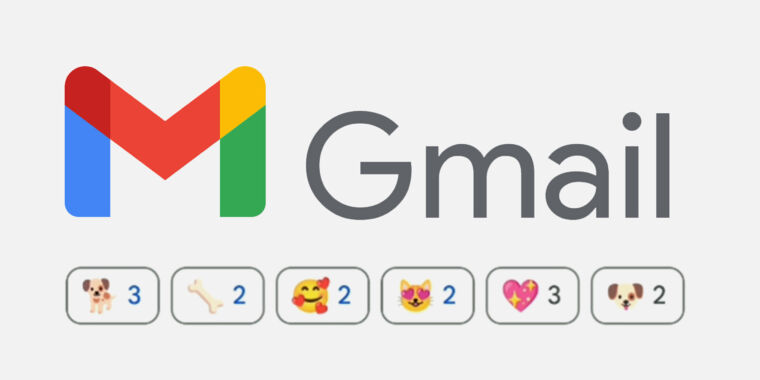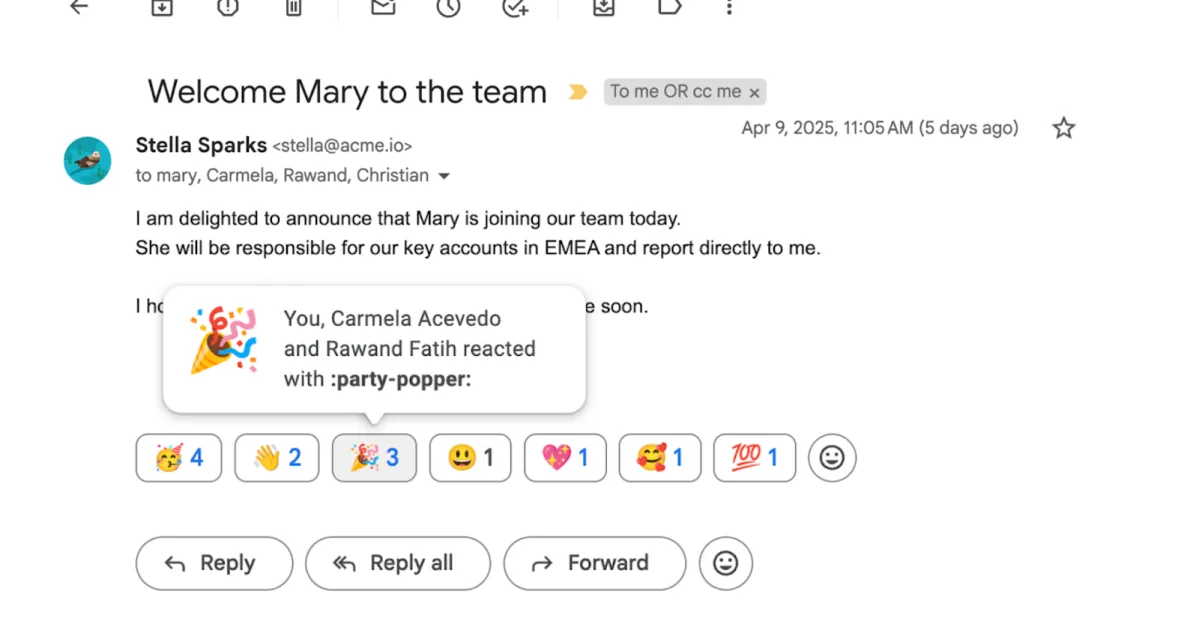
Google has expanded its emoji reactions feature to all Workspace users, allowing quick, emoji-based responses in emails, which were previously available only to personal Gmail accounts. The feature is hidden behind a smiley face icon and displays reactions visibly to recipients, enhancing email interactions with a fun and quick response option.

Klarna employees reacted negatively to the company's new return-to-office policy with mostly disapproving emojis, despite the company's IPO and high valuation. The company plans to require employees in the office three days a week, but staff expressed their dissatisfaction through emojis on Slack. Meanwhile, Klarna has set its IPO price at $40 per share and is beginning trading on the NYSE, with investor focus on its financial performance amid rising losses.
Microsoft Teams received 26 new features in August, including multiple emoji reactions, customizable keyboard shortcuts, improved meeting setup with templates, support for custom dictionaries in Copilot, and enhanced room and desk booking options, aimed at improving user experience and administrative control.
Gmail has introduced emoji reactions for emails, allowing users to respond with emojis instead of traditional replies. The feature is currently available on the Android Gmail app and may be expanded to other clients. However, since email does not natively support emoji reactions, non-Gmail users will receive an additional email containing the emoji reaction. There are limitations to this feature, including its unavailability for business or school accounts, group email lists, encrypted emails, and more. Unfortunately, there is no option to disable emoji reactions.
Google is introducing emoji reactions to Gmail, allowing users to add personality to their messages. The feature is rolling out to Android devices and will be available on iOS devices and the web in the coming months. However, there are limitations for work or school accounts and third-party email users. Users can send up to 20 reactions to the same Gmail message. Rumors about the feature first appeared on industry insider blogs.
Gmail is introducing emoji reactions to its Android app, allowing users to respond to emails with emojis. The feature can be enabled on the app and will show a smiley icon before the three-dot menu. Users can react with any emoji of their choice, and a single email can have up to 50 reactions. Android and iOS users will see the reactions in the original email, while others will receive it as a reply. The web version of Gmail may also receive emoji reactions in the future. This feature, already present in other email apps, may encourage more people to react to emails with emojis, but its effectiveness as a communication tool remains to be seen.
Google is reportedly working on a new feature for Gmail that would allow users to react to emails with emoji. Hidden code in the Gmail apps for iOS and Android suggests that emoji reactions are "coming soon." This feature, already supported in other email apps like Microsoft Outlook, would provide a quick and easy way to acknowledge emails without sending a full reply. However, there are some restrictions, such as limited support for encrypted messages and large email threads. It is unclear when Google plans to officially roll out this feature.
Google Docs is rolling out a new feature that allows users to add emoji reactions to comments, increasing collaboration and enabling users to creatively express their opinions about document content. Google Slides now allows users to replace an image using drag-and-drop, while Google Sheets is adding the YouTube Smart Canvas chip, allowing users to add YouTube data directly into a spreadsheet cell. In Meet, Google is adding the ability to watch livestreams in 1080p and attach files to associated Google Calendar events for easier access.