
Researchers at the University of Colorado, Boulder, are developing a real-life tractor beam to tackle the growing problem of space debris. The team is using the electrostatic force to influence an object's motion, creating an attractive or repulsive force to change the trajectory of individual pieces of space debris. The team's experiments show that a pulsed beam fired in a rhythm can calm down the wild tumbling of defunct satellites in geosynchronous orbit. The researchers hope to launch a prototype electrostatic tractor into space in five to ten years.
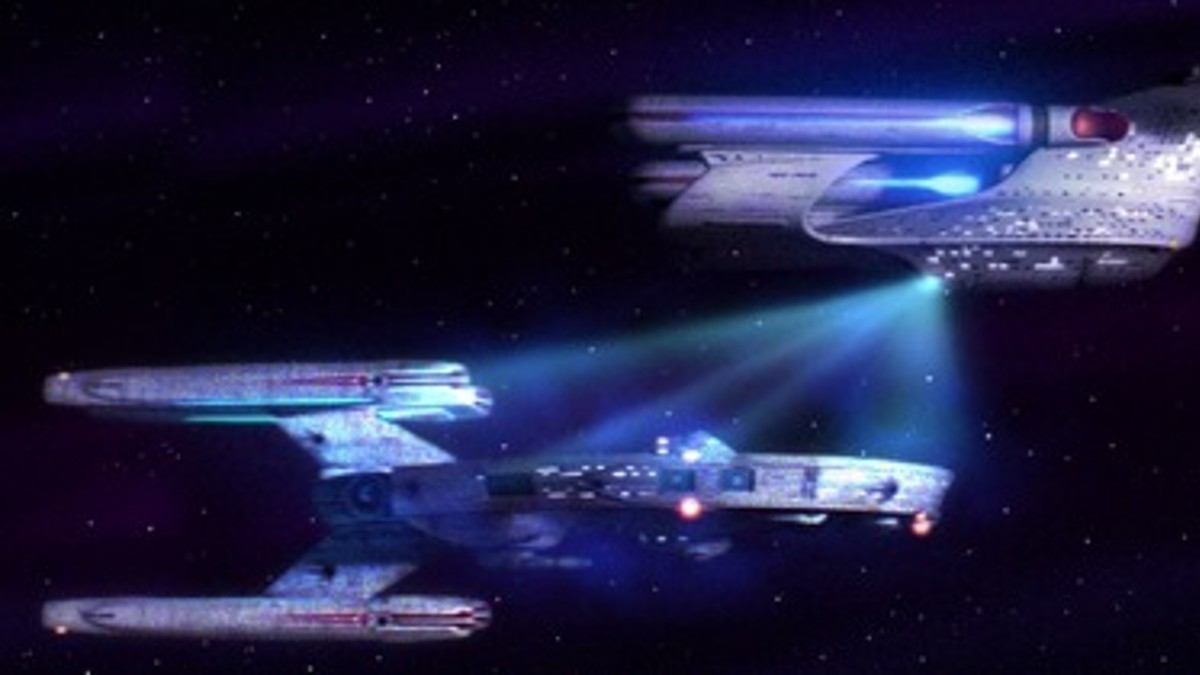
Aerospace engineers led by Professor Hanspeter Schaub are working on electron beams that use attractive or repulsive electrostatic force to remove space debris from orbit, which could prevent Kessler Syndrome. Tractor beams would allow us to move debris and other objects out of the way without having to touch them directly. The team has been experimenting with a vacuum chamber to simulate a space environment and has shown that the beams could potentially pull an object weighing several tons about 200 miles in two to three months. The team is confident that they could be ready to send out the first electrostatic tractor in as little as five to ten years with the right funding.
Engineers at the University of Colorado Boulder are experimenting with a real-life "tractor beam" that could help clean up space junk without touching it. The device uses an electrostatic force to attract or repel objects from a distance, similar to the tractor beam in Star Trek. The researchers are testing their designs in a vacuum chamber that simulates space conditions. The technology could be a cheaper and safer way to remove space debris, which is becoming an increasingly serious problem in crowded orbits.