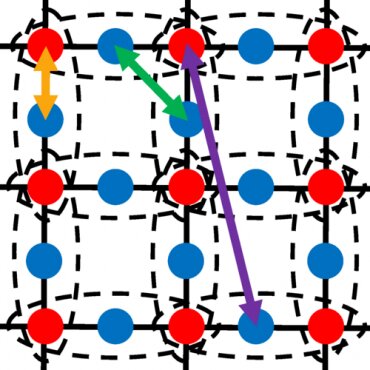
Physicists at Rice University have made a breakthrough in quantum physics by demonstrating that unchangeable topological states, crucial for quantum computing, can intertwine with alterable quantum states in certain materials. This discovery bridges subfields of condensed matter physics and offers the potential for operations at significantly higher temperatures, promising functional applications. The study showed that electrons from d atomic orbitals can become part of larger molecular orbitals, leading to entanglement with other frustrated electrons and producing strongly correlated effects. This finding opens up possibilities for utilizing the efficient coupling of d-electron systems, even in the presence of flat bands, at higher temperatures.
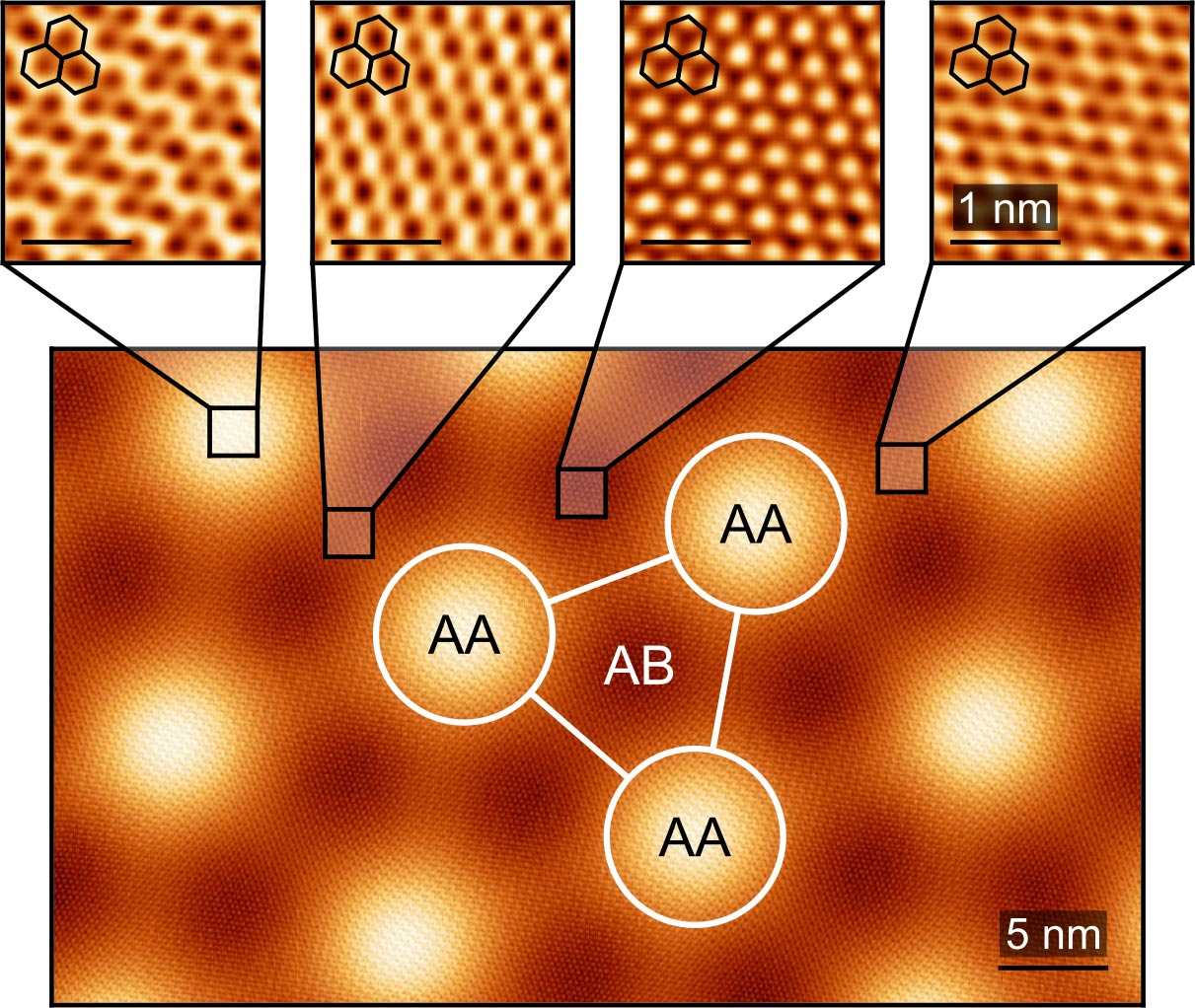
Researchers at Princeton University have used advanced microscopy techniques to image the microscopic behavior of interacting electrons in magic-angle twisted bilayer graphene (MATBG), shedding light on the insulating quantum phase of the material. By creating pristine samples and using a scanning tunneling microscope, the team captured precise visualizations of the electron behavior and developed a theoretical framework to interpret their findings. This breakthrough could lead to a better understanding of quantum phases in MATBG and pave the way for future quantum technological advancements.
Researchers have developed an efficient and highly accurate method to describe interacting electron systems for crystalline materials, a long-standing challenge in condensed matter physics. The method, called bond-dependent slave-particle cluster theory, treats two or three bonded atoms at a time and connects the clusters together in a novel way to describe the entire system. Compared to literature benchmark calculations, the new method is three to four orders of magnitude faster and can be run on a student laptop. The researchers look forward to applying this method to more complex and realistic materials problems in the near future.