Tag

Economic Coercion

All articles tagged with #economic coercion

international-relations2 years ago

Taiwan denounces China's economic coercion and election interference

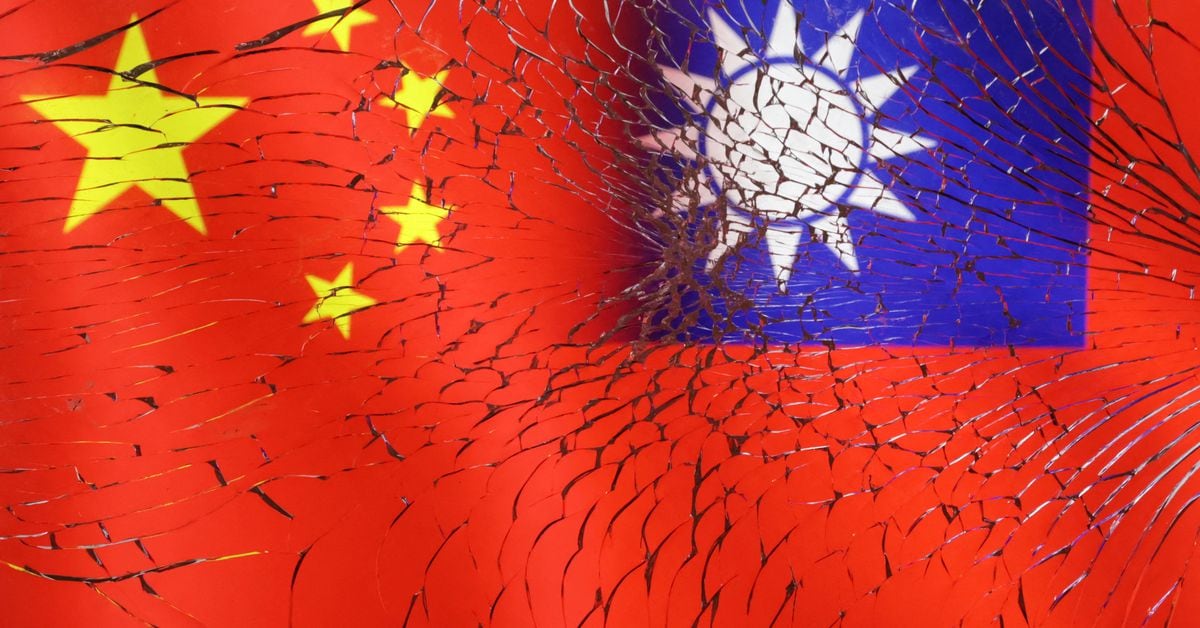
Taiwan has accused China of economic coercion and election interference after Beijing announced the end of tariff cuts on certain chemical imports from the island, claiming that Taiwan violated a trade agreement. The move comes ahead of Taiwan's presidential and parliamentary elections on January 13, which China has sought to influence. Taiwan's government and ruling party have accused China of interfering in the vote to ensure a favorable outcome for Beijing. China's Finance Ministry stated that tariff cuts will be suspended for 12 products starting January 1, citing trade restrictions imposed by Taiwan. Taiwan's Office of Trade Negotiations criticized China's "typical economic coercion" and called for talks under the World Trade Organization.

international-relations2 years ago

US imposes trade restrictions on 42 Chinese entities for supporting Russia's military

The US Commerce Department has added 42 Chinese companies to its export control list, along with seven entities from other countries, over their support for Russia's military and defense industrial base, including the supply of US-origin integrated circuits. The circuits are used by Russia for precision guidance systems in missiles and drones used in attacks against civilian targets in Ukraine. China has criticized the move as "economic coercion and unilateral bullying." The addition of companies to the US Entity List is done when they are deemed a threat to US national security or foreign policy.

international-relations2 years ago

US and Allies Unite to Condemn China's Economic Coercion Tactics

The US, along with five of its allies, has issued a joint declaration condemning the use of trade practices that amount to economic coercion, without naming any specific country but apparently aimed at China. The countries expressed concern about "pervasive subsidization," anti-competitive practices by state-owned enterprises, forced technology transfer, and government interference with corporate decision-making. They also raised concerns about forced labor and emphasized that such practices are gross abuses of human rights and economic issues.

politics2 years ago

US Commerce Secretary Vows to Take Action Against China's Ban on Micron Chips

US Commerce Secretary Gina Raimondo said the US "won't tolerate" China's effective ban on purchases of Micron Technology memory chips and is working closely with allies to address such "economic coercion." China's cyberspace regulator said on May 21 that Micron had failed its network security review and that it would block operators of key infrastructure from buying from the company, prompting it to predict a revenue reduction.

business2 years ago

US Commerce Secretary Vows to Take Action Against China's Ban on Micron Chips

The US Commerce Secretary, Gina Raimondo, has said that the US "won't tolerate" China's effective ban on purchases of Micron Technology memory chips and is working closely with allies to address such "economic coercion". Raimondo also raised the Micron issue in a meeting on Thursday with China's Commerce Minister, Wang Wentao. The US is investing in the $52 billion CHIPS Act to foster semiconductor production in the United States and welcomes participation from companies in IPEF countries.

geopolitics2 years ago

G7 faces pushback on China and Ukraine priorities.

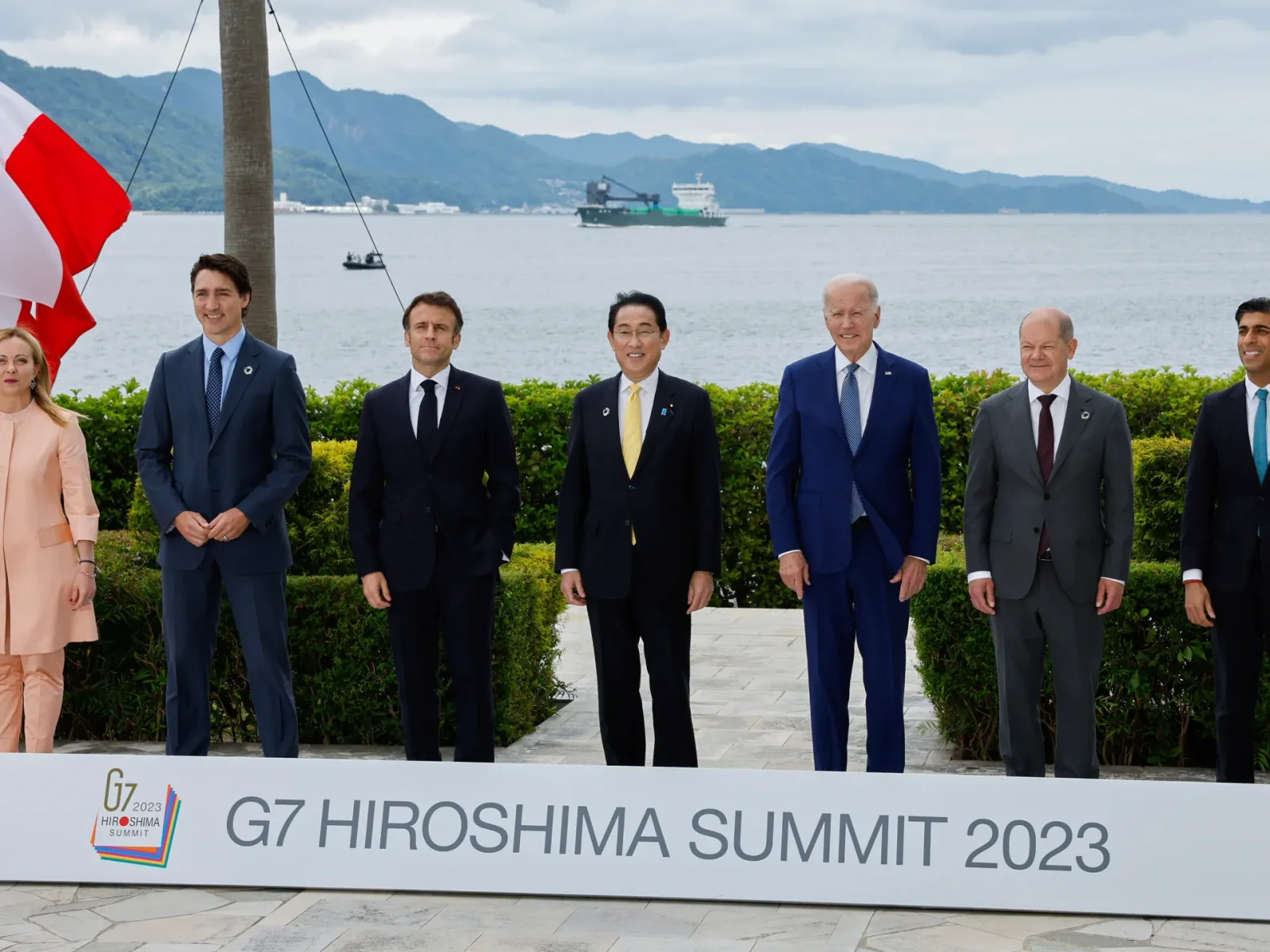
The G-7 has agreed to de-risk and diversify their supply chains away from China, but an analyst warns that isolating Beijing is "impossible" and "dangerous." The joint statement from the G-7 said that their policy approaches are not designed to harm China nor do they seek to thwart China's economic progress and development. The shift from the Biden administration highlights the realization that it would take a great deal of effort and economic pain to separate its economy from that of China. The G-7 leaders expressed their concerns about the situation in the East and South China Seas and in supporting a "no change" in the status quo of Taiwan.

politics2 years ago

G7's Complex Relationship with China and Russia.

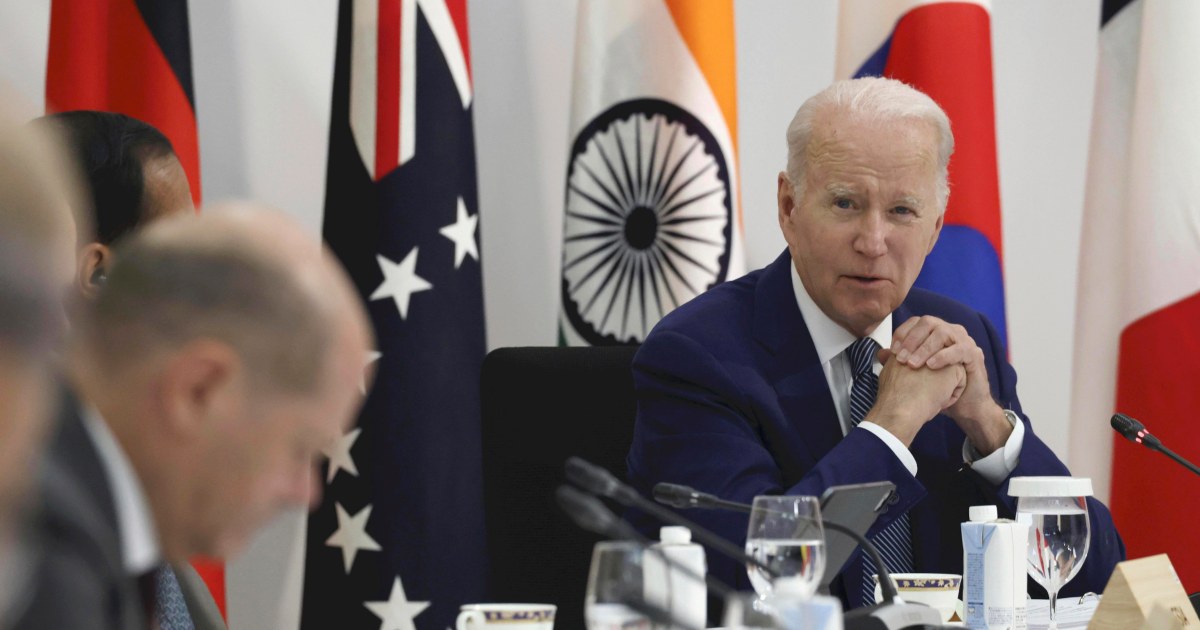
The G7 leaders have condemned China's "economic coercion" and called for "de-risking" policies to counter it. They plan to strengthen supply chains for important goods, beef up digital infrastructure, and wield multilateral export controls to prevent their technologies from ending up in the hands of "malicious actors". The G7 also seeks to maintain communication lines with China and expressed their willingness to cooperate with a "growing China that plays by international rules". China has accused the G7 of "smearing and attacking" China and urged them not to become the US' "accomplice in economic coercion".

politics2 years ago

G7 seeks constructive ties with China while addressing global issues.

The G7 leaders have called for "constructive" ties with China while also criticizing Beijing's human rights record and territorial claims. The G7 does not seek to decouple from China but recognizes the need to "de-risk and diversify" economic relations. The leaders expressed concerns about China's claims in the East and South China Seas and its crackdowns on freedoms in Hong Kong, Tibet, and Xinjiang. The G7 also plans to launch a "Coordination Platform on Economic Coercion" to respond to economic coercion and promote cooperation with partners beyond the G7.

politics2 years ago

G7 Leaders Discuss China and Russia's Double Containment at Summit

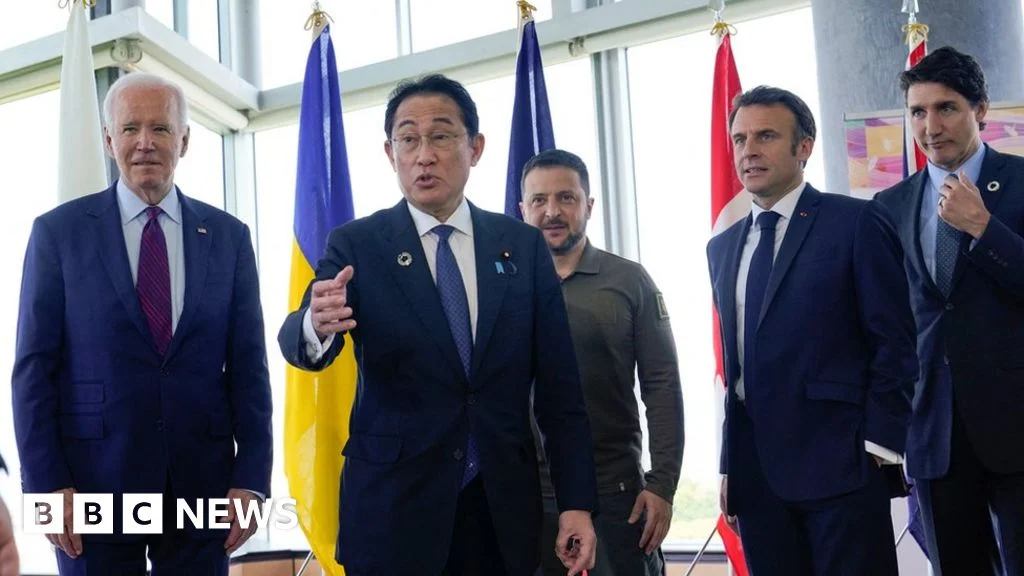
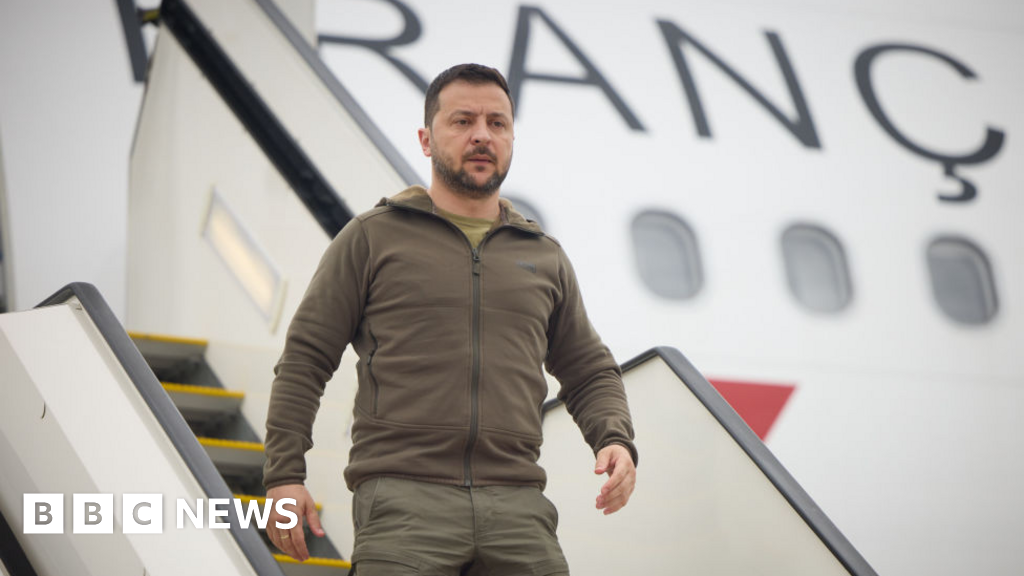
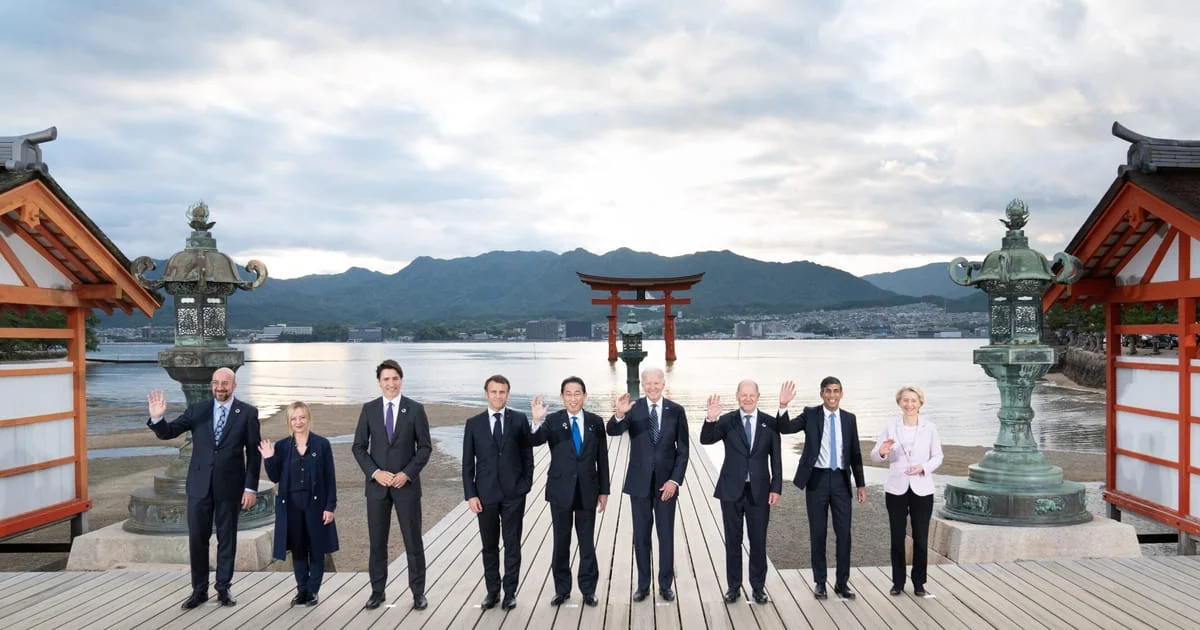
G7 leaders agreed to reduce risks posed by China while maintaining economic ties with the Asian giant. They will outline measures including building more resilient supply chains and protecting sensitive technologies. The leaders also opposed China's "militarization" in the Asia-Pacific region and called on Beijing to press Russia to stop its military aggression and withdraw its troops from Ukraine. Ukrainian President Volodymr Zelenskyy arrived in Japan for the G7 summit and met with various leaders to bolster support for his country.

politics2 years ago

G7 leaders acknowledge Zelensky's dominance and criticize China.

Ukrainian President Zelensky's last-minute appearance at the G7 summit in Japan added urgency to discussions on the Ukraine war and overshadowed the diplomatic proceedings. G7 leaders issued a veiled warning to China, condemning Russia and warning against "economic coercion". They stressed their commitment to "economic resilience" and reducing excessive dependencies in critical supply chains. The leaders also called for China to "play by international rules" and expressed support for South East Asian and Pacific countries. China expressed "strong dissatisfaction" with the G7's joint statement.

politics2 years ago

G7 leaders address China's economic coercion and global influence.

G7 leaders have been discussing ways to counter China's use of economic power for political gain, which they describe as coercive tactics. The leaders have been considering ways to defend against this issue, which they contend is a troubling outgrowth of Beijing's growing economic might. The G7 communiqué does not specify how member countries should parry China, but analysts have said that blunting any punitive action taken by China calls for coordinated action and resolve on the part of the US and its allies.

politics2 years ago

G7 leaders unite against China's economic coercion and Russia's sanctions.

The Group of Seven (G7) countries issued a statement reflecting a broad convergence of the US, Europe, and Japan on a need to change tack on China's stances on Russia, Taiwan, trade bullying, economic monopoly, and domestic interference. The statement called on China to press Russia to stop its military aggression and withdraw its troops from Ukraine. The G7 countries launched a new "coordination platform on economic coercion" to increase their collective assessment, preparedness, deterrence, and response to economic coercion. They also vow to deliver the goal of mobilizing up to $600 billion in financing for quality infrastructure through the Partnership for Global Infrastructure Investment, a rival to China's Belt and Road initiative.

politics2 years ago

G7 Takes Aim at China's Economic Coercion Tactics.

The G7 leaders have unveiled a new plan to fight economic coercion, which includes an early warning system and rapid information sharing to deter and counter such actions. The statement did not name China, but British Prime Minister Rishi Sunak said the new initiative “will address the growing and pernicious use of coercive economic measures to interfere in the sovereign affairs of other states”. The leaders also vowed to support the supply chain of middle and low income countries and prevent cutting edge technology developed by member states from being leaked. Chinese embassies to Britain and Canada had already issued pre-emptive criticisms of the widely expected statement hours before it was released.

politics2 years ago

G7 Summit Awaits Zelensky and Shifts Focus to China Risks.

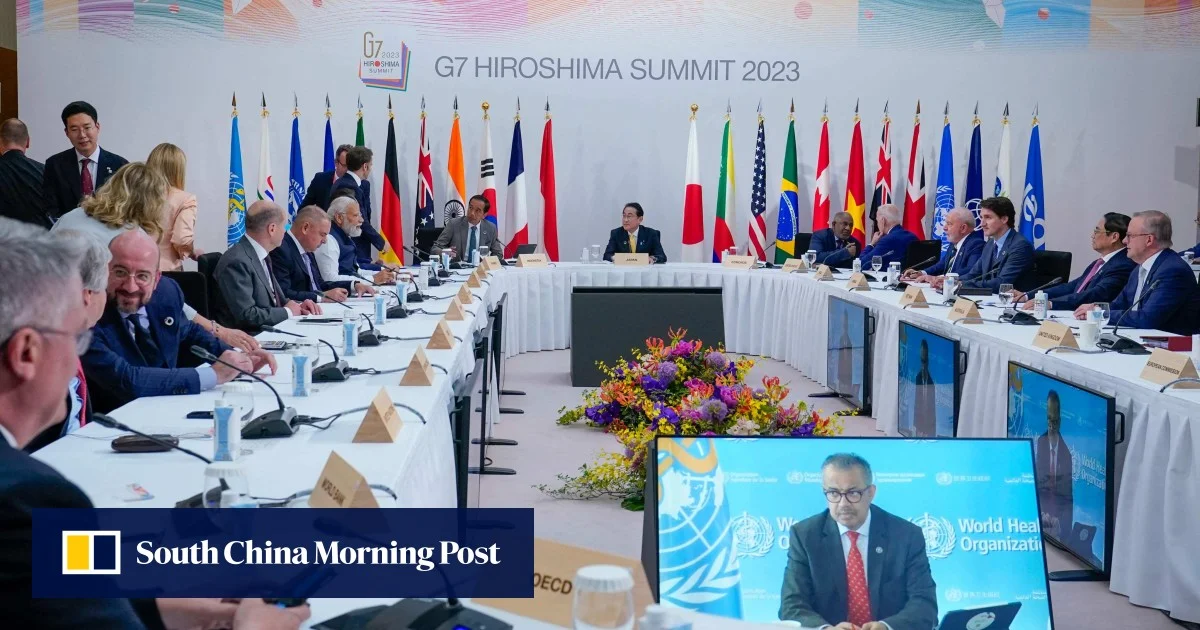
The G7 summit in Japan has focused on countering economic coercion, with a thinly veiled warning towards China and direct criticism of Russia's invasion of Ukraine. The leaders called for enhancing supply chain resilience, hitting back against "harmful industrial subsidies," and protecting sensitive technologies with military applications. The summit also addressed climate change and infrastructure investments in low and middle-income countries, as a move towards countering China's Belt and Road Initiative. The US is expected to unveil a $375 million military aid package to Ukraine after hearing from President Zelensky, who attended the summit in person to appeal for more advanced weapons and tighter sanctions on Moscow.

politics2 years ago

G7 unites against China's economic coercion and global threats.

The G7 countries are preparing a unified response to China's "economic coercion" tactics, which include trade sanctions and other measures used to punish countries that criticize China's human rights record or challenge its territorial claims. The response is expected to focus on strengthening global trade rules and promoting a more level playing field for all countries.