The sun is technically classified as a G2V main-sequence star, often called a dwarf star, but it is much larger than what is typically considered a dwarf star. It is a yellow, hydrogen-fusing star that will eventually become a red giant in about 5 billion years. Despite its name, the sun appears yellow due to atmospheric scattering, and it is the largest object in our solar system.
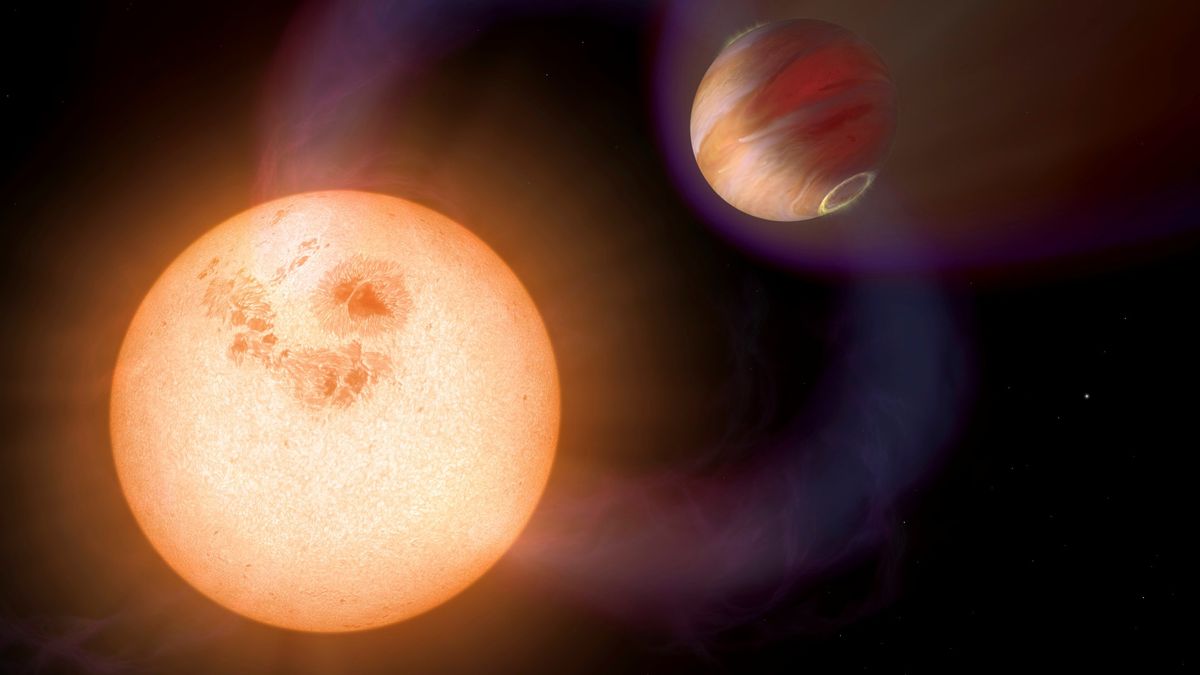
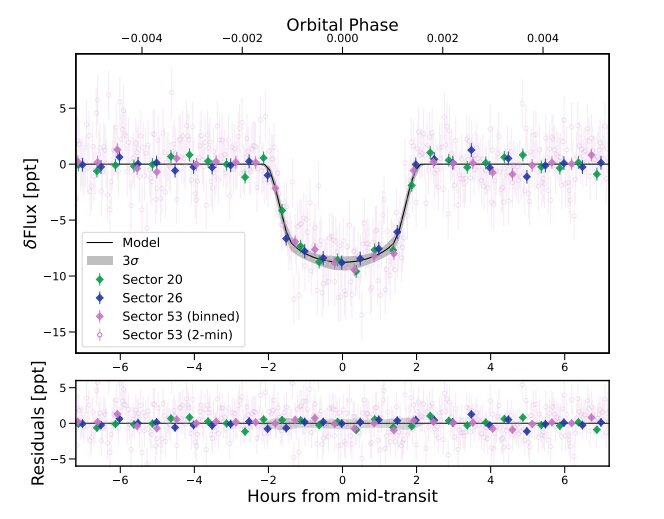
NASA's Transiting Exoplanet Survey Satellite (TESS) has discovered a "warm" exoplanet, TOI-4127 b, with twice the mass of Jupiter orbiting a distant dwarf star. The exoplanet takes 56.4 days to orbit its host star and has a highly eccentric orbit that brings it to within around a third of the distance between the Earth and the sun from the star. The team thinks it has the capability of becoming a hot Jupiter if another celestial object perturbs its orbit. TESS has identified over 6,200 exoplanet candidates since its launch in April 2018.
Astronomers have discovered a new exoplanet, TOI-4127 b, using NASA's TESS. The planet is a warm Jupiter-sized exoplanet orbiting a dwarf star and is more than two times as massive as Jupiter. The planet has a highly eccentric orbit and an equilibrium temperature of about 605.1 K. The researchers concluded that the planet may be a "hot Jupiter" progenitor, but only if a perturbing companion is present.