
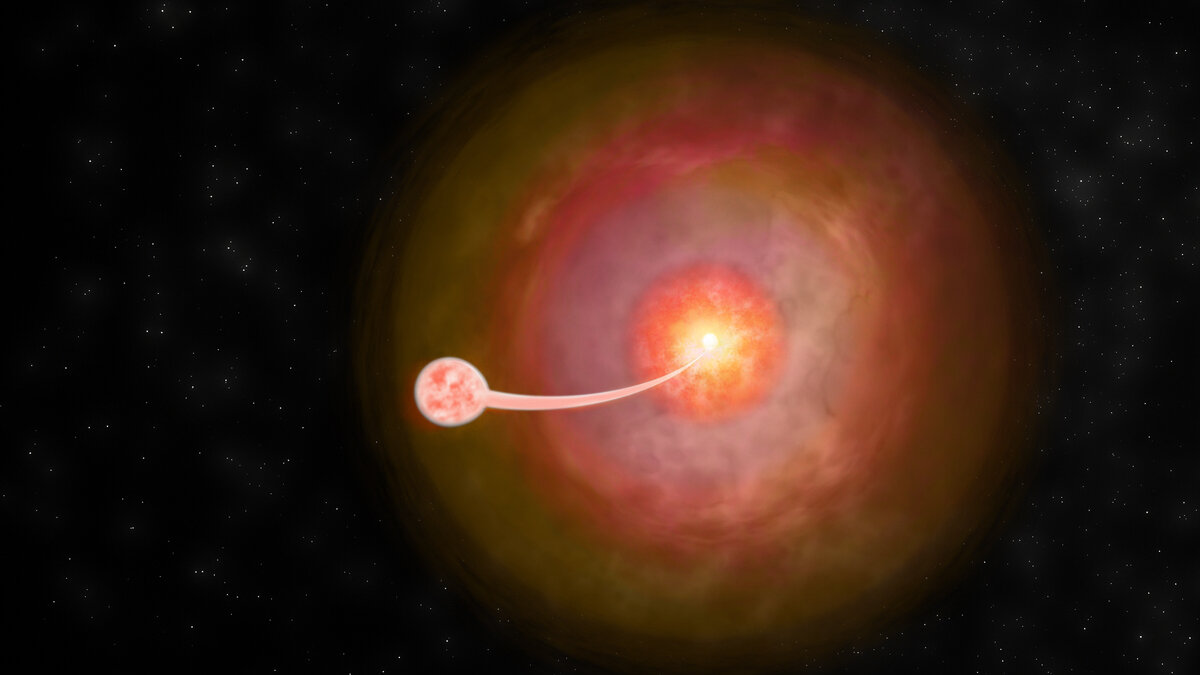
Very Long Baseline Array Uncovers Complexity of Classical Novae Explosions in Space.
Using the National Radio Astronomy Observatory's Very Long Baseline Array (VLBA), scientists have detected non-thermal emission from a classical nova with a dwarf companion, contradicting the historical belief that these systems produce only thermal emissions. The VLBA observations of V1674 Herculis, the fastest classical nova on record, provide a detailed picture of the non-thermal emission and suggest that classical novae are more complex than previously thought. The team's findings are an important step in understanding the hidden lives of classical novae and what ultimately leads to their explosive behavior.