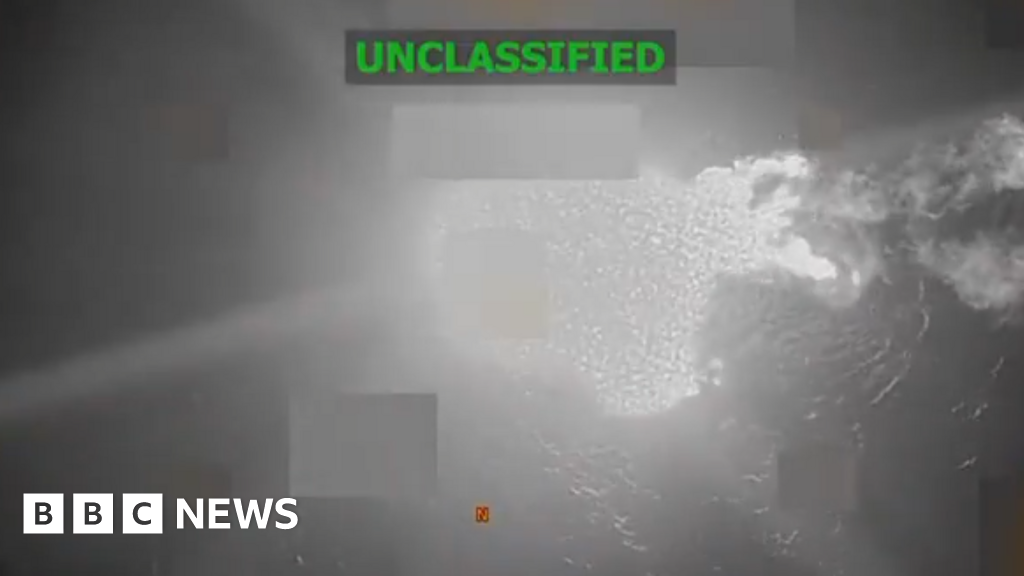
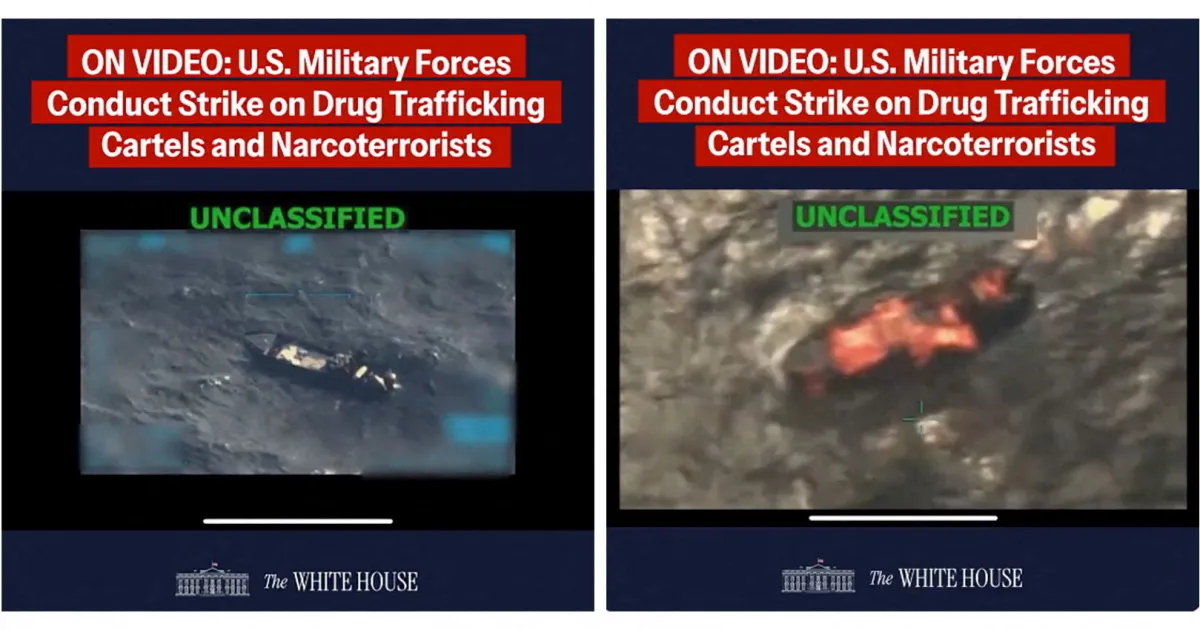
The U.S. military reported striking three alleged drug smuggling vessels in the Pacific, resulting in at least five deaths and the abandonment of others by the suspects, amid ongoing operations against narco-traffickers linked to Venezuela. The strikes have raised legal and ethical questions, especially regarding the treatment of survivors and the escalation of military actions without congressional approval.
President Donald Trump indicated that the U.S. conducted a strike on a shore facility linked to drug smuggling in Venezuela, part of an escalating campaign against drug trafficking boats, though few details were provided and the exact location remains unclear.
The U.S. military conducted its 26th strike against alleged drug smuggling boats in the eastern Pacific, killing four people, amid ongoing debates in Congress over the legality and scope of these operations, which the Trump administration justifies as part of an armed conflict with drug cartels.
The US military conducted strikes on three boats in the eastern Pacific accused of drug smuggling, killing eight people, amid increasing congressional scrutiny over the campaign, which has resulted in at least 95 deaths since September. The strikes are part of a broader effort to combat drug trafficking and pressure Venezuelan President Nicolás Maduro, with upcoming congressional briefings expected to address the campaign's implications.
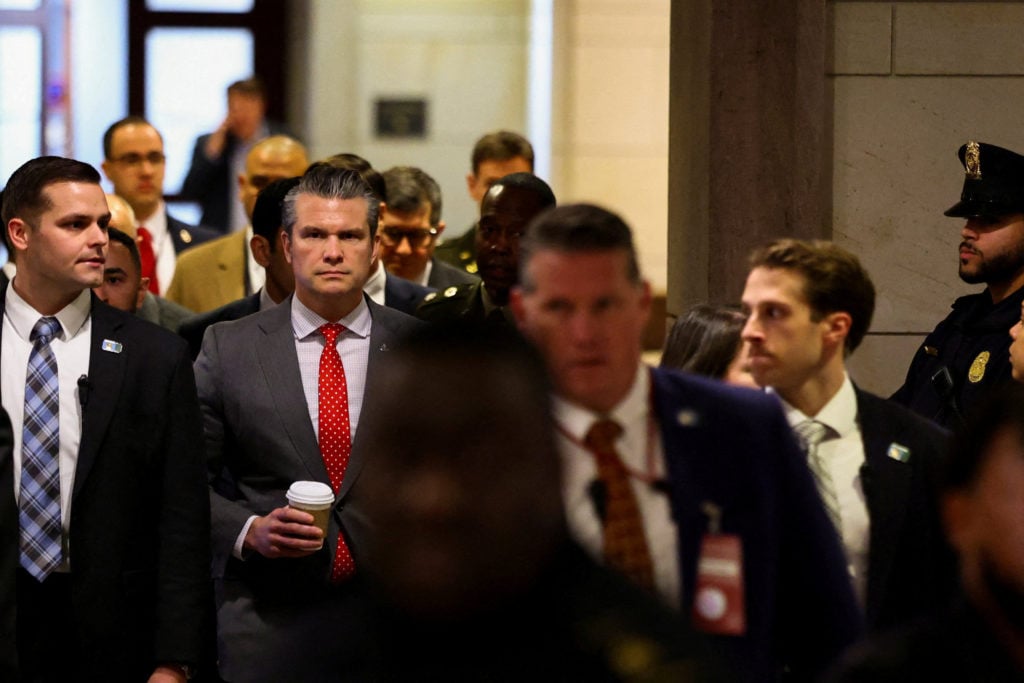
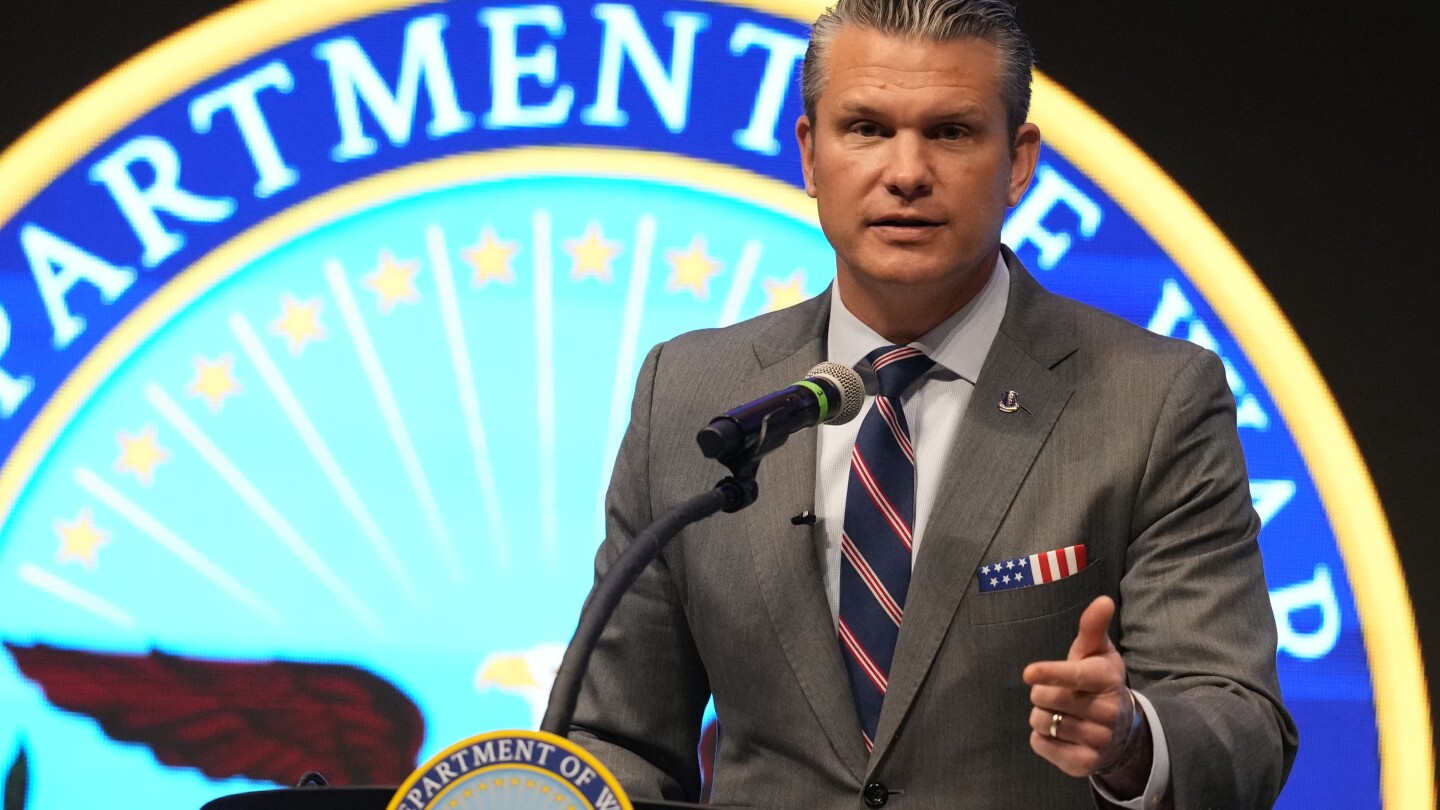
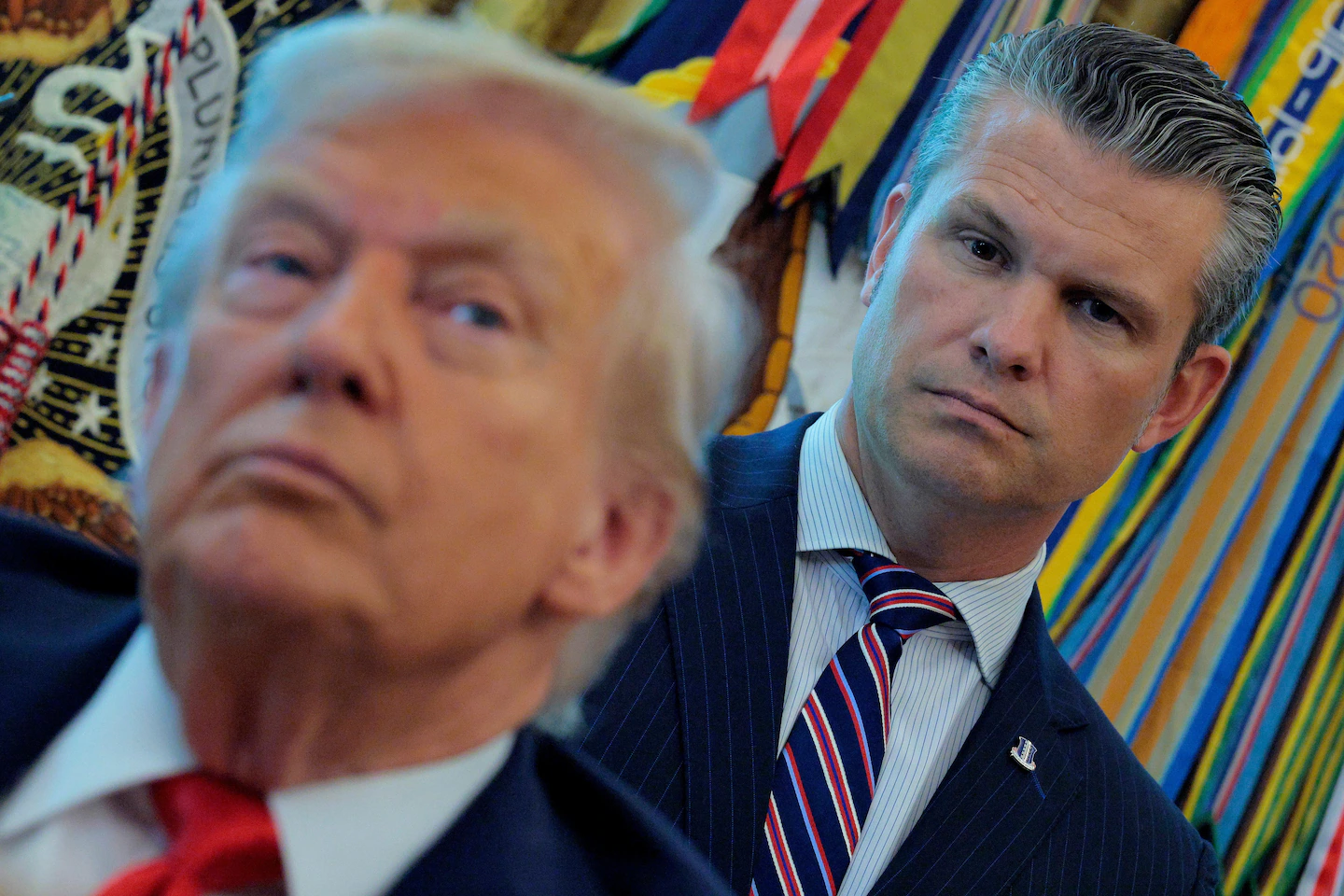
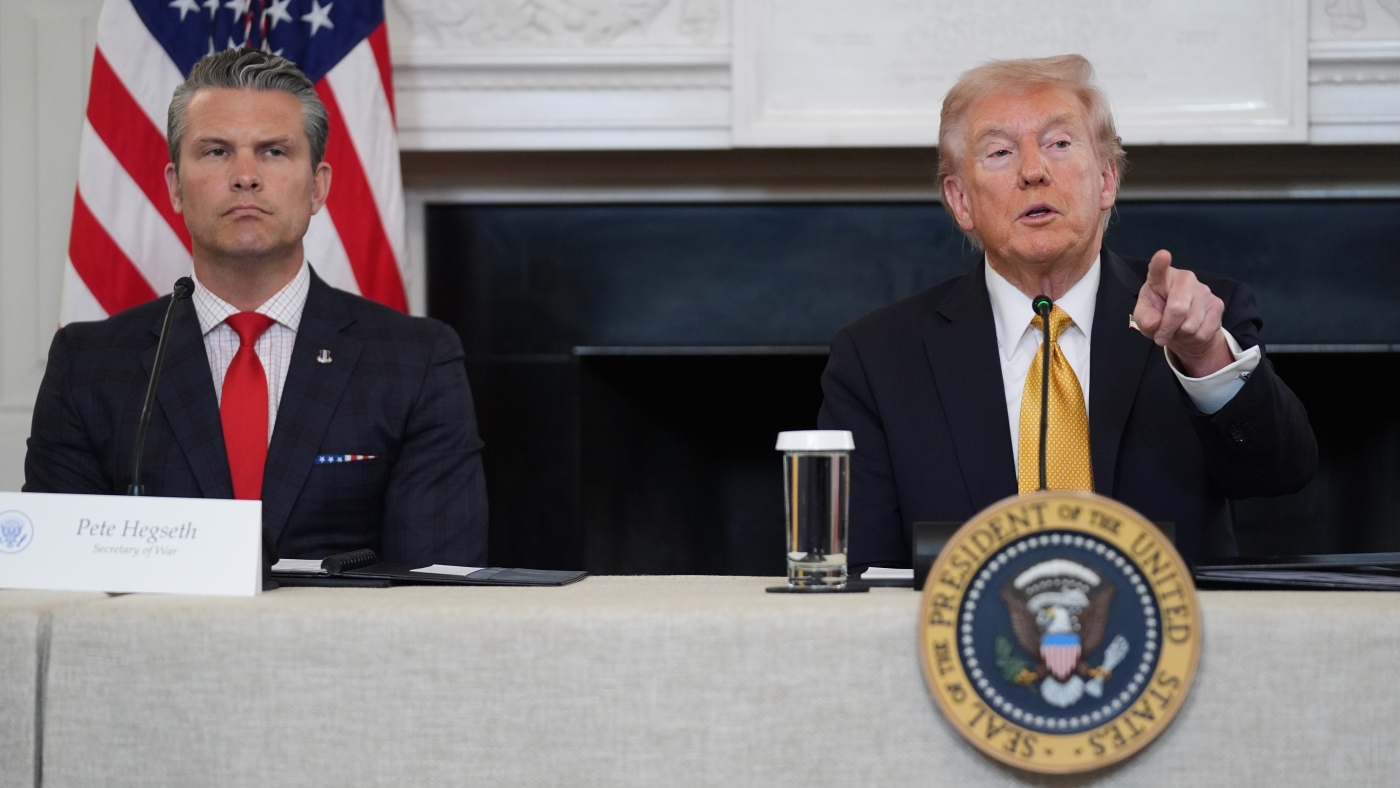
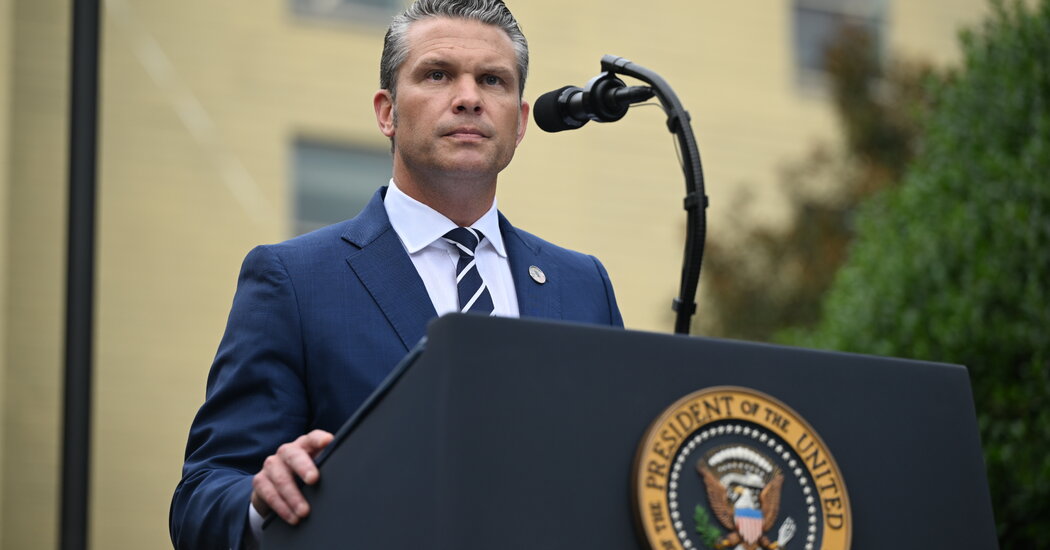
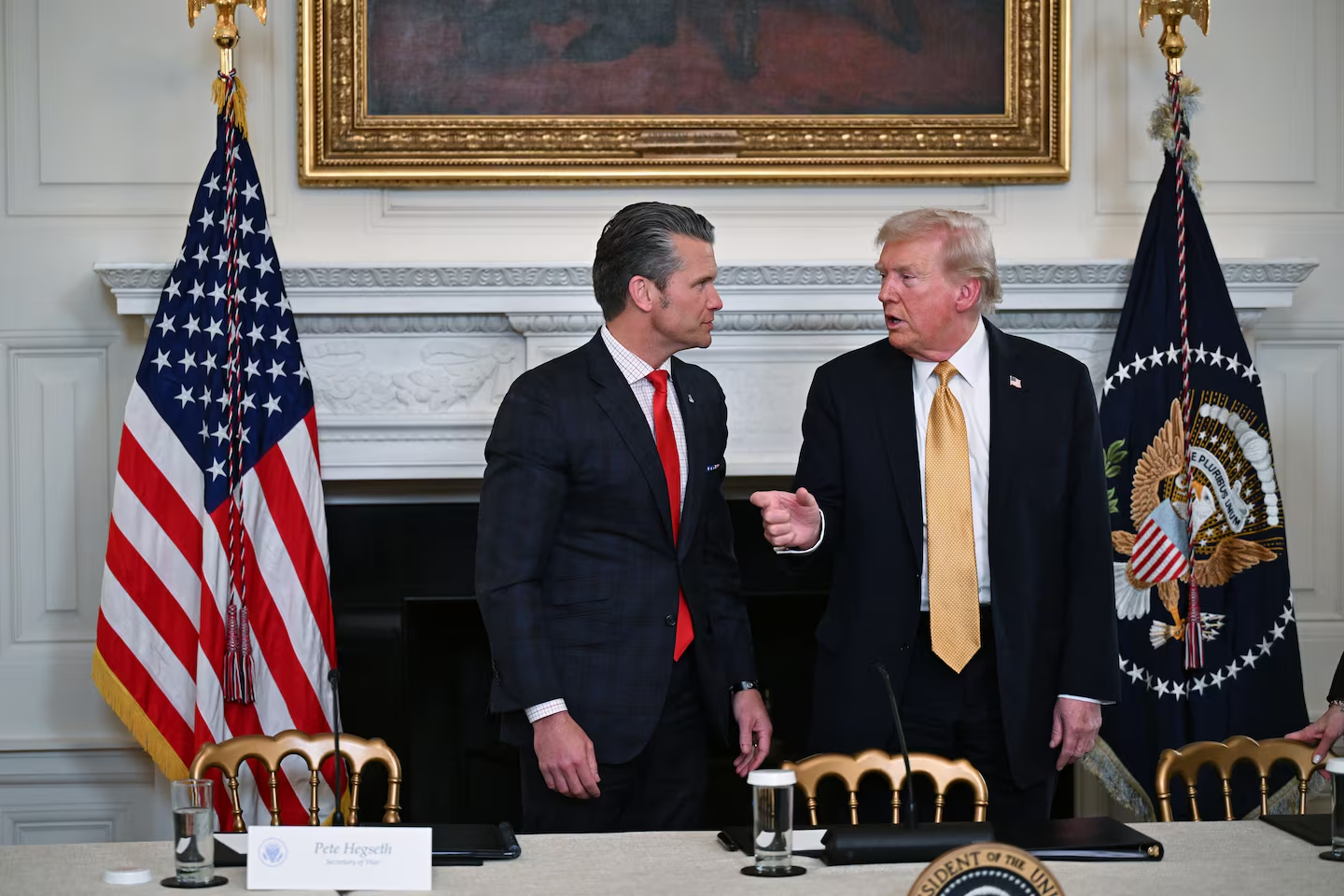
President Trump expressed confidence that Defense Secretary Pete Hegseth did not order the killing of a boat crew suspected of drug smuggling in the Caribbean, amid reports of a second strike after initial attack survivors.
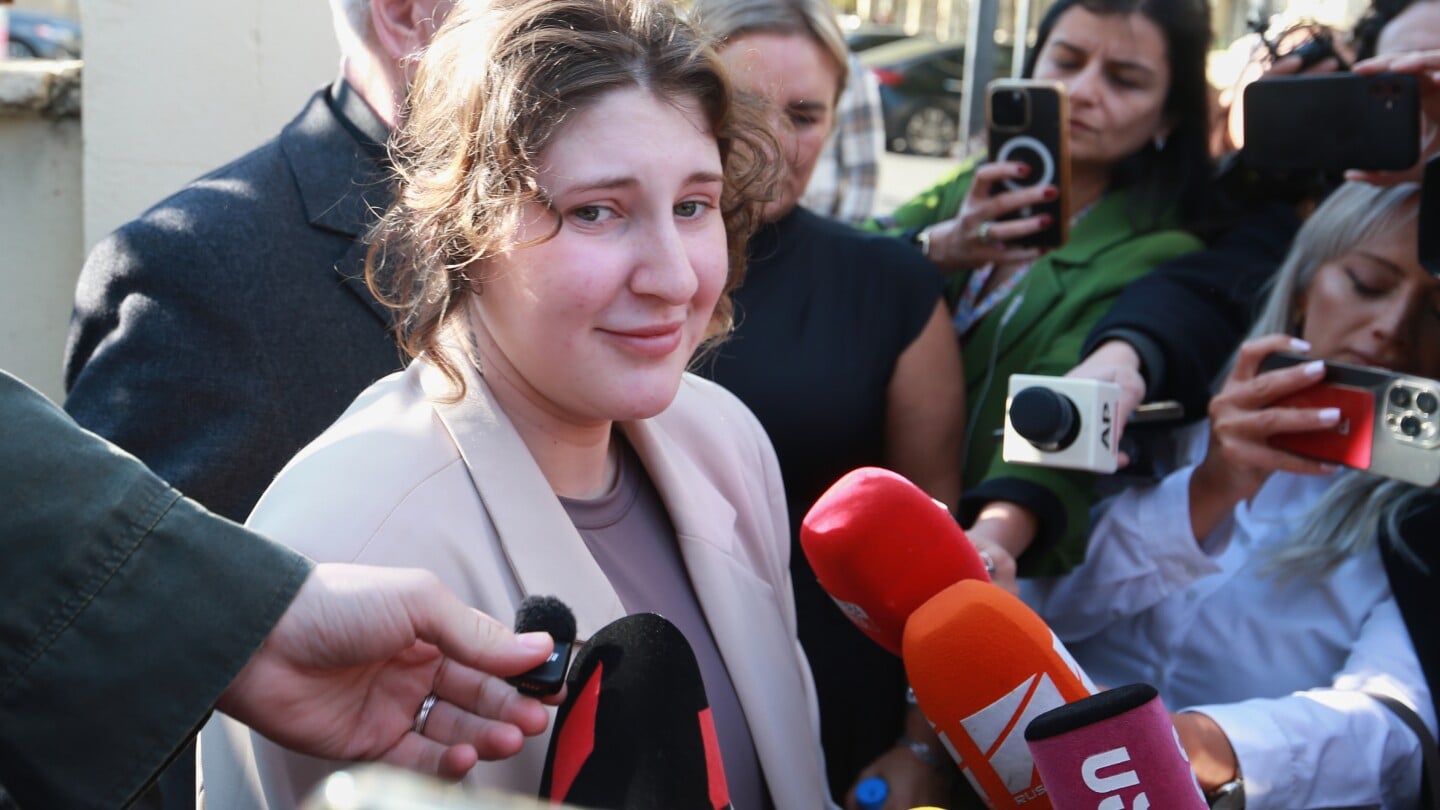
British teenager Bella May Culley, pregnant and arrested in Georgia for drug smuggling, was released after a plea deal that included a guilty verdict and a fine, with her prison time considered in her sentence, amid claims of torture in Thailand.
The US conducted a military strike on a suspected drug-smuggling boat in the Caribbean, killing three men, amid controversy over the legality and political motives of such actions, with critics citing human rights concerns and regional tensions.
The US military conducted its 15th strike in the Caribbean since September, targeting vessels linked to drug smuggling, killing at least 64 people, with the latest attack killing three. The strikes are justified by the Trump administration as part of a broader effort to combat drug cartels, though lawmakers demand more transparency about the legal basis and targets of these operations.
The US military conducted a strike on a Caribbean vessel involved in drug smuggling, killing three men, under orders from President Trump, amid rising tensions with Venezuela and Colombia, with international criticism over the legality and human cost of these operations.
The Department of Defense has conducted at least 14 strikes against boats suspected of drug smuggling, primarily transporting cocaine, but officials cannot confirm the identities of those killed, raising concerns about oversight and effectiveness among lawmakers.
The U.S. military conducted three strikes in international waters off the Pacific coast, killing 14 individuals on boats accused of drug smuggling, bringing the total to 57 deaths since September, amid a broader military escalation in Latin America targeting narco-traffickers and pressuring Venezuela.
The US military conducted three strikes on four vessels in the eastern Pacific, killing 14 individuals accused of being narco-terrorists involved in drug trafficking, with one survivor rescued and handed over to Mexican authorities. The strikes have raised concerns among some lawmakers about their legality and transparency.
The U.S. military conducted its 10th strike targeting a vessel involved in drug smuggling in the Caribbean, killing six people and targeting members of the Venezuelan criminal group Tren de Aragua, which the U.S. designates as a terrorist organization.
Senator Rand Paul criticizes U.S. policies on maritime drug interdiction and covert operations, questioning the practice of destroying ships suspected of smuggling and highlighting the risks of revealing covert plans, while also expressing concern over U.S. actions in Venezuela and maintaining a high regard for former President Trump.
The U.S. Navy has rescued and detained two survivors from a suspected drug-smuggling semi-submersible vessel in the Caribbean, marking the first time prisoners from a recent military anti-drug campaign are held aboard a Navy ship, raising complex legal and policy questions for the Trump administration about their detention and prosecution.