Tag

Digital Divide

All articles tagged with #digital divide

Big Tech's Free AI Offer to Creatives Comes with Hidden Costs

Originally Published 4 months ago — by Creative Bloq

Featured image for Big Tech's Free AI Offer to Creatives Comes with Hidden Costs
Source: Creative Bloq

The article warns that major tech companies are likely to introduce paid AI services that will become essential for creatives, risking a new digital divide where only those who can afford premium tools stay competitive, while small creators may be priced out. It draws parallels with past tech price hikes and emphasizes the unsustainability of current AI investments, suggesting that access to AI will soon resemble a paid necessity rather than a luxury.

Global AI Divide Deepens Amidst Power and Resource Gaps

Originally Published 6 months ago — by The New York Times

Featured image for Global AI Divide Deepens Amidst Power and Resource Gaps
Source: The New York Times

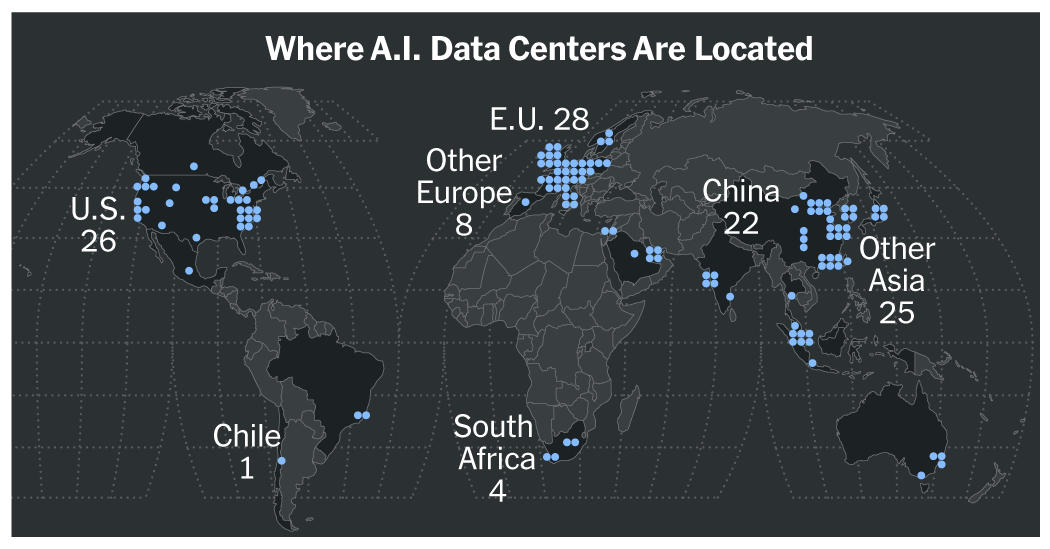
AI computing power is unevenly distributed worldwide, with most advanced data centers located in the US, China, and the EU, creating a digital divide that impacts scientific progress, economic power, and geopolitical influence, while many countries struggle to develop their own infrastructure and retain talent.

"Internet Subsidy Program Expiration Threatens Access for Low-Income Americans"

Originally Published 1 year ago — by The Verge

Featured image for "Internet Subsidy Program Expiration Threatens Access for Low-Income Americans"
Source: The Verge

The Affordable Connectivity Program (ACP) has provided crucial support for over 23 million low-income households to afford broadband service, but it is at risk of running out of funds by the end of April. There is a bipartisan push to extend the program, but the Federal Communications Commission (FCC) needs to take urgent action to sustain and expand the Universal Service Fund (USF) to ensure permanent funding for the ACP's subsidy for low-income households. This is essential for addressing the digital divide and ensuring universal and affordable connectivity for all Americans, regardless of economic status or geographic location.

"Rising Threat of Internet Disconnection for Millions of Americans"

Originally Published 1 year ago — by CNN

Featured image for "Rising Threat of Internet Disconnection for Millions of Americans"
Source: CNN

Millions of Americans, including military families, older adults, and rural residents, are at risk of losing home internet access as the Affordable Connectivity Program (ACP) faces a funding crisis. Without Congressional action, over 23 million households could lose internet access or face significantly higher bills, impacting their ability to work, attend school, access healthcare, and connect to essential services. The ACP, which provides discounts on internet service for low-income households, is set to run out of funding by May, and despite bipartisan support, Congress has yet to approve the necessary $6 billion to renew the program, leaving millions of Americans facing financial distress and widening the digital divide.

"Expiration Threatens Biden's Affordable Internet Vow for Millions"

Originally Published 1 year ago — by The Associated Press

Featured image for "Expiration Threatens Biden's Affordable Internet Vow for Millions"
Source: The Associated Press

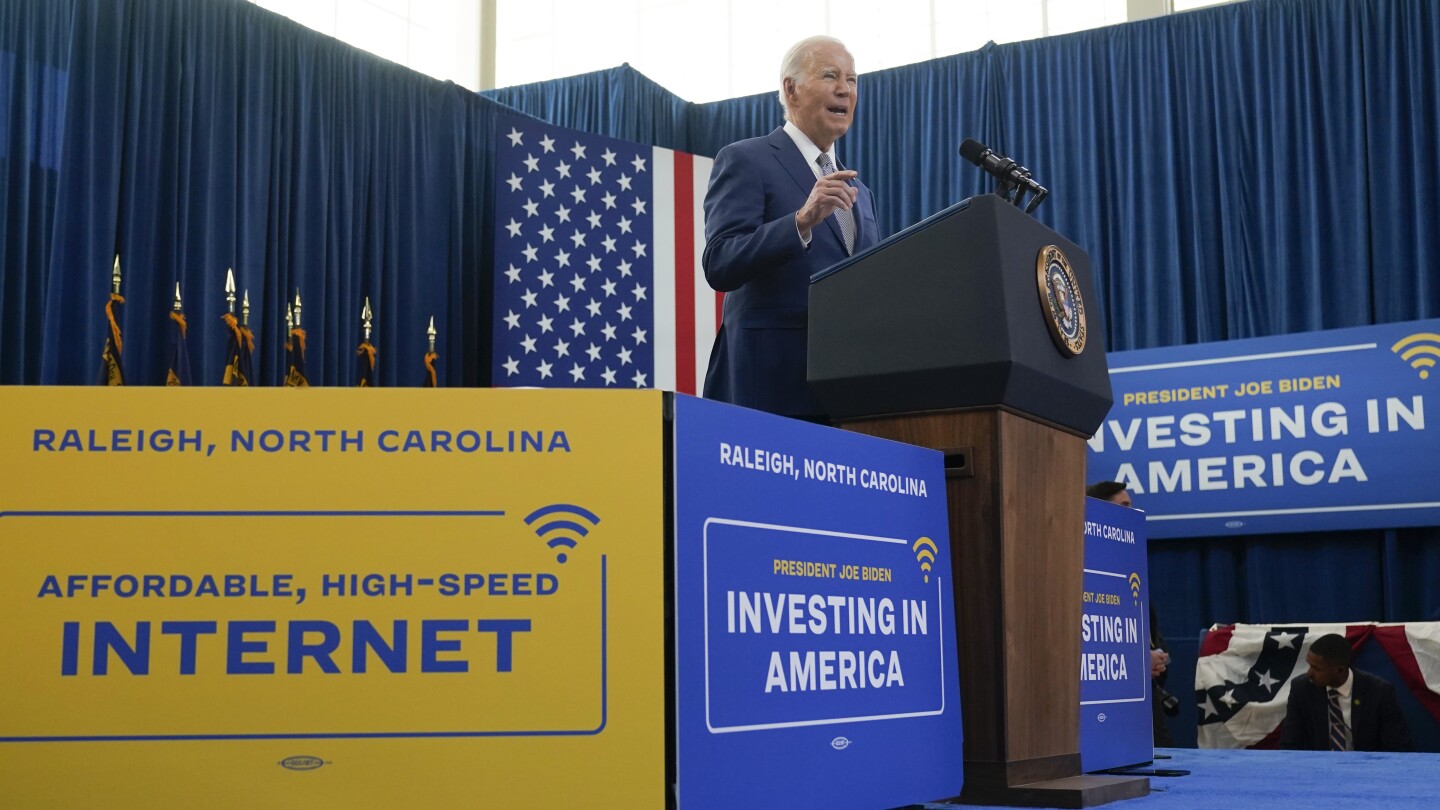
President Biden's goal of affordable internet access for all Americans is at risk as the Affordable Connectivity Program (ACP) subsidy, providing $30 a month for qualifying families, is set to expire this spring. The program, crucial to the administration's plans to connect everyone to high-speed internet by 2030, has enabled families to avoid financial trade-offs and access vital services. A bipartisan group of lawmakers proposed a bill to sustain the ACP through 2024 with additional funding, but its future remains uncertain in a divided Congress. The program's expiration could result in families losing internet access or having to pay more, impacting infrastructure funding and the Biden administration's efforts to close the digital divide.

"Record-breaking Enrollment: 20 Million Americans Benefit from FCC's ACP for Subsidized Internet Access"

Originally Published 2 years ago — by CNN

Featured image for "Record-breaking Enrollment: 20 Million Americans Benefit from FCC's ACP for Subsidized Internet Access"
Source: CNN

Over 20 million US households are now receiving discounted internet service through the Affordable Connectivity Program (ACP), a federal initiative aimed at bridging the digital divide. The program provides $30-a-month subsidies to eligible households, with higher subsidies available for those living on tribal lands. Despite its popularity, the ACP's future is uncertain as it is expected to run out of its initial $14 billion funding by 2024. The program has only reached about 40% of potentially eligible households, highlighting the ongoing need for affordable internet access.

US Government Allocates Billions for Broadband Expansion Across States

Originally Published 2 years ago — by AL.com

Featured image for US Government Allocates Billions for Broadband Expansion Across States
Source: AL.com

Alabama is set to receive $1.4 billion from the federal infrastructure law to expand broadband access in the state as part of the Biden administration’s $40 billion plan to increase internet access across the country. The funding will be used to deploy or upgrade broadband networks in Alabama to ensure reliable, affordable high-speed internet. The funds are among $2 billion allocated to Alabama for broadband infrastructure under the Biden administration.

Biden's $42 billion plan to connect every home with high-speed internet by 2030

Originally Published 2 years ago — by PBS NewsHour

Featured image for Biden's $42 billion plan to connect every home with high-speed internet by 2030
Source: PBS NewsHour

President Biden has announced a $42 billion investment to expand high-speed internet access to the 8.5 million homes and businesses without it, aiming to achieve universal access by 2030. The funds will be allocated to all states and territories, with 19 states receiving over $1 billion each. The timeline includes drafting plans, distributing funds, and beginning work on projects, with some potentially not being completed before the 2024 election. The administration aims to address the digital divide and ensure that underserved communities, including rural and suburban areas, have access to affordable broadband. This initiative is seen as an important part of Biden's reelection campaign to demonstrate progress and address the enthusiasm gap.

Biden pledges $42 billion for nationwide broadband expansion.

Originally Published 2 years ago — by The Washington Post

Featured image for Biden pledges $42 billion for nationwide broadband expansion.
Source: The Washington Post

President Biden is set to announce over $42 billion to expand high-speed internet access nationwide, with the aim of helping an estimated 8.5 million families and small businesses take advantage of modern-day connectivity. The money will be distributed to states over the next two years, serving as the centerpiece of a vast and ambitious campaign to deliver reliable broadband to the entire country by 2030, ensuring that even the most far-flung parts of the United States can reap the economic advantages of the digital age.

Nvidia CEO: AI is democratizing programming and revolutionizing industries.

Originally Published 2 years ago — by Reuters

Featured image for Nvidia CEO: AI is democratizing programming and revolutionizing industries.
Source: Reuters

Nvidia CEO Jensen Huang said that artificial intelligence has closed the digital divide and made everyone a programmer, as all they need to do is speak to the computer. Huang added that AI is leading a computing revolution and will touch every single industry. Nvidia has become the world's most valuable listed semiconductor company as a major supplier of chips and computing systems for AI. The company has forecast second-quarter revenue more than 50% above Wall Street estimates and is boosting supply to meet surging demand for its AI chips.

Nvidia CEO: AI democratizes programming, leaving non-experts behind.

Originally Published 2 years ago — by Business Insider

Featured image for Nvidia CEO: AI democratizes programming, leaving non-experts behind.
Source: Business Insider

Nvidia CEO Jensen Huang said that anyone can be a programmer with the help of AI tools, which have bridged the "digital divide." Huang made the comments at the Computex conference in Taipei, where he also announced new AI-related products and partnerships. Nvidia's processors power AI efforts like OpenAI's ChatGPT, which has sparked fears about job displacement.

Navigating the Risks and Opportunities of Generative AI for Future-Proofing Your Brand.

Originally Published 2 years ago — by Ars Technica

Featured image for Navigating the Risks and Opportunities of Generative AI for Future-Proofing Your Brand.
Source: Ars Technica

The rapid growth of artificial intelligence (AI) models like Dall-E and GPT-4 comes at a cost to society and the planet. The downsides include the environmental toll of mining rare minerals, the human costs of the labor-intensive process of data annotation, and the escalating financial investment required to train AI models as they incorporate more parameters. The digital divide in the AI community is also widening between those who can train cutting-edge models and those who can't. The environmental impact of training large language models (LLMs) is significant, with estimates suggesting that training a 2019 model called BERT emitted 280 metric tons of carbon emissions, equivalent to the emissions from five cars over their lifetimes.