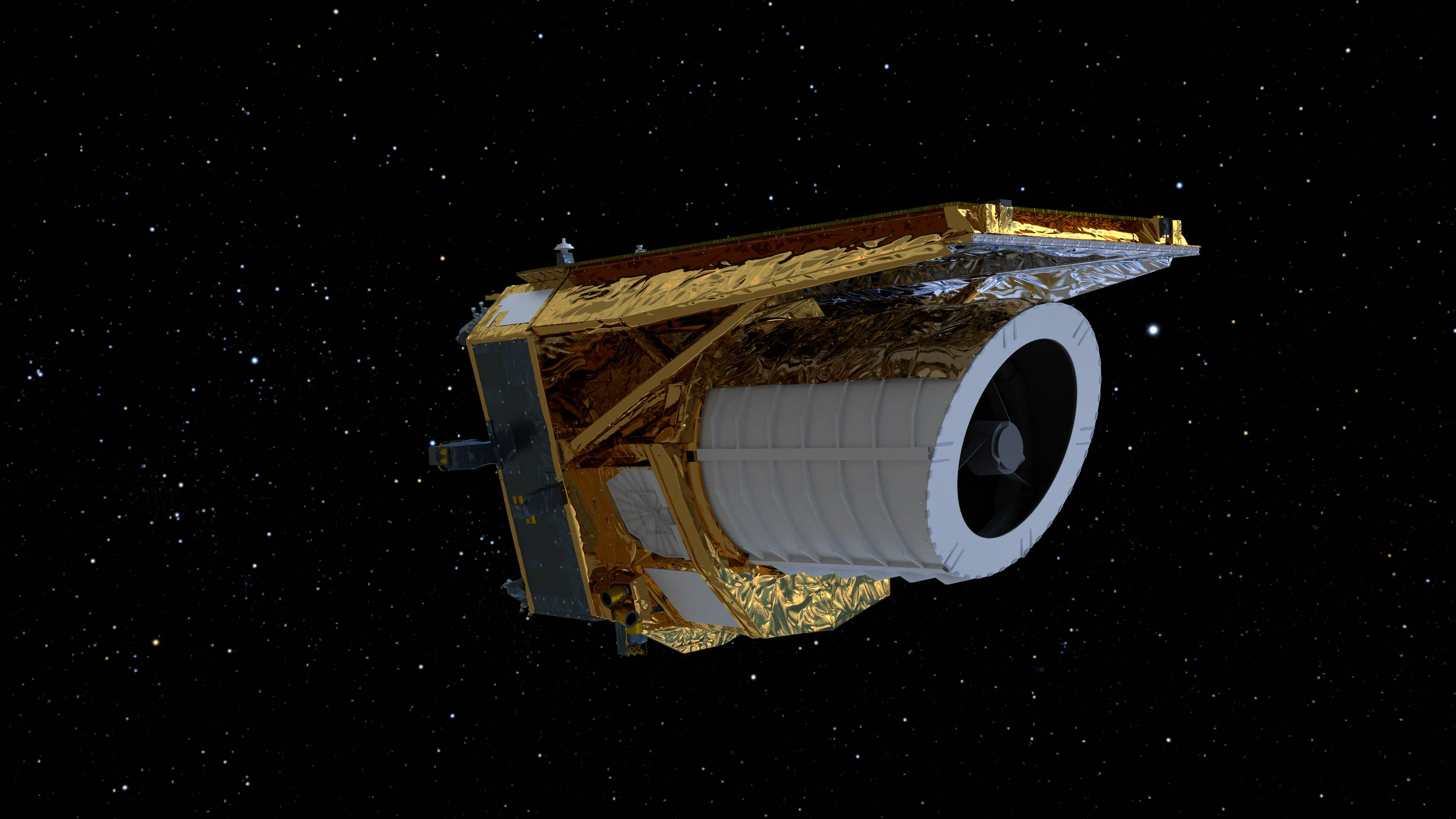
The European Space Agency's Euclid telescope, launched in July 2023 to study dark energy and dark matter, is experiencing optical issues due to ice formation from water absorbed during assembly. Engineers are working on a de-icing procedure to address the problem, which involves carefully heating specific parts of the spacecraft to avoid affecting its optical alignment. This issue highlights the need for ongoing maintenance, as small amounts of water are expected to be released within the spacecraft throughout its lifetime.
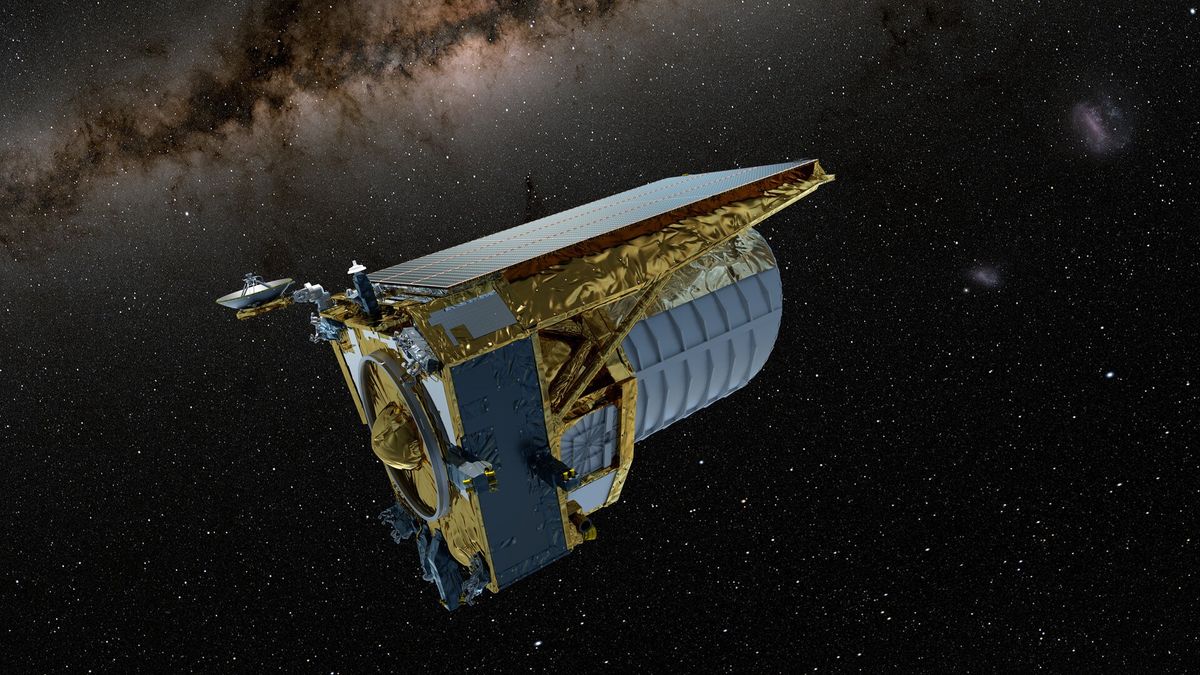
The European Space Agency's Euclid telescope, located a million miles away, is being "de-iced" due to ice layers on its mirrors affecting the amount of starlight it captures. Scientists are heating low-risk optical parts to begin the de-icing process, aiming to restore and preserve the telescope's ability to collect light from ancient galaxies. This issue is the second problem with the spacecraft in a year, following a sensor malfunction last September. If successful, the de-icing campaign could keep Euclid's systems ice-free for the rest of its six-year mission.
Researchers in Chicago have discovered that freezing water with impurities makes ice easier to remove from surfaces, potentially leading to less damaging de-icing methods and alternative melting agents. The study, published in Materials Horizons, highlights the impact of contaminants on ice adhesion and could pave the way for more effective and environmentally friendly solutions for dealing with ice-related issues.
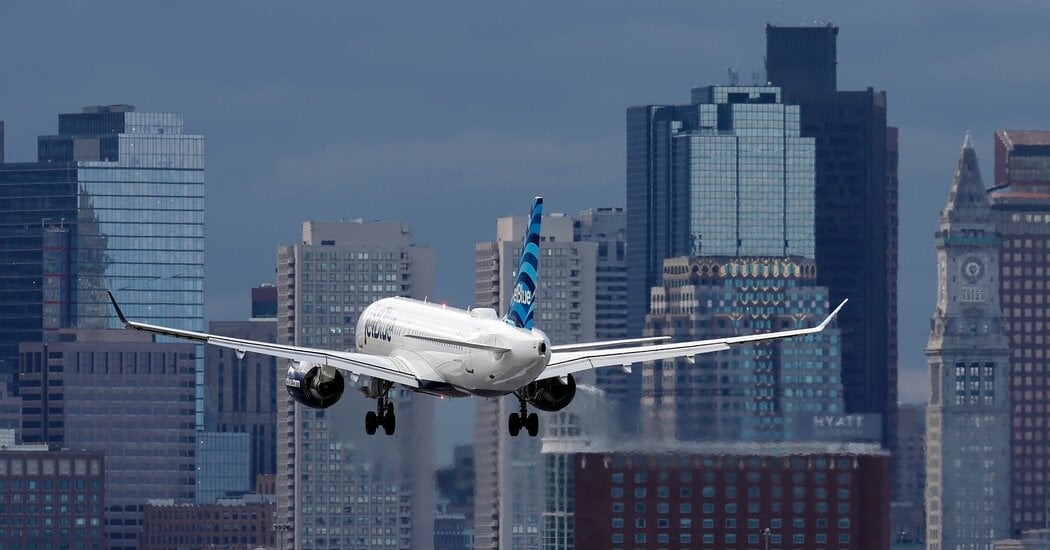
Two JetBlue planes collided on the tarmac at Boston Logan International Airport, with one plane bound for Las Vegas striking the tail of another plane headed to Orlando while entering a de-icing pad. The collision caused damage to both aircraft but resulted in no reported injuries. The Federal Aviation Administration will investigate the incident, and JetBlue stated that safety is their priority and they will work to determine the cause of the collision.
Delta Air Lines holds a three-day summer de-ice "boot camp" in Minneapolis, training around 400 employees on how to de-ice planes using water instead of de-icing fluid. The workers then return to their home bases to train 6,000 co-workers before October. De-icing is crucial to ensure safe aircraft operations during winter, as ice build-up can affect performance and even cause planes to stall. Delta de-iced approximately 30,000 planes last winter, with 13,000 in Minneapolis alone. The training program includes employees from various locations, including those not typically associated with winter weather.
The National Transportation Safety Board (NTSB) has found that the company responsible for maintaining a Texas interstate where 130 vehicles crashed in icy conditions two years ago, killing six and injuring dozens, failed to address the deteriorating road conditions. The NTSB said that the failure of North Tarrant Express Mobility Partners Segment 3 to address the conditions contributed to the crash, as did drivers' speeds. The recommendations from the NTSB include the installation of variable speed limit signs, adding sensors to reduce response times to hazardous road conditions, and providing training on how to better respond to winter weather conditions.