Training AI chatbots on large amounts of low-quality social media content impairs their reasoning, accuracy, and ethical responses, highlighting the importance of high-quality data for effective AI performance.
Economist Diane Swonk warns that despite positive market signals, the U.S. economy is more fragile than it appears due to persistent inflation, data collection issues, and a bifurcated consumer base, suggesting a potential slowdown and challenging holiday season ahead.
The article discusses concerns over the decline in quality and reliability of U.S. economic data produced by the Bureau of Labor Statistics (BLS) under the Trump administration, citing staffing issues, reduced data collection, and political interference, with experts warning of potential impacts on economic policy and analysis.
The article discusses the emerging signs of AI model collapse, where AI systems, especially in search and data generation, are producing increasingly unreliable and distorted results due to error accumulation, loss of rare data, and feedback loops. This decline threatens the usefulness of AI, particularly as models are trained on their own outputs, leading to a cycle of degrading accuracy and trustworthiness, with potential consequences for businesses and users alike.
A.I.-powered chatbots like ChatGPT and Bard often fabricate information, leading to inaccurate answers and advice. However, by directing these chatbots to use information from trusted sources such as credible websites and research papers, they can generate intelligible answers and useful advice with a high degree of accuracy. This approach can also help reduce the production and spread of misinformation. Examples include using plug-ins that pull data from well-known media sites for meal planning, relying on trusted sources and double-checking data for research, and incorporating suggestions from favorite travel sites for travel planning. The key is to pair the language simulation ability of A.I. chatbots with high-quality information to maximize their usefulness.
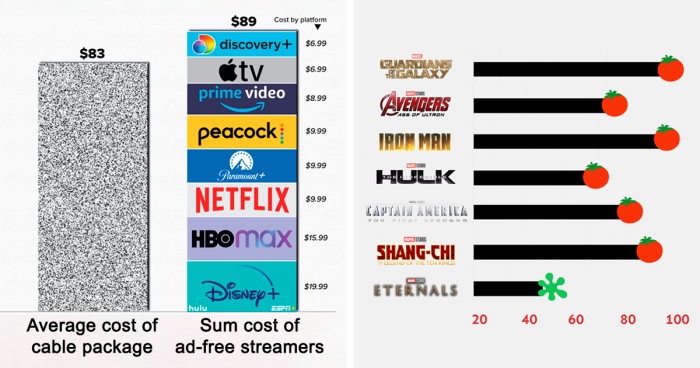
The subreddit r/dataisbeautiful showcases easy-to-understand visualizations that effectively convey complex information. Data analysts can identify and address data quality issues in large datasets by employing strategies such as data profiling, cleaning, imputation, and validation. Organizations should look for data analysts with problem-solving skills, proficiency in programming languages and software, statistical analysis, machine learning knowledge, data visualization ability, and communication skills. Unstructured data requires additional care, and organizations should foster a data-driven culture while keeping in mind the ethics of data collection, usage, and storage.