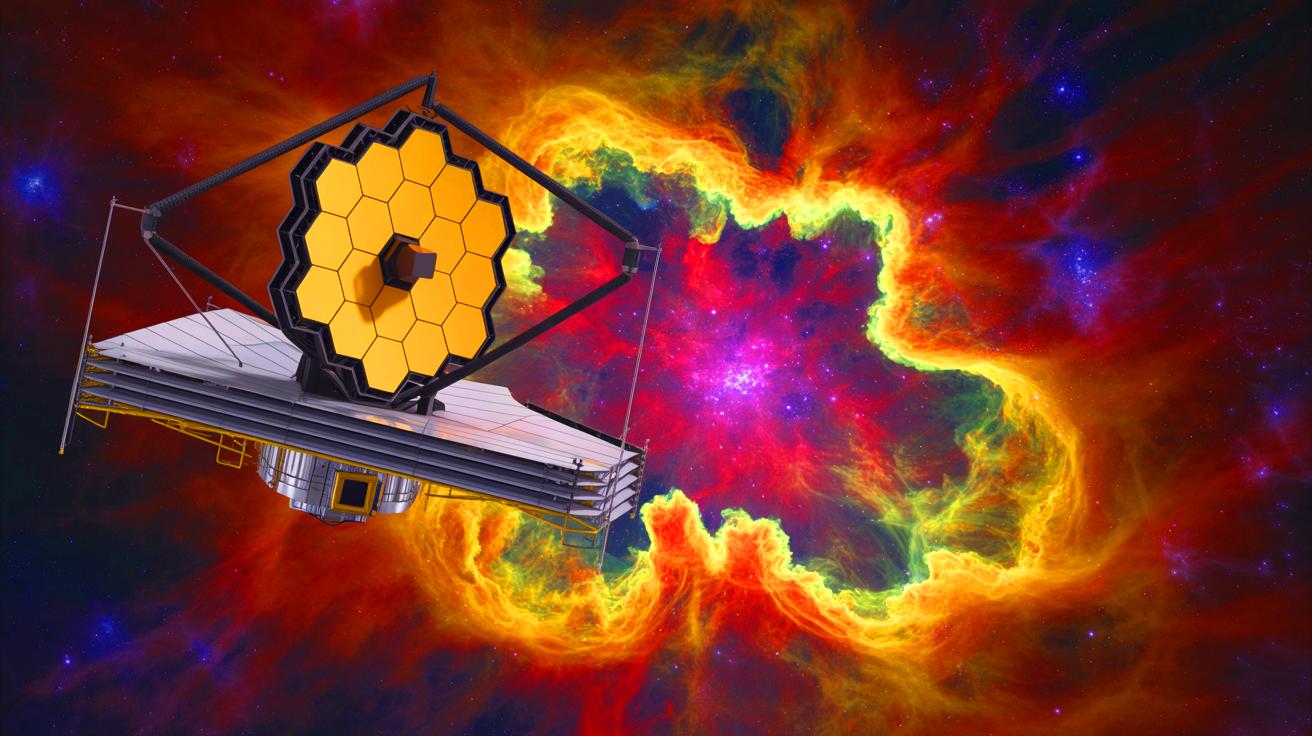
2025 was a groundbreaking year for black hole research, featuring discoveries such as a rapidly feeding black hole in the early universe, a runaway supermassive black hole moving at incredible speeds, space tornadoes around the Milky Way's core, energetic flares from our galaxy's black hole, and the detection of the universe's most distant and possibly most massive black holes, all facilitated by advanced telescopes like JWST and ALMA.
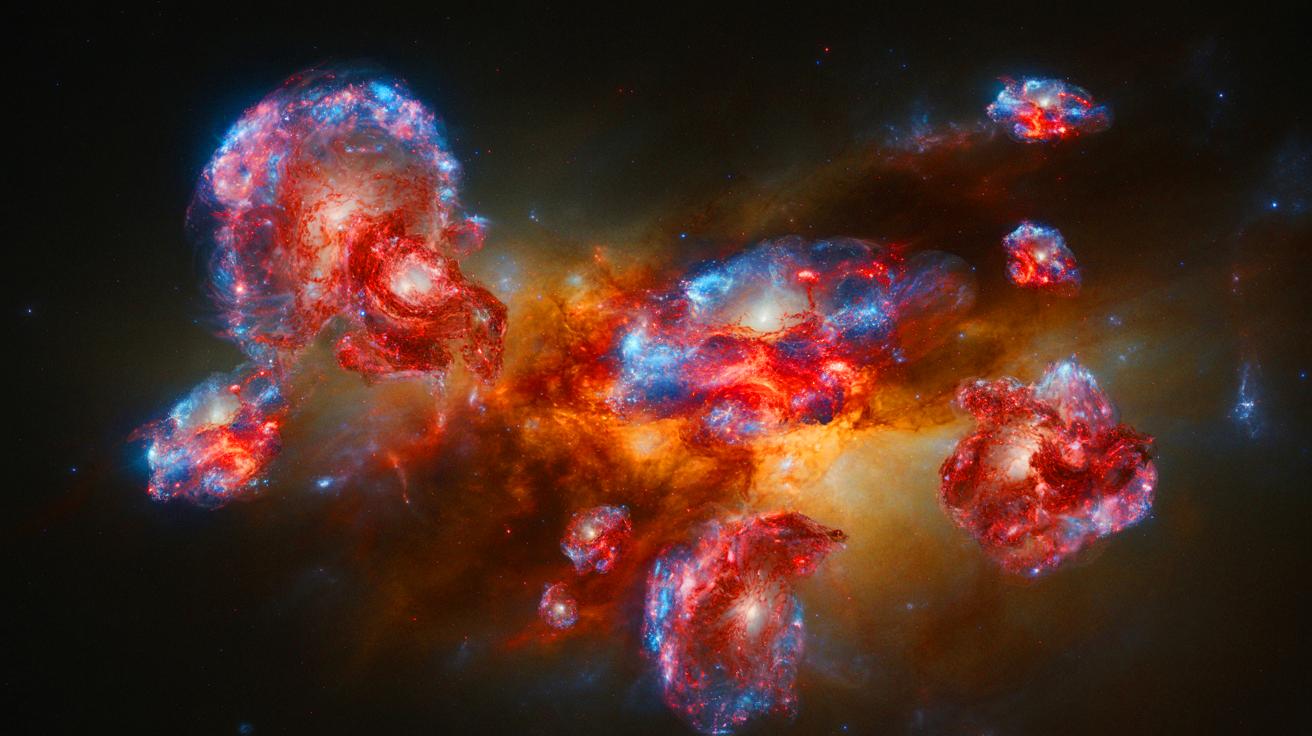
The James Webb Space Telescope has discovered dormant galaxies in the early universe, challenging existing models of galaxy evolution by revealing that some galaxies paused star formation within the first billion years after the Big Bang, due to factors like supermassive black holes and stellar feedback mechanisms, with future observations aiming to uncover more about these galaxies' life cycles.
Celebrating its third year, the James Webb Space Telescope has provided stunning new insights into the star-forming Cat’s Paw Nebula, revealing intricate processes of stellar birth and evolution through its advanced infrared capabilities, and paving the way for future cosmic exploration.