
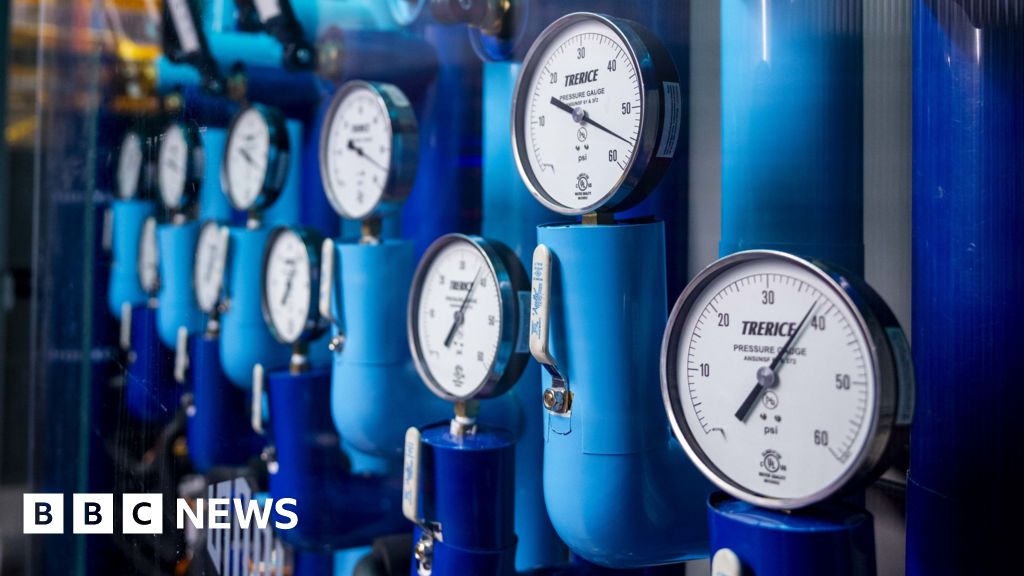
Innovative cooling technologies like liquid cooling and microfluidics are transforming data centres by reducing energy consumption and addressing overheating issues, especially as AI and high-performance chips demand more efficient solutions amid environmental concerns.

AI systems consume significant water primarily for cooling data centers and generating electricity, with usage varying based on location, technology, and efficiency measures. While current water use by AI is small compared to everyday activities like lawn watering, understanding and optimizing its water footprint is crucial for sustainable growth and informed decision-making.
A swarm of jellyfish caused the shutdown of three reactors at France's Gravelines nuclear power plant by clogging its water intake filters, though safety was maintained. Jellyfish swarms frequently disrupt coastal power plants worldwide, prompting scientists to develop early warning tools to predict such events. Similar incidents have occurred in Scotland, Sweden, the US, Japan, and China, highlighting the ongoing environmental challenge posed by jellyfish to energy infrastructure.
An experiment conducted on the International Space Station (ISS) aims to understand how heating and air conditioning systems can operate in reduced gravity and extreme temperatures experienced on the moon and Mars. The experiment, called the Flow Boiling and Condensation Experiment (FBCE), is being conducted by scientists and engineers from Purdue University and NASA's Glenn Research Center. By studying the effects of reduced gravity on boiling and investigating how condensation works in a weightless environment, the research could provide valuable insights for future human colonies in space and enable longer-distance space travel and in-orbit refueling.