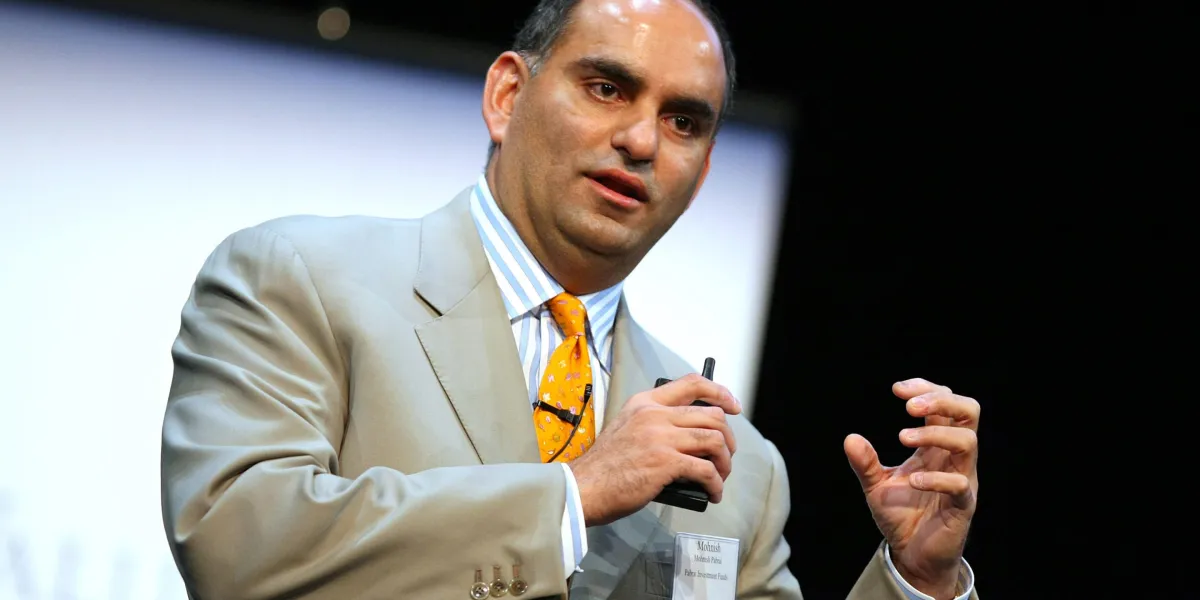
Mohnish Pabrai emphasizes the importance of the Rule of 72 as a simple mathematical tool for investors to understand how long it takes for money to double at a given interest rate, advocating for its inclusion in basic education to promote smarter investing and highlight the power of compound interest over time.
Gen Z is demonstrating strong retirement savings habits, contributing to 401(k) plans earlier and more aggressively than millennials did at the same age, with young women leading the way, highlighting a trend of early financial planning among younger generations.
Financial advisor and self-made millionaire Ramit Sethi advises college graduates to invest 10% of their salaries annually, increasing by 1% each year, to achieve financial success. By starting early and leveraging compound interest, graduates can potentially become multimillionaires. Sethi, who has extensive experience and authored the best-seller "I Will Teach You To Be Rich," emphasizes the importance of opening investment accounts and setting up automatic deposits to grow wealth over time.
Self-made millionaire Ramit Sethi advises new graduates to invest 10% of their salary annually and increase it by 1% each year to become multimillionaires. He recommends starting with low-cost index funds to diversify portfolios and benefit from compound interest over time. Starting early, even with smaller amounts, can significantly grow wealth by retirement.
Leveraging the power of compound interest and long-term investing can exponentially grow your retirement savings. By consistently investing small amounts in passive investments like the Vanguard S&P 500 ETF, you can build a substantial nest egg over time without needing to actively manage your portfolio. Starting early and regularly contributing to your investments can significantly boost your retirement prospects.
Warren Buffett attributes much of his success to the power of compound interest, emphasizing its ability to grow wealth over time. He believes that starting early and staying invested for the long term are crucial to reaping the benefits of compounding. By consistently reinvesting earnings and allowing them to generate further returns, Buffett has built his fortune through patient and disciplined investing.
As a Gen Z personal finance reporter, the author learned about the benefits of Roth IRAs for young investors, including the ability to make prior year contributions before tax season ends and the potential for a Saver's Credit. They also explored the use of high-yield savings accounts for emergency funds and sinking funds, highlighting the importance of understanding compound interest and tax implications when using these accounts.
A national study on millionaires revealed that 79% of them are self-made, with compound interest being a key factor in their wealth accumulation. The S&P 500, known for its historical average annual return of 9-10%, is highlighted as a dependable stock market investment. The Rule of 72 is introduced as a tool for estimating investment growth, demonstrating the potential for significant wealth accumulation over time. The article emphasizes the importance of starting to invest early and leveraging compounding to build wealth, regardless of age.
Personal finance experts emphasize the significance of reaching a net worth of $100,000, as it marks a turning point where compound interest starts to significantly accelerate wealth growth. Young Americans face challenges in achieving this milestone due to factors like inflation, student debt, and limited purchasing power. To expedite the journey to personal wealth, following the GROWTH method is recommended, which includes gaining control of finances, rooting investments in low-cost index funds, optimizing tax management, paying down debts, diversifying income, and exercising self-discipline.
Experts are debating the realistic rate of return for retirement investments, with Suze Orman and Dave Ramsey advocating for a 12% return assumption while David Blanchett argues for a more conservative estimate of 5-7%. Orman emphasizes the power of compounding and advises young investors to start early, while Blanchett highlights the impact of volatility and inflation. Personal asset allocation, fees, and staying invested through market volatility are also important factors in determining actual returns.
Household wealth in the US has surged during the pandemic, with the average net worth of households over 50 now exceeding $1 million, driven by increased home values and 401(K) growth. However, there is a significant gap between average and median wealth, highlighting disparities within different age groups. While wealth tends to peak for households in their 60s, it starts to decline in their 70s as retirement savings are drawn down. Compound interest plays a significant role in driving wealth for those in their 50s, while households in their 20s and 30s struggle with debt and lower net worth.
Retirement expert Anne Lester emphasizes the importance of starting to save for retirement early, even if it's a small amount like $20 a day. By saving $100 a week from age 25 with a 7% annual return, one could accumulate over $1 million by age 65. Starting later, at age 30 or 35, significantly reduces the potential savings due to the power of compound interest. Lester advises against waiting for a perfect saving plan and suggests taking small, manageable steps towards the retirement goal, highlighting that even small contributions can grow substantially over time.
Only about half of workers earning $100,000 or more feel they're saving enough for retirement, with the median retirement account balance for those earning between $100,000 and $149,000 at $104,155. Americans believe they'll need around $1.8 million saved by retirement. CNBC calculated how much you need to save each month if you earn $150,000 and want to retire with $2 million at 67, based on starting ages of 25, 30, and 35. The calculations range from $1,979 to $258 per month for a 25-year-old, $2,463 to $429 per month for a 30-year-old, and $3,108 to $718 per month for a 35-year-old. It's important to be aware of contribution and income limits for retirement accounts, and financial experts recommend a savings rate of 15% annually.
Three charts provide valuable lessons for investors. The first chart demonstrates the power of investing early and letting compound interest work over time. The second chart emphasizes the importance of diversification to boost returns and mitigate volatility. The third chart reminds investors to maintain a long-term perspective by looking at historical market trends and not getting caught up in short-term fluctuations.
Opening a high-yield savings account before 2024 is a smart move due to the currently high interest rates, which can range from 4.25% to 5.27%. These rates are a result of the Federal Reserve raising the federal funds rate. Additionally, there is a possibility of rates going up further in the future. By starting early, you can take advantage of compound interest and maximize your savings potential.