The U.S. Department of Education has partnered with over 40 conservative organizations to create civics programs celebrating the 250th anniversary of the United States, aiming to promote patriotism and civic knowledge through various initiatives, including a nationwide speaking tour and college series, under the leadership of the America First Policy Institute.
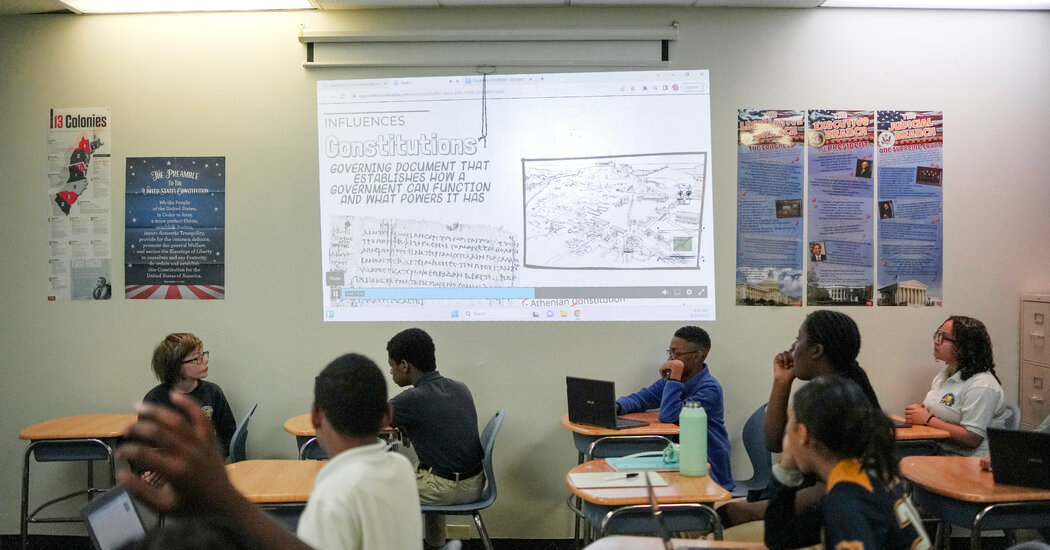
Republican governors in states like Florida, Virginia, and South Dakota are leading a controversial overhaul of civics education, emphasizing patriotism, Christianity, and anti-communism. The new standards restrict discussions on race and gender and discourage activities like mock elections and debates on current events. Critics argue that these changes may prevent students from gaining a full understanding of American government and hinder critical thinking. The standards also draw on experts affiliated with Hillsdale College, a Christian institution, and promote a particular interpretation of the founding fathers' beliefs. While the standards aim to address knowledge gaps, there are concerns about the reduction of critical thinking and the memorization-heavy approach. The civics standards reflect the ongoing divide in the nation's schools over what children should learn about their country.
Republican governors in states like Florida, Virginia, and South Dakota are leading a controversial overhaul of civics education, emphasizing patriotism, Christianity, and anti-communism. The new standards restrict discussions on race and gender and remove hands-on activities like mock elections and debates on current events. Critics argue that these changes may prevent students from gaining a full understanding of American government and limit critical thinking. The standards also draw on experts affiliated with Hillsdale College, a Christian institution, and present a particular perspective on the influence of Christianity in the founding of the nation. The divide over what children should learn about their country continues to deepen, with some states adopting ethnic studies requirements and adding LGBTQ history and critiques of capitalism to their curriculum.
U.S. children's test scores in social studies, math, and reading have all dropped since the beginning of the pandemic, with eighth graders' scores in U.S. history and civics down to where they were back in the 1990s, according to the Nation's Report Card. Experts attribute the drop to COVID-19, culture wars in schools, and a lack of resources for the subjects. The lack of quality social studies education stems from decades of fights that have prioritized other subjects and caused a lack of resources for civics and U.S. history. The lack of civic education can lead to more divisiveness in the country.
Test scores for eighth-grade students in US history and civics have declined, according to a report from the National Assessment of Educational Progress. The decline follows a fall in reading and math scores for American nine-year-olds last year. The report shows that scores in history have been consistently declining since 2014, with 40% of students scoring “below basic” proficiency in 2022. The percentage of eighth graders taking classes focused mainly on US history also declined from 72% in 2018 to 68% in 2022. The declines in history and civics further illustrate the effect of the Covid-19 pandemic on educating children.
The National Assessment of Educational Progress tests show a decline in knowledge of civics among eighth-graders and a 5-point decline in average scores in history, highlighting the impact of pandemic disruptions on academic performance in social studies. The poor performance is a cause for concern regarding the level of understanding of the nation’s history, government, and democratic processes. The results suggest that now is not the time for politicians to cut education funding or limit what students learn in U.S. history and civics classes. The decline in scores is a larger concern for lower-performing students across all subjects, and NCES Commissioner Peggy Carr suggests more social studies lessons for students to improve scores.
Eighth grade students in the US have seen a slight decline in their history and civics test scores, with an increasing number of children lacking a basic understanding of either subject, according to the National Assessment of Educational Progress. The results reflect the impact of the COVID-19 pandemic that shuttered schools across the country. Nearly one-third of eighth grade students cannot describe the structure or function of government, and many US schools aren't doing enough to reverse the trend, history and civics educators say.
National test scores in the US show a significant drop in students' knowledge of US history and a modest decline in civics, a trend that has been ongoing for nearly a decade. The pandemic has accelerated this decline, with a growing number of students falling below basic standards. The dip in civics performance was smaller but notable, and it was the first decline since the test began being administered in the late 1990s. The decline in history scores is due to a continuing de-emphasis on social studies instruction, which has been amplified during the pandemic. Experts warn that a base knowledge in history and civics is critical for students to become engaged, informed citizens.
The National Assessment of Educational Progress (NAEP) has reported a drop in history and civics scores for eighth-graders in the US, with this year's history scores being the lowest since the assessment began in 1994. The pandemic is believed to have had a profound impact on student learning, with declines in reading and math also reported. The results have prompted calls for action to address the problems head-on, rather than limiting what students learn in US history and civics classes.