
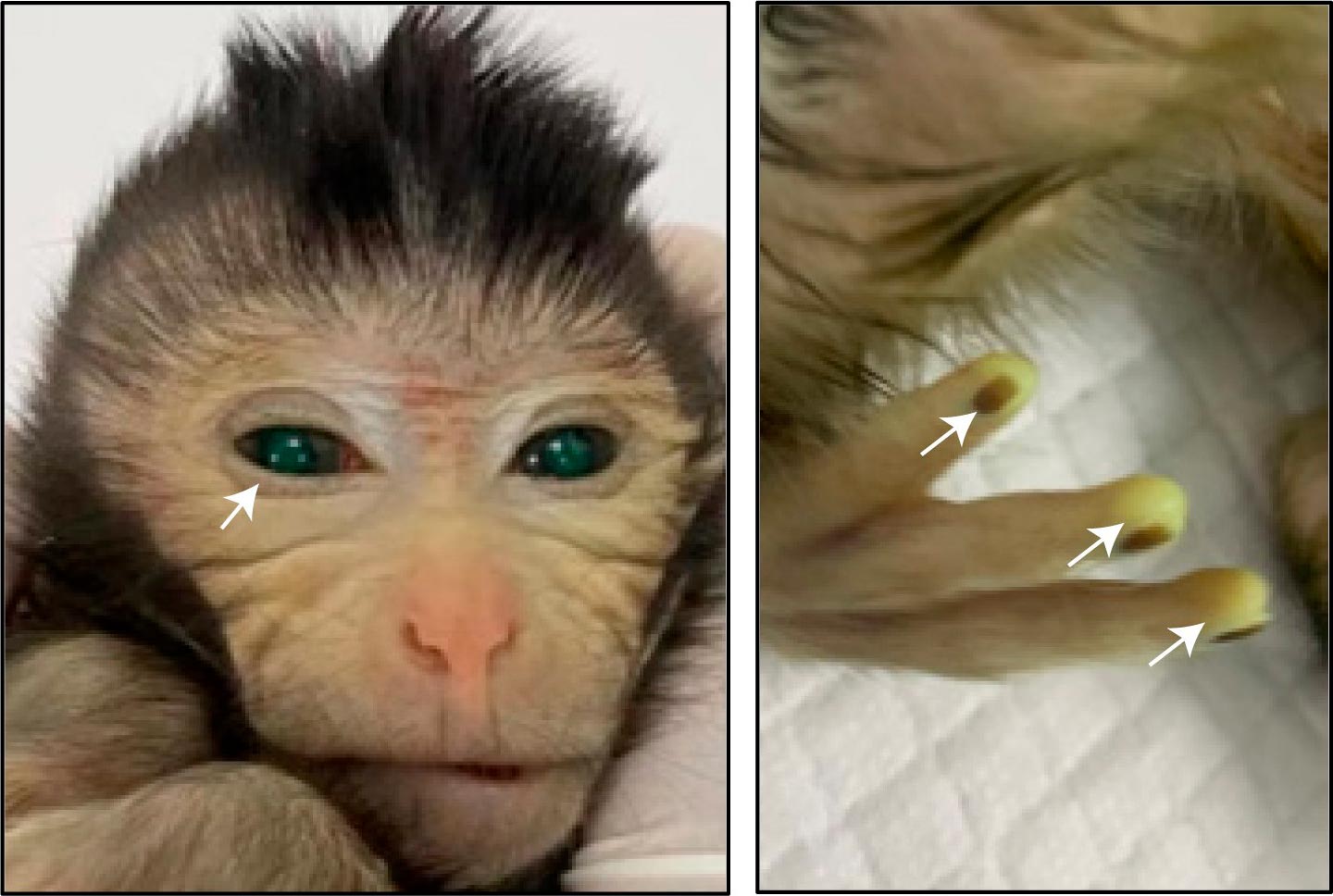
Chinese researchers have achieved the first live birth of a chimeric monkey, a significant breakthrough in primate research. The monkey is composed of cells derived from two genetically distinct embryos of the same species, opening new avenues in understanding stem cell pluripotency and having implications for genetic engineering and biomedical studies. The researchers established stem cell lines and injected a subset of stem cells into early monkey embryos, resulting in 12 pregnancies and six live births. The chimeric monkey exhibited stem cell-derived tissue in various organs, with contributions ranging from 21% to 92%. Future research aims to optimize the generation of chimeric monkeys and explore the mechanisms underlying embryo survival.
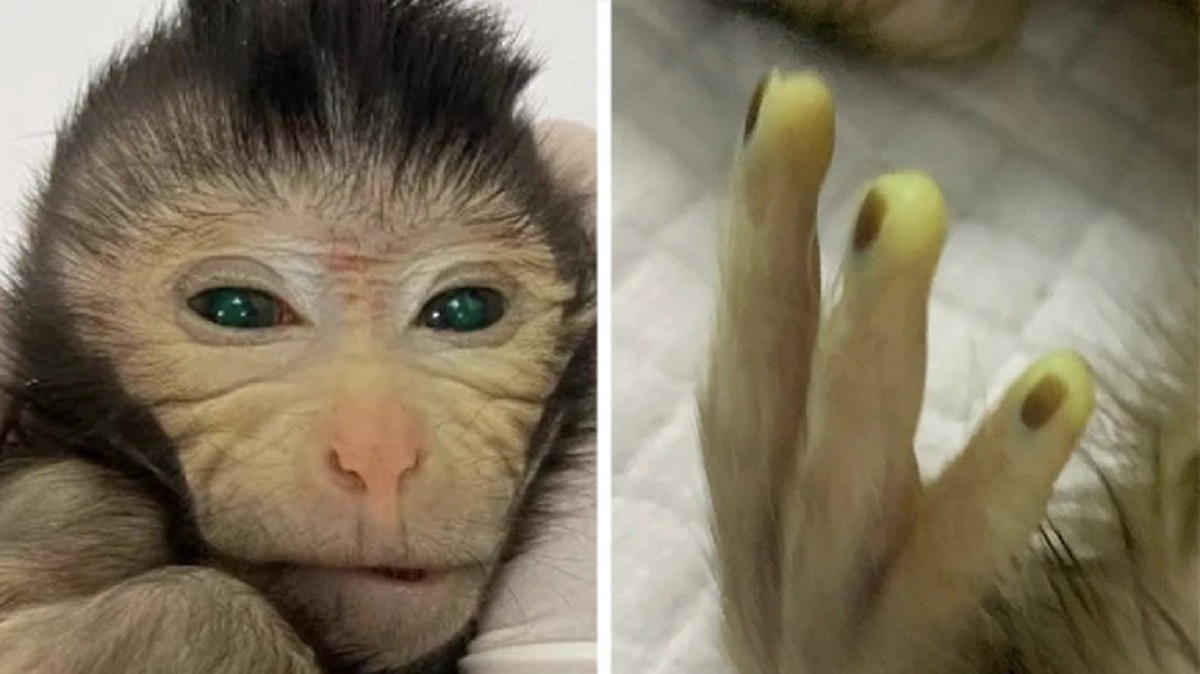
Scientists in China have successfully created a genetically modified "chimeric" monkey, the world's first live-born primate with more than two sets of DNA. The long-tailed macaque had a glowing green face, fingertips, and eyes, achieved by adding a green fluorescent protein to the donor cells during the genetic modification process. While the monkey's short lifespan and health issues highlight the challenges, this breakthrough opens doors for more accurate disease modeling and cellular study in primates, which are genetically closer to humans than mice or rats. The successful integration of donor DNA in various body tissues represents a significant advancement in genetic research.
Scientists in China have successfully created the first-ever live birth of a chimeric monkey using stem cells. The monkey, created from two genetically distinct embryos, displayed fluorescent green eyes and fingertips due to a fluorescence green protein introduced during the experiment. Unfortunately, the monkey lived for only 10 days before being euthanized. The researchers believe this breakthrough has significant implications for stem cell research, neurological disease studies, genetic engineering, and species conservation among primates. They hope to further study embryo survival during pregnancy and improve their line of chimera monkeys.