Cyanobacteria's Circadian Clock Mimics AM Radio for Cellular Control
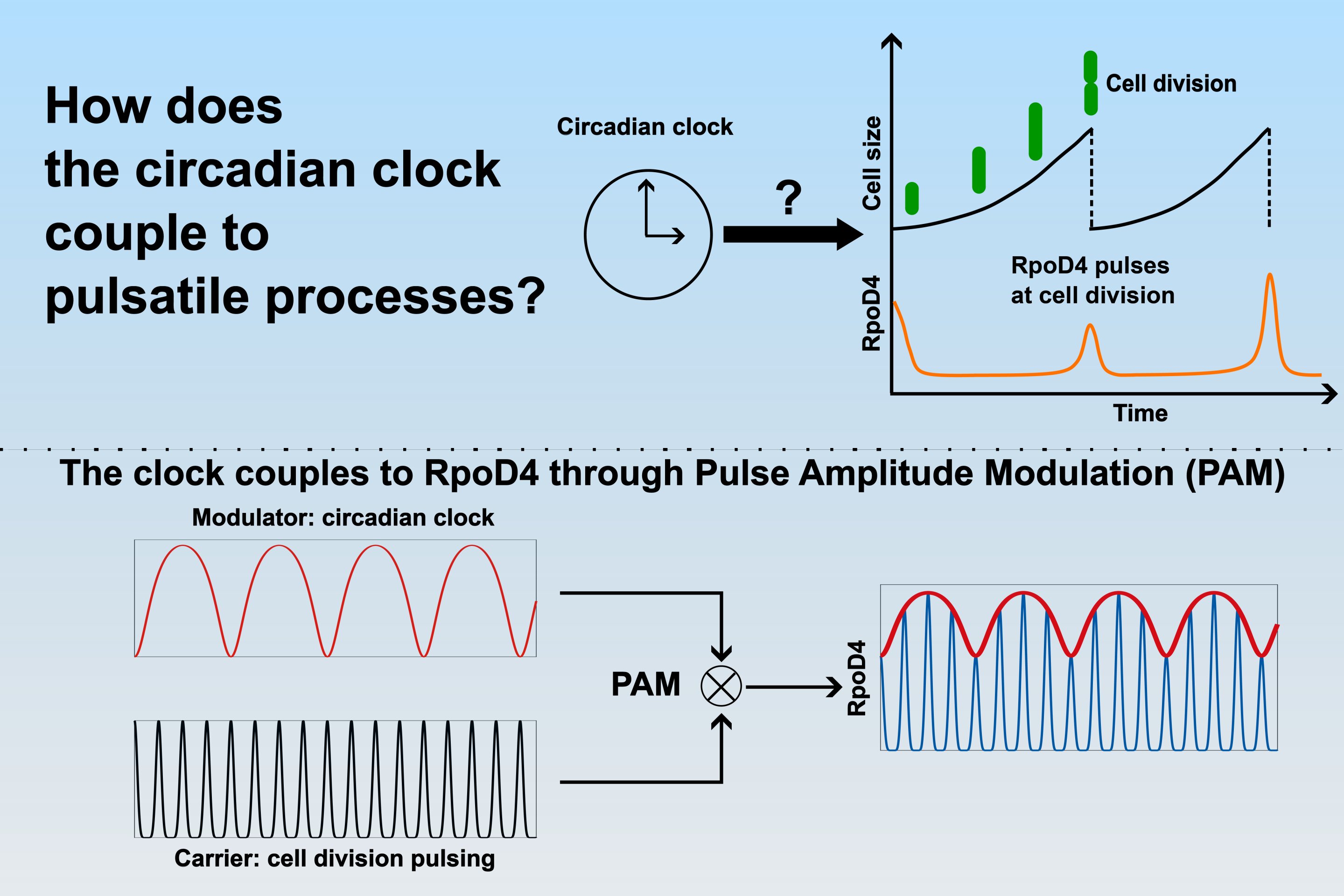
Researchers have discovered that cyanobacteria use a mechanism similar to AM radio to regulate cellular processes, integrating signals from their circadian clock and cell cycle. This process, known as pulse amplitude modulation, allows the bacteria to encode information about both oscillatory signals in the same output. The study, conducted by teams from the Sainsbury Laboratory and the University of Warwick, highlights the potential broader implications of this mechanism in synthetic biology and biotechnology.