
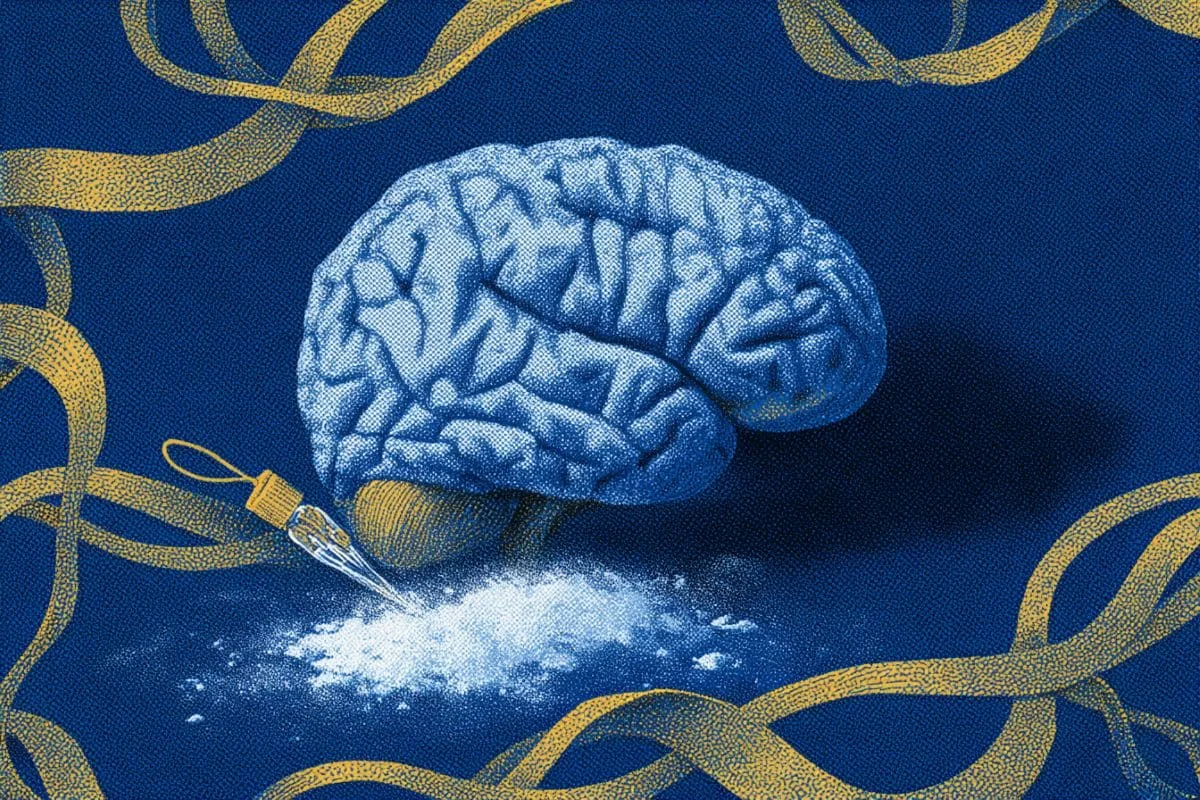
Brain’s DeltaFosB as Switch Behind Cocaine Relapse, Study Finds
Chronic cocaine use rewires the brain by accumulating DeltaFosB in the ventral hippocampus–nucleus accumbens reward-memory circuit, altering gene expression and driving compulsive drug-seeking. CRISPR experiments show DeltaFosB is necessary for these changes, and calreticulin helps rev the brain’s engine toward cocaine seeking. With no FDA-approved meds for cocaine addiction, researchers are pursuing DeltaFosB-targeting compounds as a potential future treatment to reset brain circuits and reduce relapse.