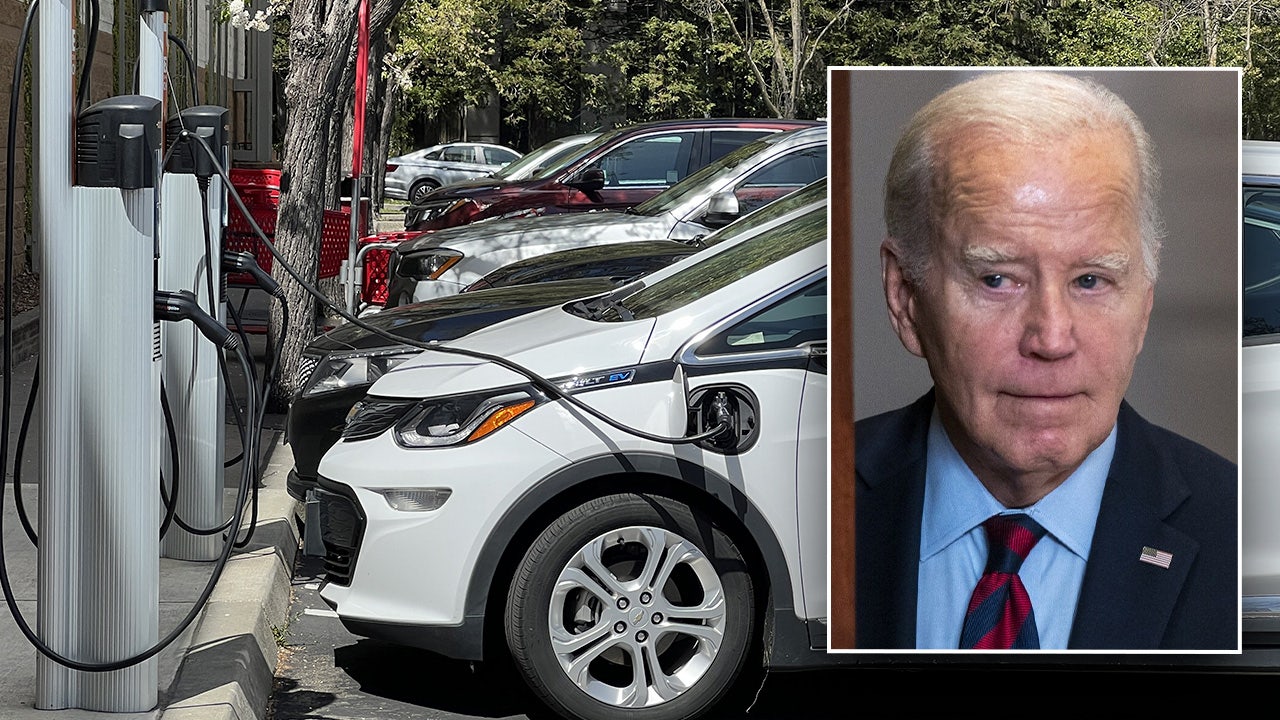
The House voted to overturn President Biden's waiver of "Buy America" requirements for taxpayer-funded electric vehicle (EV) charging stations, with two House Democrats and 207 Republicans voting in favor. The resolution, previously passed by the Senate, aims to block the waiver that would benefit Chinese manufacturers dominating the EV charger supply chain. The White House has stated that President Biden will veto the resolution, which is part of the administration's push to expand EV manufacturing and the network of chargers nationwide.
The Senate rejected President Biden's decision to waive some "Buy America" requirements for government-funded electric vehicle (EV) charging stations, with several Democrats joining Republicans in a 50-48 vote. The White House argues that the bill to rescind the waiver would harm domestic manufacturing and American jobs, while Republicans claim that most parts for EV chargers would be bought from China. The bipartisan infrastructure law allocated $7.5 billion for EV charging stations, but the installation of new chargers has been slow. The rules requiring at least 55% of construction materials to be sourced domestically go into effect in July 2024.
The US Senate voted 50-48 to reject President Joe Biden's decision to waive some "Buy America" requirements for government-funded electric vehicle (EV) charging stations. The White House plans to veto the measure, arguing that the Republican bill would harm domestic manufacturing and American jobs. The Federal Highway Administration had previously waived some requirements until July 2024 to expedite EV charger acquisition and installation. The funding for EV charging stations is crucial to the Biden administration's plans to boost electric vehicle sales. The bill to rescind the waiver would also overturn the decision to extend Buy America rules to EV chargers, potentially allowing government funds to go to Chinese companies. However, states and companies have warned that meeting made-in-America standards for EV chargers is challenging due to the strain on the global supply chain.