
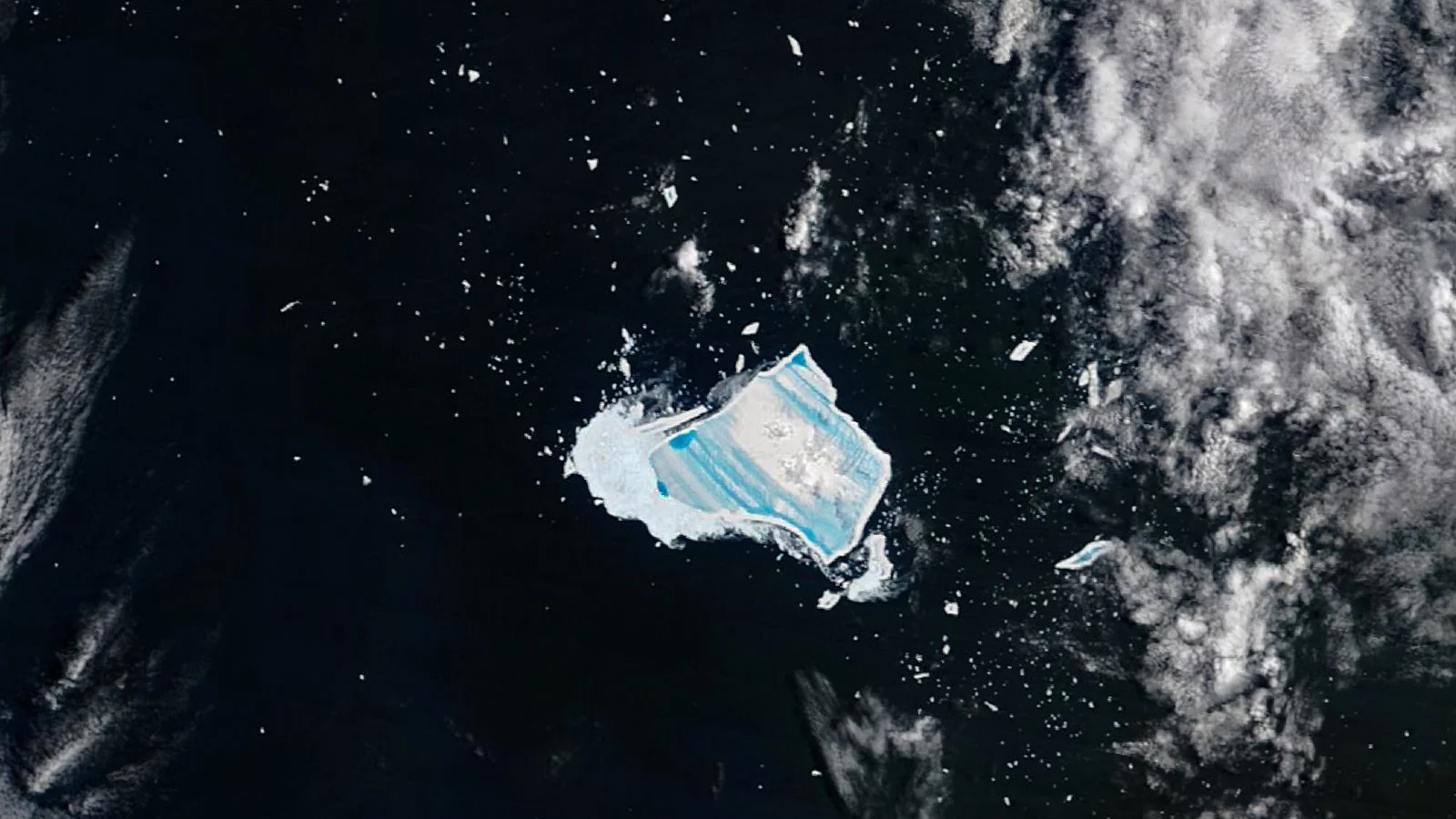
Antarctica’s A23a Iceberg Fades into Blue Patches as Four-Decade Voyage Ends
Satellite imagery shows A23a, once the world’s largest iceberg, shrinking and turning into a bright blue, patchy “blue mush” as it disintegrates after roughly 40 years at sea. Born from Antarctica’s Filchner-Ronne Ice Shelf in 1986, it became stuck on the seafloor, broke away in 2020, drifted through currents toward South Georgia, and then broke apart in 2024–2025. The blue striations are melt ponds forming in cracks and ponds on the surface, a sign of rapid disintegration that may already be fading in newer photos; with A23a waning, D15A is cited as the current largest iceberg.