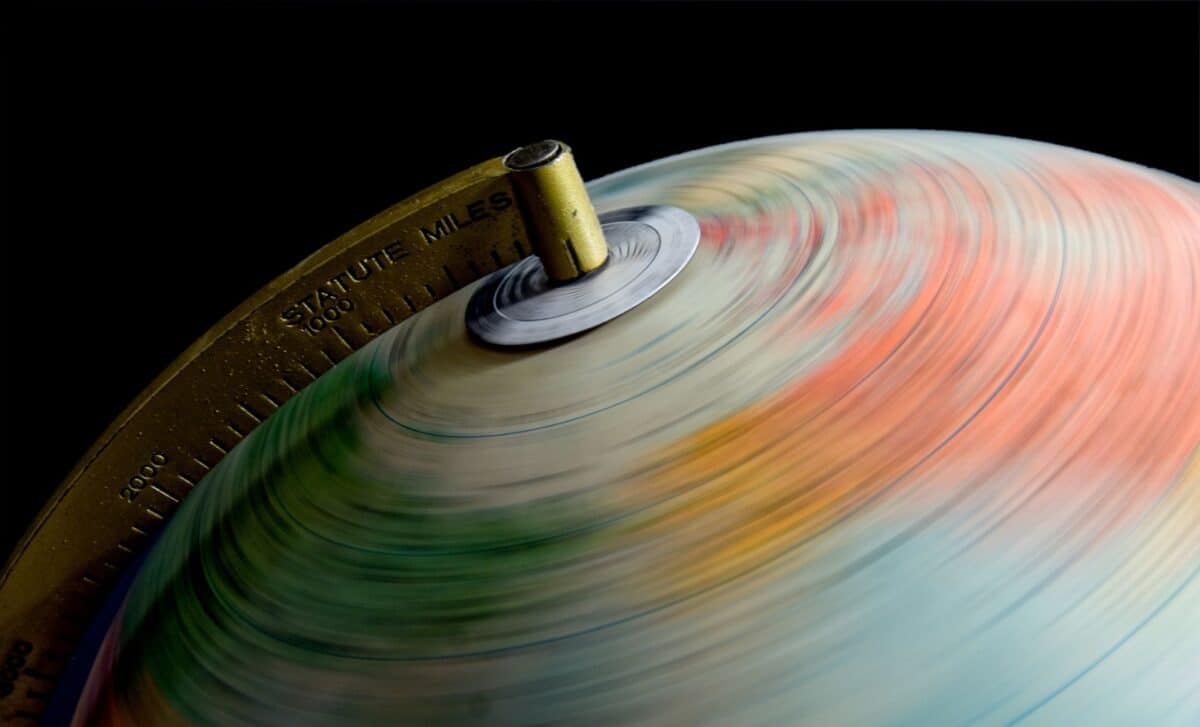
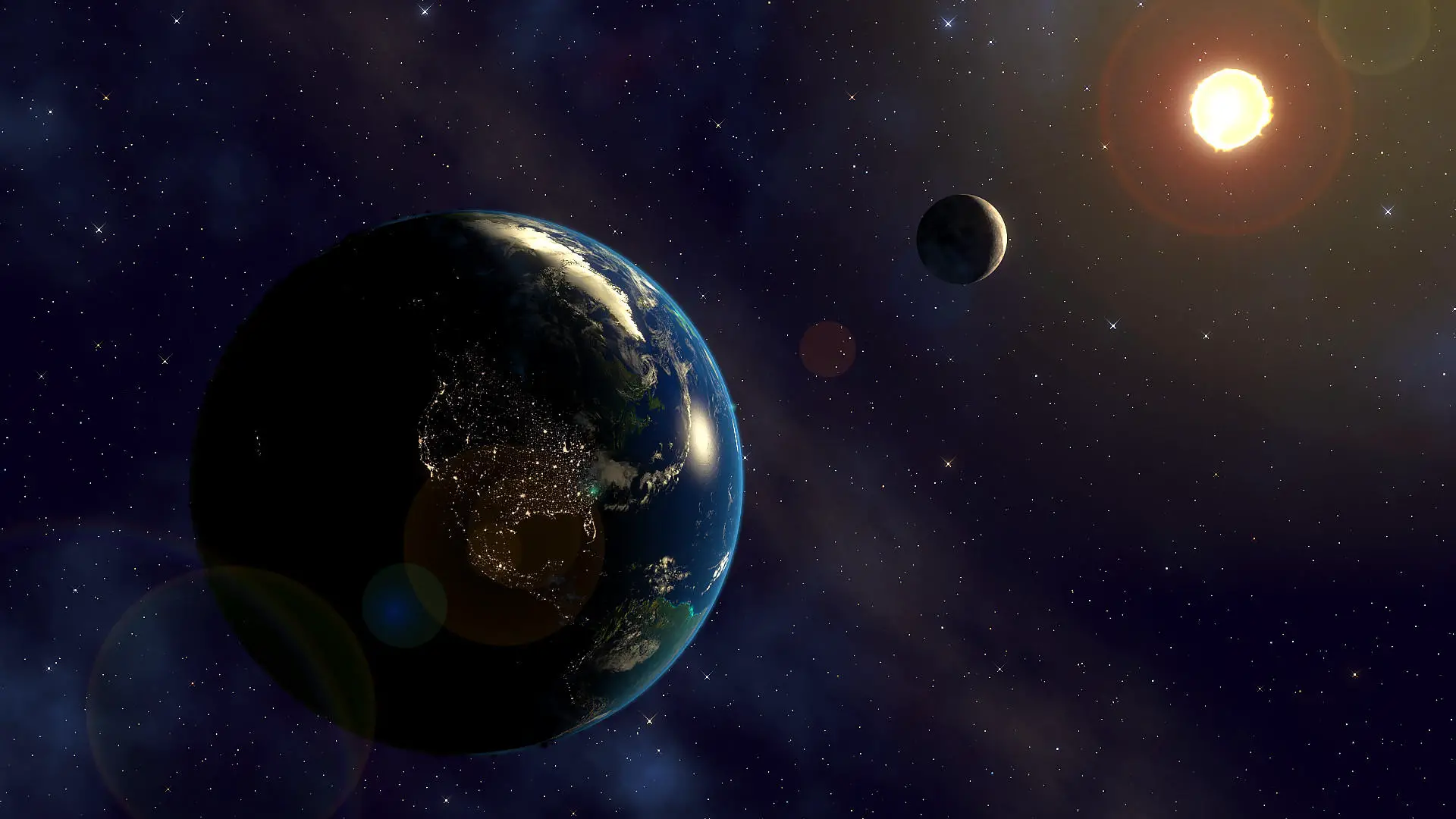
Earth's rotation paused at a 19-hour day for nearly a billion years due to a rare balance between lunar and solar atmospheric tides, impacting atmospheric oxygen levels and delaying the rise of complex life, with subtle ongoing changes influenced by Earth's deep interior.
Astrophysicists from the University of Toronto have discovered that from approximately two billion years ago until 600 million years ago, solar-driven atmospheric tides counteracted the moon's influence on Earth's rotation, resulting in a billion-year pause in the lengthening of Earth's day. This pause kept the day's duration at a constant 19.5 hours. The research provides insights into the impact of climate change on day length and the reliability of climate modeling instruments. The study highlights the importance of atmospheric resonance and temperature in determining the tidal balance and warns that global warming could lead to a faster increase in the length of the day.