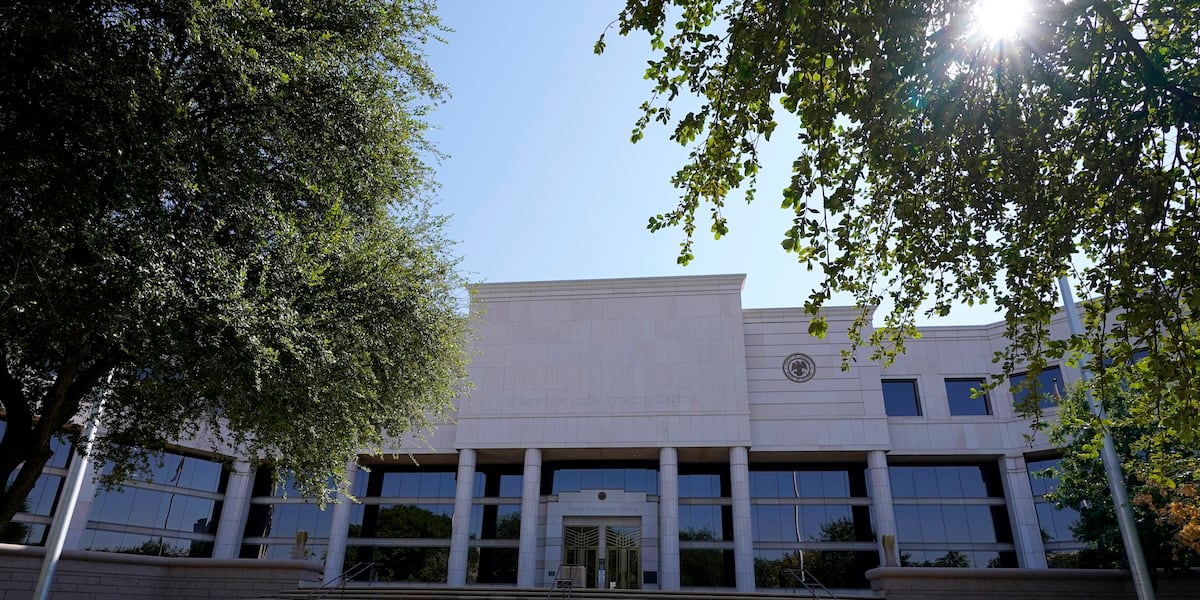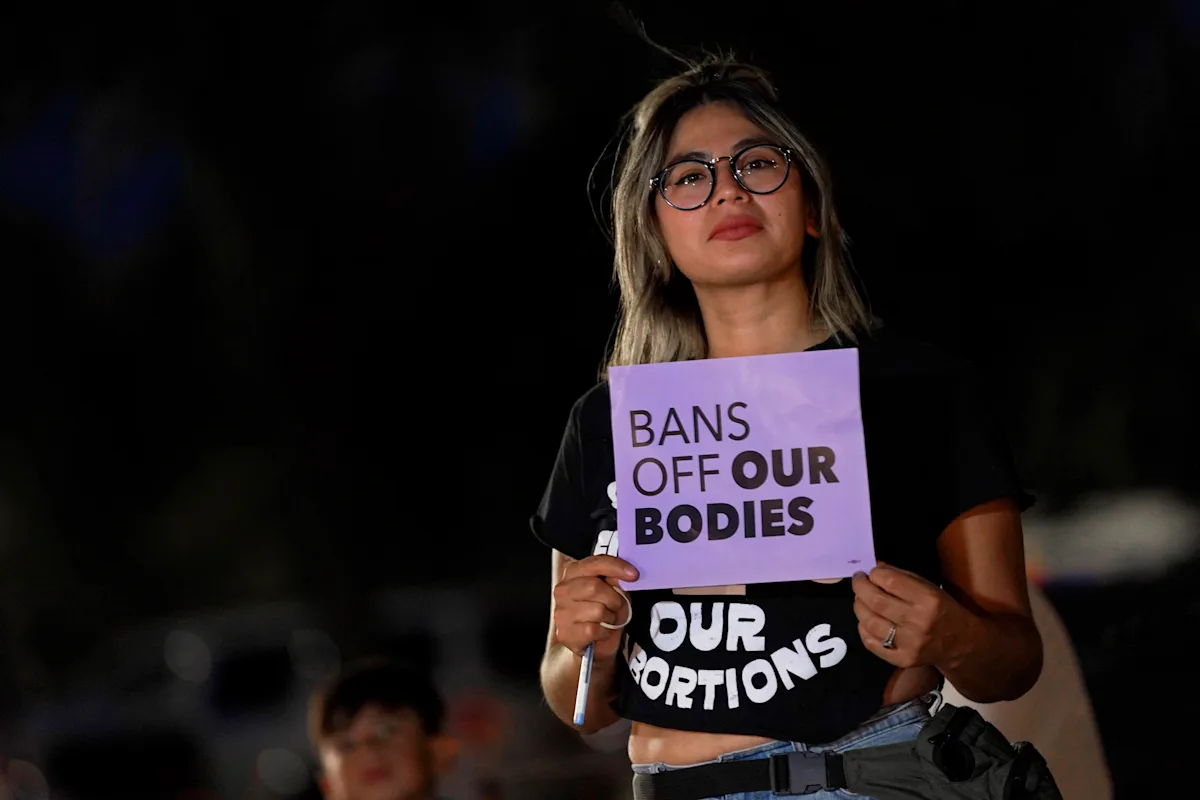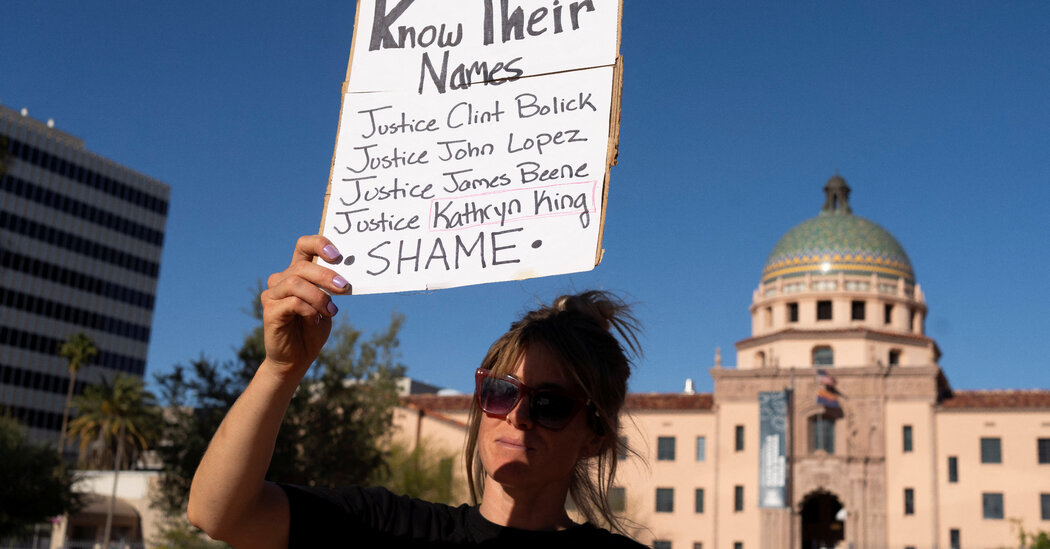
Arizona's Republican former governor, Doug Ducey, expanded the state's Supreme Court to seven justices, all solid conservatives, who upheld a 160-year-old abortion ban. Ducey's influence on the court, through his record-breaking judicial appointments and changes to the nominating process, has resulted in an even more conservative activist bent. All four justices in the majority decision on the abortion case were appointed by Ducey, while the two dissenting justices were appointed by his Republican predecessor, Jan Brewer.

The Arizona Supreme Court's abortion ruling has put the state at the center of political battles for 2024, while an arrest warrant is issued for Kansas City Chiefs receiver Rashee Rice after a high-speed car crash. The Education Department faces criticism for FAFSA delays, and China's middle class is losing confidence as the economy slows down. Palestinians continue to recover bodies from Gaza's Al-Shifa hospital, and a crew of sailors stranded on a Pacific island is rescued after making a "HELP" sign with leaves.
The Arizona Supreme Court revived a 160-year-old law banning almost all abortions, reflecting a trend in Republican-leaning states following the overruling of Roe v. Wade. Despite this, polls show that a majority of registered voters in Arizona support legal abortion, highlighting a disconnect between politicians and public opinion. The Republican stance on abortion is seen as contradictory to principles of personal choice and freedom, and the restrictive laws will disproportionately impact women's access to medical care.
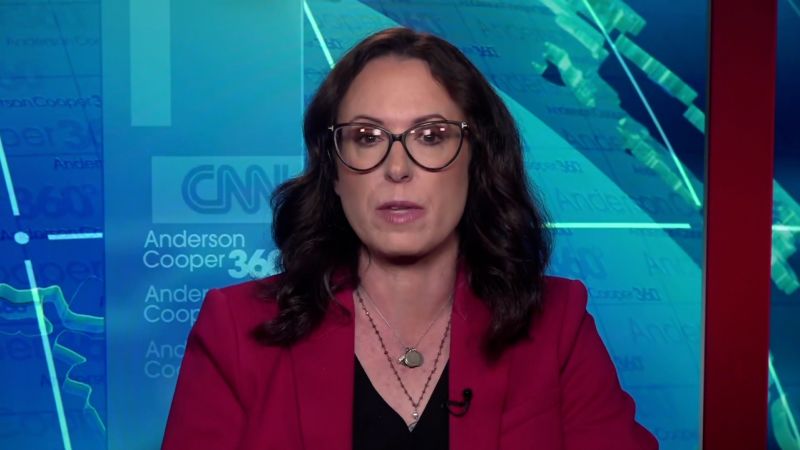
Former President Donald Trump stated that abortion rights should be decided by individual states, just a day before Arizona's Supreme Court upheld a century-old law banning nearly all abortions. New York Times reporter and CNN political analyst Maggie Haberman discusses Trump's stance on abortion with CNN's Anderson Cooper.
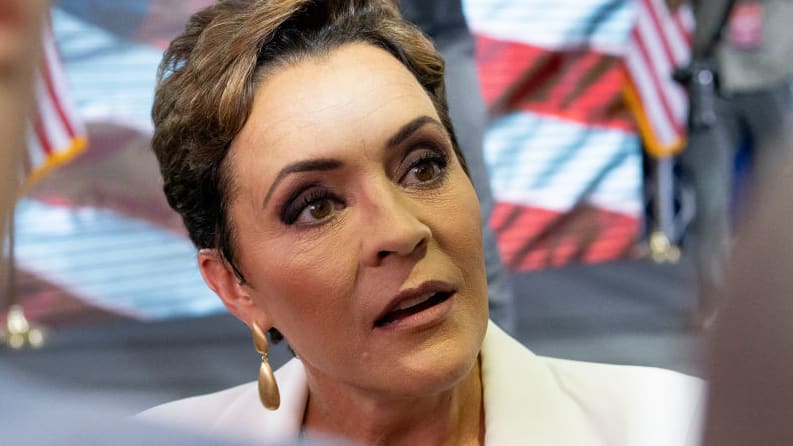
The Arizona Supreme Court reinstated a 160-year-old abortion ban, prompting Republicans like Senate candidate Kari Lake to backtrack on their previous support. The decision overturns a 2022 law allowing abortions until 15 weeks, and the ban will soon be enforced, affecting abortion access in the state. Democrats see this as a crucial issue for the upcoming elections, while anti-abortion lawmakers seek to distance themselves from the ruling. Both sides are gearing up for a contentious battle over reproductive rights in Arizona.
The Biden campaign and administration blamed Donald Trump after the Arizona Supreme Court upheld a 160-year-old abortion ban, citing Trump's influence on the Supreme Court. The ruling, which could shutter abortion clinics in Arizona, has major political repercussions in the battleground state. Democrats criticized the decision as a result of Trump's three Supreme Court appointments and plan to make restoring abortion rights a defining issue in the 2024 campaign. The ruling may lead to a referendum on abortion in Arizona, potentially impacting the 2022 midterm elections and the race to replace Sen. Kyrsten Sinema. Vice President Kamala Harris plans to visit Arizona in the wake of the ruling to advocate for reproductive rights.
Arizona's highest court upheld an 1864 law that bans nearly all abortions, stating that it is now enforceable due to the overturning of the federal right to abortion in Roe v. Wade. The decision, on hold for now, could lead to clinics stopping abortion services and women traveling to nearby states for the procedure. The law outlaws abortion from the moment of conception with no exceptions for rape or incest, and doctors could face fines and prison terms for violating it, prompting concerns about women's health and access to reproductive care.
President Joe Biden and Vice President Harris condemn the Arizona Supreme Court's decision to uphold an 1864 abortion ban, criticizing it as extreme and dangerous. They pledge to continue fighting for reproductive rights and call on Congress to pass a law restoring the protections of Roe v. Wade for women in every state.
The Arizona Supreme Court is expected to rule on whether the state's ban on nearly all abortions after 15 weeks will stay in place or revert to a much older law that prohibited the procedure in all cases except when necessary to save a pregnant person's life. The court's decision in Planned Parenthood of Arizona vs. Mayes/Hazelrigg is anticipated to be filed at approximately 10 a.m. PT on Tuesday, following months of legal uncertainty and conflicting rulings. This ruling comes as abortion rights organizations in Arizona have gathered enough signatures for a 2024 ballot measure to enshrine abortion rights in the state's constitution.
The Arizona Supreme Court heard oral arguments in the case of Planned Parenthood v. Mayes, which could potentially reimpose an 1800s-era near-total abortion ban. The 1864 law, currently blocked, would ban abortions with no exceptions for rape or incest, allowing them only if the mother's life is in danger. Proponents of the ban argue that life begins at conception, while opponents stress the importance of upholding reproductive rights and maintaining current laws. The court's decision could have significant implications for abortion access in Arizona.
Pima County Attorney Laura Conover and Arizona Attorney General Kris Mayes will give brief remarks and answer questions from the media after oral arguments in the Planned Parenthood v. Mayes case at the Arizona Supreme Court. The event will be live-streamed on News 4 Tucson's website.
The Arizona Supreme Court has agreed to review a lower court's ruling that concluded abortion doctors cannot be prosecuted under a pre-statehood law that bans the procedure in nearly all cases. The lower court decision stated that doctors couldn't be charged for performing abortions in the first 15 weeks of pregnancy because other Arizona laws passed over the years allow them to perform the procedure. The review comes after Dr. Eric Hazelrigg, the medical director of anti-abortion counseling centers, requested the court to uphold the 1864 law that imposes a near total ban on abortions. The law provides no exceptions for rape or incest and allows abortions only if a mother's life is in danger.