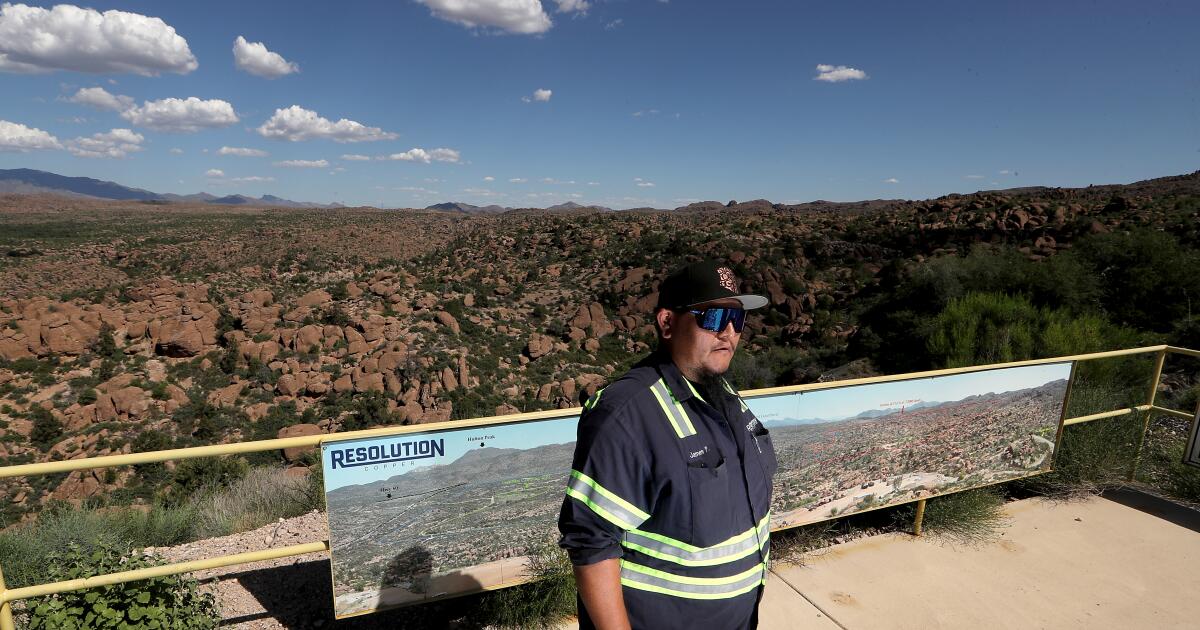
The U.S. Supreme Court declined to hear an Apache religious challenge to a copper mine on Oak Flat, a sacred site, allowing the project to proceed despite opposition from the Apache community who argue it violates their religious rights. The decision upholds a lower court ruling, with dissenting justices warning of broader implications for religious sites on federal land. The mine, rich in copper and economically significant, faces ongoing legal and political battles.

The U.S. Supreme Court rejected an appeal by Apache tribes to block a copper mining project on sacred land in Arizona, allowing the transfer of land to Resolution Copper, which plans to develop one of the world's largest copper mines, despite concerns over religious and environmental impacts.
Multiple ransomware groups are actively exploiting recently disclosed vulnerabilities in Atlassian Confluence and Apache ActiveMQ. The flaws allow threat actors to create unauthorized accounts and lead to a loss of confidentiality, integrity, and availability. Atlassian has updated its advisory, noting active exploits and increasing the severity of the flaw. The attacks involve mass exploitation of vulnerable Atlassian Confluence servers, originating from IP addresses in France, Hong Kong, and Russia. Additionally, a severe remote code execution flaw in Apache ActiveMQ is being weaponized to deliver a remote access trojan and a ransomware variant. Cybersecurity firms emphasize the need for rapid remediation of these vulnerabilities.