
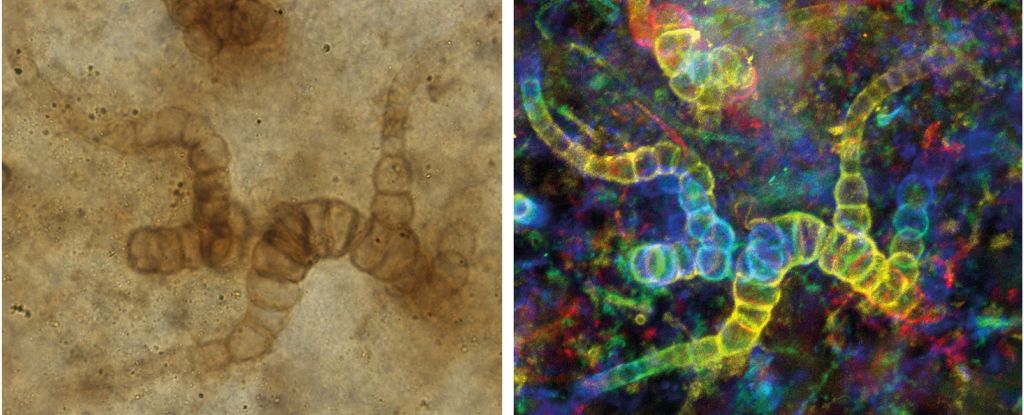
"400-Million-Year-Old Land-Crawling Organism Unearthed"
Fossils discovered in Scotland's Rhynie cherts reveal that an ancient species of cyanobacteria, Langiella scourfieldii, was among the first photosynthesizing bacteria to colonize dry land over 400 million years ago. The 3D reconstructions of the fossils show evidence of branching, indicating that these cyanobacteria thrived in terrestrial environments, including hot springs and wetlands. The findings suggest that cyanobacteria played a crucial role in the early colonization of land by plants and may have competed with them for space. The study highlights the intricate evolutionary history of cyanobacteria and their ability to adapt to various ecological circumstances.