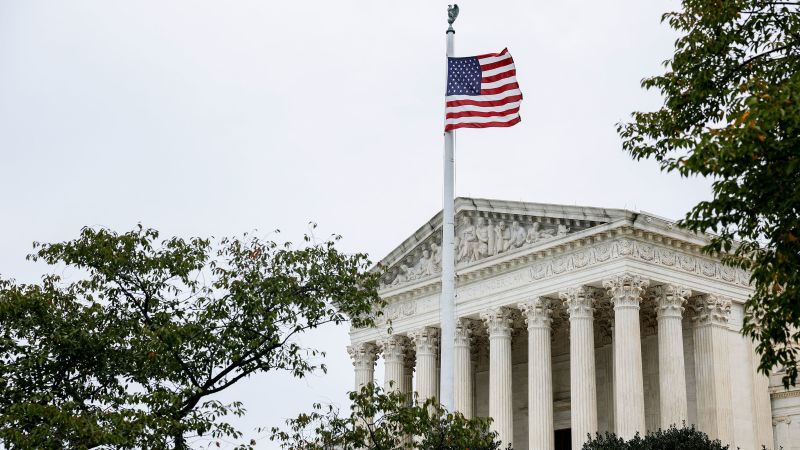
The Supreme Court ruled that a retired firefighter cannot sue her former employer for disability discrimination under the Americans with Disabilities Act because the alleged discrimination occurred after her retirement, and the law does not cover claims by retirees.
The U.S. Justice Department has sued Tennessee over a law that imposes harsher penalties on HIV-positive individuals convicted of sex work, arguing that it violates the Americans with Disabilities Act. The law requires lifetime registration as a "violent sex offender" for those convicted, regardless of whether they knew they could transmit the disease. The lawsuit seeks to stop enforcing the law, remove convictions from the sex offender registry, and expunge them. The state attorney general's office will review the complaint.
The Department of Justice (DOJ) has stated that Tennessee's law that imposes harsher penalties on individuals with HIV engaged in prostitution violates the Americans with Disabilities Act (ADA). The law, passed in 1991, raises prostitution from a misdemeanor to a felony for those with HIV and requires them to register as violent sex offenders. The DOJ warned that the state could face a lawsuit if it continues to enforce the law. The American Civil Liberties Union and the Transgender Law Center have already filed a federal lawsuit seeking to have the law scrapped. The DOJ argues that the law is outdated, discourages testing, and further marginalizes people living with HIV.
The Justice Department has accused Tennessee of discriminating against people with HIV through a state law that elevates misdemeanor prostitution crimes to felonies if the defendant has HIV. The department argues that this law violates the Americans with Disabilities Act by subjecting individuals to harsher penalties solely based on their HIV status. The law imposes steeper charges, including potential prison sentences and placement on the state's Sex Offender Registry, without considering the actual risk of harm or likelihood of transmission. The Justice Department's investigation found several complainants who have been harmed by the law and have been considered registered sex offenders for life. If the state does not resolve the findings, the federal government may take legal action.
Bradley County Schools in Tennessee are facing a lawsuit for allegedly denying a 7-year-old student with cancer an extension for homebound instruction. The child, Caroline, is undergoing radiation and chemotherapy for kidney cancer, which weakens her immune system. Despite her doctors' advice that she cannot return to school until January, the school district reportedly discontinued her medical homebound instruction and ordered her to return to school. The lawsuit claims that this violates the Americans with Disabilities Act and Section 504 of the Rehabilitation Act. Bradley County Schools stated that they are committed to providing the best education for all students, including those with disabilities, but declined to comment further due to the ongoing litigation.
The Supreme Court is set to hear a case that will determine whether disability rights advocates, known as "testers," have the right to sue hotels for alleged violations of the Americans with Disabilities Act (ADA). The case involves Deborah Laufer, who has brought numerous lawsuits against hotels for non-compliance with ADA rules. Laufer, who uses a wheelchair and has a visual impairment, files complaints to force hotels to update their websites to be ADA-compliant. The outcome of the case could impact the effectiveness of the ADA in protecting individuals with disabilities from discrimination in public accommodations.
Senator Tammy Duckworth, a former Army Black Hawk helicopter pilot and advocate for disability rights, expressed frustration when she discovered that the theater she went to see the Barbie movie with her daughters was not wheelchair accessible due to a broken elevator. Despite checking beforehand, Duckworth was unable to join her daughters for the show and felt let down by the lack of signage and support from theater staff. She emphasized the need for accessibility to be the default in America and highlighted the importance of the Americans with Disabilities Act (ADA).
On the 33rd anniversary of the Americans with Disabilities Act, the U.S. Department of Transportation (DOT) announced a new rule requiring airlines to make lavatories on new single-aisle aircraft more accessible for wheelchair users. The rule mandates that lavatories be large enough for a passenger with a disability and an attendant to approach, enter, and maneuver within. This announcement is part of the Biden-Harris Administration's efforts to improve infrastructure accessibility, including retrofitting old rail and subway stations and potentially allowing passengers to stay in their own wheelchairs when flying. The DOT is also working on rules for better training of airline staff and ensuring future vehicles are designed inclusively.
The Biden administration has announced new measures to improve access to online services for Americans with disabilities by establishing accessibility standards for state and local governments' web and mobile app-based services. The new rule aims to address challenges faced by individuals with disabilities in accessing services such as voter registration, filing taxes, applying for social services, registering for vaccines, accessing public transit information, and taking online courses. The rule will impact nearly 50 million people with disabilities and seeks to eliminate disparities in access to critical services exacerbated during the pandemic. The proposed rule will be open for public review and comments for 60 days before the Justice Department issues a final rule.
The U.S. District Court for the Southern District of Florida has ruled that the State of Florida violates the Americans with Disabilities Act (ADA) by unnecessarily institutionalizing children with disabilities in nursing facilities and placing others at risk of institutionalization. The court found that these children are capable of living in the community and that parents overwhelmingly want their children to live at home but have not been given meaningful options. The ruling marks a major turning point in the treatment of children with disabilities in Florida and emphasizes their right to community integration. Florida must now take steps to ensure access to necessary services and develop transition plans for institutionalized children.
The US Equal Employment Opportunity Commission (EEOC) has sued Walmart for firing an employee with Crohn's disease after the company allegedly refused to grant her disability-related leave. The EEOC's complaint accuses Walmart of violating the Americans with Disabilities Act in its treatment of deli worker Adrian Tucker. The EEOC is seeking monetary relief for Tucker, including back pay, and compensatory and punitive damages. The commission also seeks injunctive relief against Walmart to end any ongoing discrimination. Walmart did not immediately respond to a request for comment.
The U.S. Equal Employment Opportunity Commission (EEOC) has sued Walmart for illegally firing a North Carolina deli worker with Crohn's disease. The EEOC accused Walmart of violating the Americans with Disabilities Act by dismissing Adrian Tucker in April 2017 because her nine "unauthorized" absences in the prior six months, including a hospitalization and a visit to the emergency room, violated its "attendance and punctuality policy." The lawsuit seeks back pay and punitive damages for Tucker, and an end to similar future discrimination. Walmart said it was reviewing the complaint.
The US Equal Employment Opportunity Commission (EEOC) has sued Walmart for illegally firing a deli worker with Crohn's disease. The EEOC accused Walmart of violating the Americans with Disabilities Act by dismissing Adrian Tucker in April 2017 because her nine "unauthorized" absences in the prior six months, including a hospitalization and a visit to the emergency room, violated its "attendance and punctuality policy." The lawsuit seeks back pay and punitive damages for Tucker, and an end to similar future discrimination. Walmart said it was reviewing the complaint.
The US Supreme Court has agreed to hear a case concerning whether a self-appointed “tester” of the Americans with Disabilities Act has the right to sue hotels over alleged violations of the civil rights law. The case was brought by Acheson Hotels, which was sued by Deborah Laufer, who has filed hundreds of lawsuits against hotels across the country, claiming their websites are not in compliance with ADA rules. The justices will decide next term whether Laufer has the right to act as a “tester” toward hotels she doesn’t intend to visit.
Disability rights activist Deborah Laufer, who has filed hundreds of federal lawsuits against hotels for failing to disclose accessibility information on their websites, faces a Supreme Court showdown after Acheson Hotels, which operates the Coast Village Inn and Cottages in Maine, argued that Laufer does not have legal standing to bring the cases under the Americans with Disabilities Act because she has no intention of staying at the hotels in question. The Supreme Court will hear oral arguments and issue a ruling in its next term, which starts in October and ends in June 2024.