
The Impact of Imaginary Universes on Cosmology.
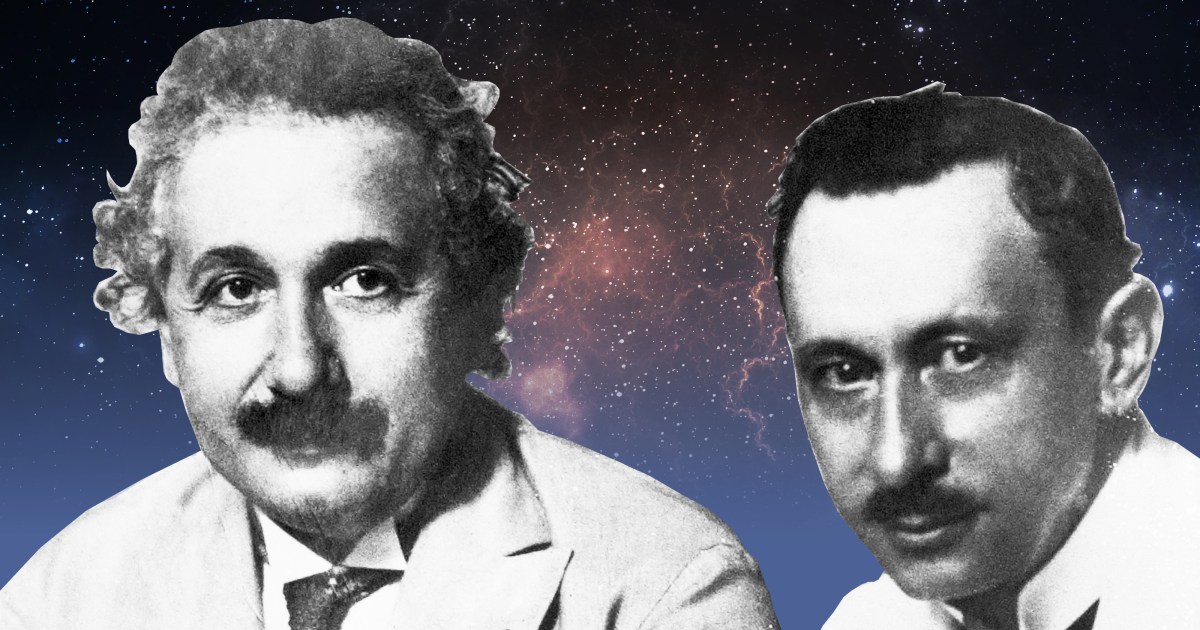
Theoretical physicists in the early 20th century used their equations to propose models of the universe, playing with the right-hand side of the equation that determines the curvature of spacetime based on the matter and energy that fill up space. Willem de Sitter proposed a solution with no matter and a cosmological constant, which had a curious property of cosmic repulsion that stretched the universe apart. Alexander Friedmann searched for other possible cosmologies and presented his results in a paper titled "On the Curvature of Space," showing that there are solutions to Einstein's equations that show a time-evolving universe. Friedmann distinguished two main types of cosmological solutions: expanding and oscillating.