
Guidelines for Responsible and Effective AI Use in the Workplace
AI is increasingly used at work, but employees should understand their company's policies, verify AI outputs, avoid sharing confidential info, and use AI ethically to avoid trouble.

All articles tagged with #ai policies
AI is increasingly used at work, but employees should understand their company's policies, verify AI outputs, avoid sharing confidential info, and use AI ethically to avoid trouble.
Florida Governor DeSantis advocates for state-led AI regulations, emphasizing the state's right to act independently despite federal guidance and potential legal challenges, with proposals including consumer notifications, restrictions on AI therapy, parental controls, and limits on data center growth, to be considered in the upcoming legislative session.

During a White House dinner, top tech CEOs praised President Trump for his AI policies and pro-business stance, with discussions on investments and policies affecting the tech industry, highlighting the close ties and potential benefits or risks for these companies under his administration.
META stock is currently in focus as U.S. government authorities in Washington are scrutinizing and targeting AI policies, which could impact the company's stock performance and regulatory landscape.
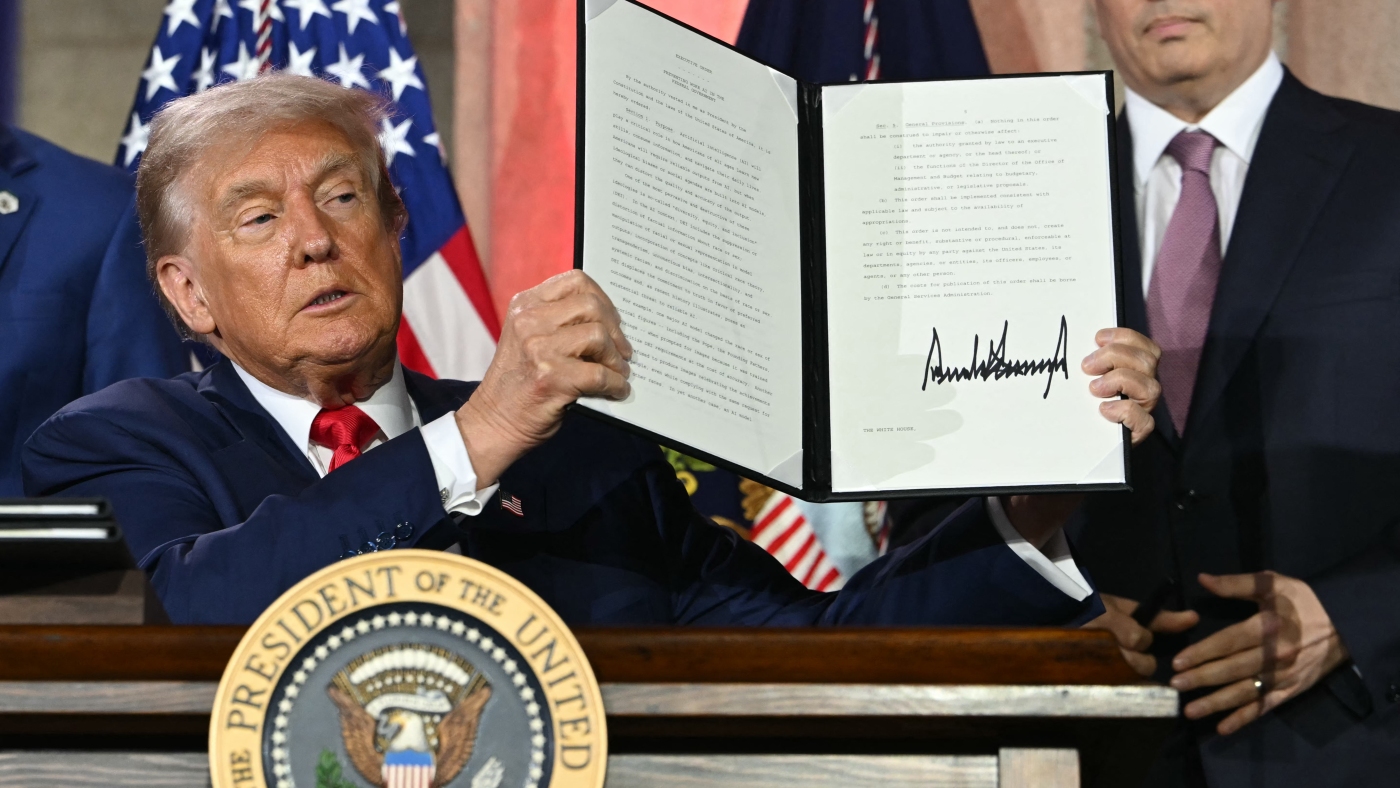
President Trump signed an executive order requiring AI companies working with the federal government to eliminate ideological biases, particularly targeting diversity and inclusion initiatives, fueling ongoing culture war debates over AI and free speech.

The US government is planning to expand its use of artificial intelligence (AI), but a new report from the Government Accountability Office (GAO) warns that it lacks a comprehensive plan for acquiring and responsibly using AI technology from the private sector. The report highlights the potential risks and benefits of AI, including concerns about security, algorithmic biases, and threats to national security. The GAO's survey of federal agencies reveals that AI is already being used in over 200 ways, with more than 500 planned applications. However, the lack of government-wide standards and inconsistent policies on AI use pose challenges to the welfare and security of the American public. The Office of Management and Budget (OMB) has yet to issue guidance on AI procurement, contributing to the inconsistent implementation of AI practices across agencies. The report also identifies shortcomings in agencies' approaches to AI and the need for updated plans and forecasts.