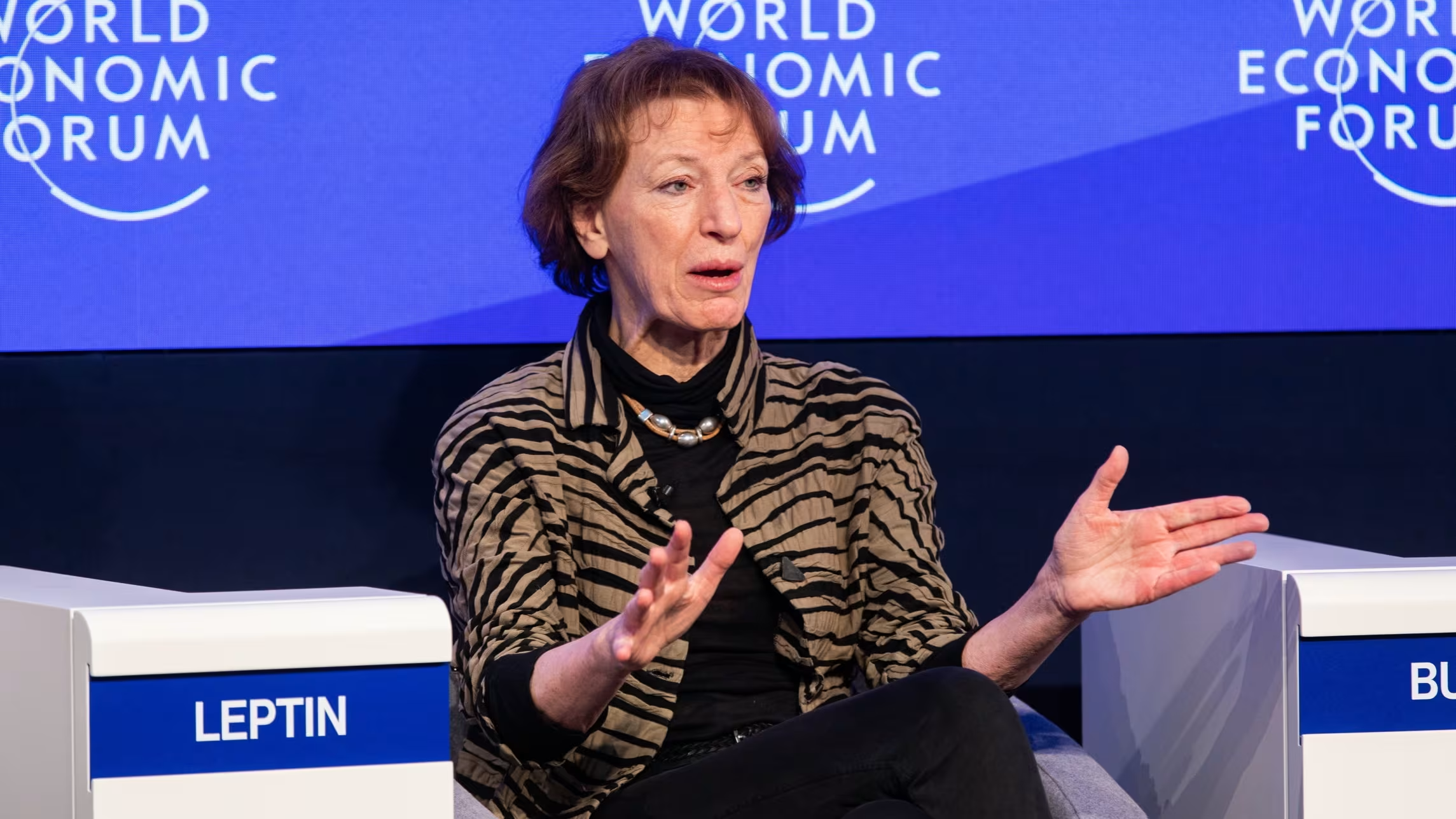
A Microsoft scientist warns that US President Trump's cuts to academia could jeopardize the country's leadership in artificial intelligence, highlighting concerns about reduced research funding and collaboration.
An official states that Donald Trump's criticisms of American academia are negatively impacting European scientists, highlighting the international repercussions of his rhetoric.
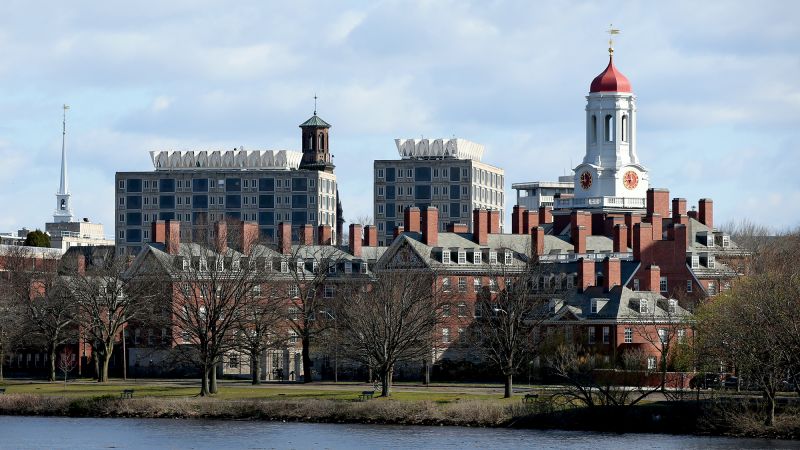
Harvard University's Faculty of Arts and Sciences will no longer require diversity and inclusion statements in its hiring process, opting instead for broader service statements that emphasize strengthening academic communities and fostering inclusive learning environments. This change comes amid national scrutiny of DEI efforts and feedback from faculty who found the previous requirements too narrow.
Taylor Swift's upcoming album title, The Tortured Poets Department, has sparked discussions about her music as poetry and the academic subculture of Taylor Swift studies. Academics see connections between Swift's work and poets like Emily Dickinson, Sylvia Plath, and William Wordsworth, as well as early 2010s Tumblr and Instapoetry. While her recent albums, Folklore and Evermore, are seen as poetically rich, there's a call to appreciate the literary value in her entire catalog. As she embraces the poet angle, speculation arises about the potential for a volume of poetry from Swift.
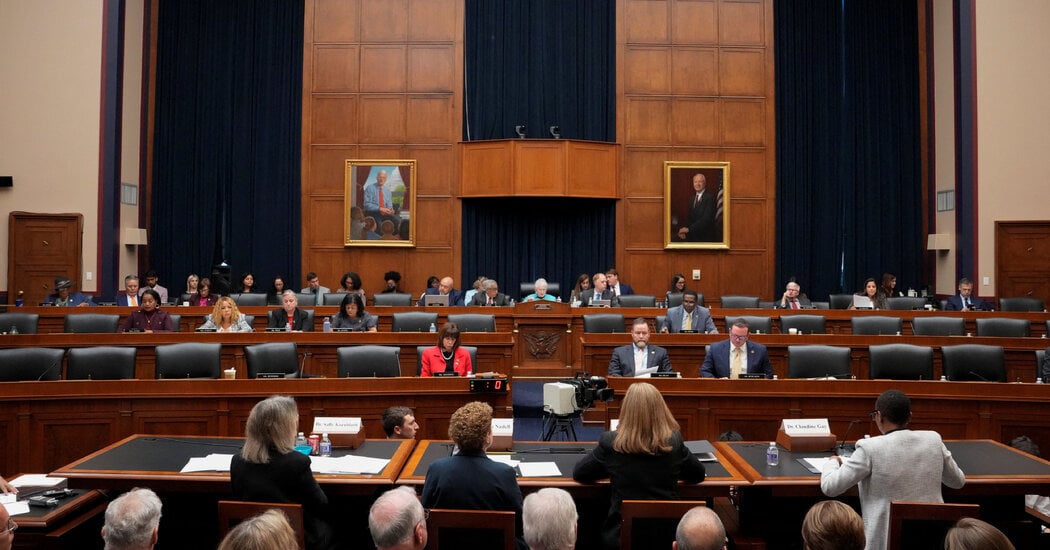
Recent events involving female university presidents being targeted for federal discrimination complaints and congressional hearings have raised concerns about a potential pattern of attacks on women leaders in academia. The majority of discrimination complaints were against universities led by women, despite only 30 percent of colleges and universities nationwide having female presidents. The recent summoning of four women presidents by Congress, under threat of subpoena, has sparked questions about the underlying agenda and potential gender bias in these actions.
The concept of settler colonialism, originating in academia, has surged in use over the past two decades and is now widely taken up on the activist left, applied to various subjects including Israel. While some see it as a useful analytic concept to illuminate similarities and differences across societies, others view it as a dangerously simplistic view of history. The term generally refers to a form of colonialism in which existing inhabitants of a territory are displaced by settlers who establish a permanent society with privileged status enshrined in law. The idea has deep roots in Native American studies and has spread into various scholarly circles, as well as being embraced by the activist left for drawing connections across a broad range of issues.
The Claudine Gay plagiarism scandal has sparked a debate on the relevance of plagiarism rules, with some arguing that the rules are hypocritical and unnecessary. The author contends that plagiarism rules are unjustified and that authors should not be required to attribute unless they believe it's deserved. They suggest that abandoning plagiarism rules would be beneficial and that punishing authors for using clichés or students for learning through plagiarism should be stopped.
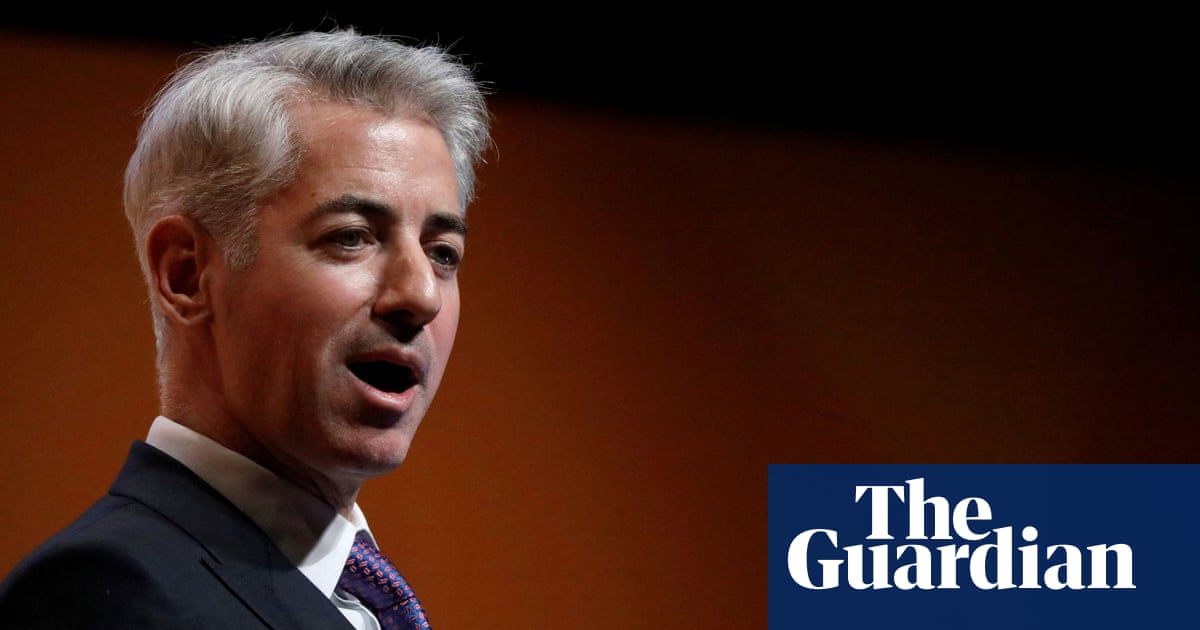
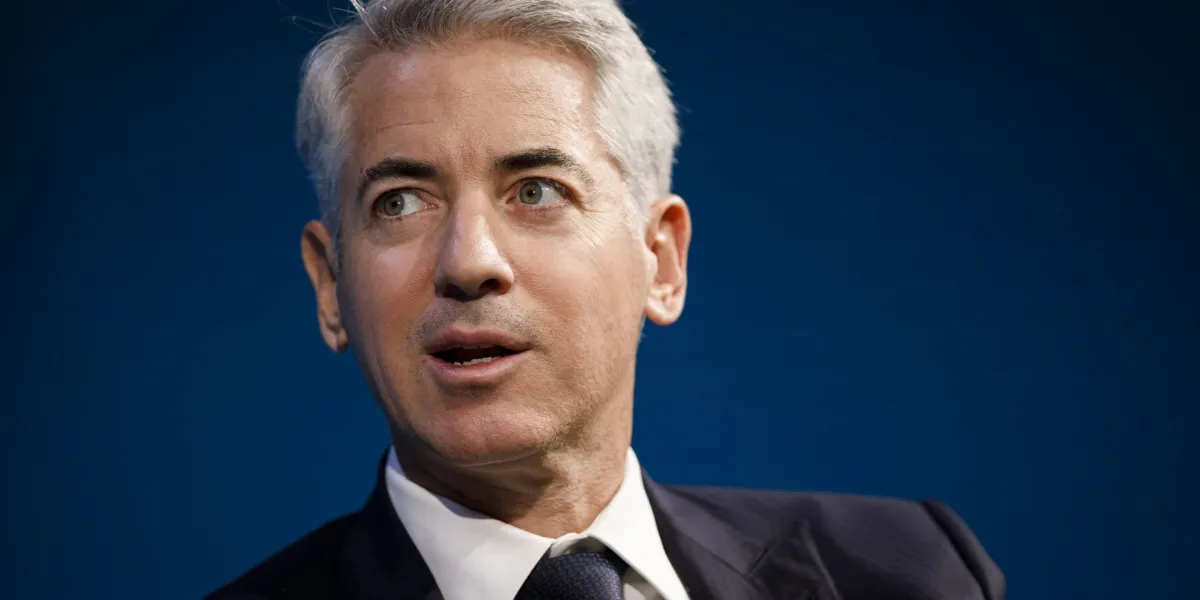
Billionaire hedge fund manager Bill Ackman, known for his involvement in university politics, has expanded his focus to include media organizations after his wife, Neri Oxman, was accused of plagiarism in her PhD dissertation. Ackman has publicly criticized Business Insider for their reporting on the issue and plans to investigate the reporters and staff. This move has raised concerns about the influence of ultra-wealthy individuals on journalism and news organizations, particularly in an industry already facing challenges. Ackman's shift in focus follows his sustained campaign against Harvard University, MIT, and the University of Pennsylvania, and has sparked debates about antisemitism and racial animus.
Billionaire investor Bill Ackman suggests that AI-powered plagiarism checks will cause "incredible embarrassment" in academia, as they can quickly reveal examples of plagiarism in academic papers. Ackman has vowed to subject the work of MIT President Sally Kornbluth and faculty to plagiarism checks and believes that AI tools will be used for this purpose going forward. He also started a pressure campaign against university presidents and has been pushing for the removal of certain individuals from their positions.
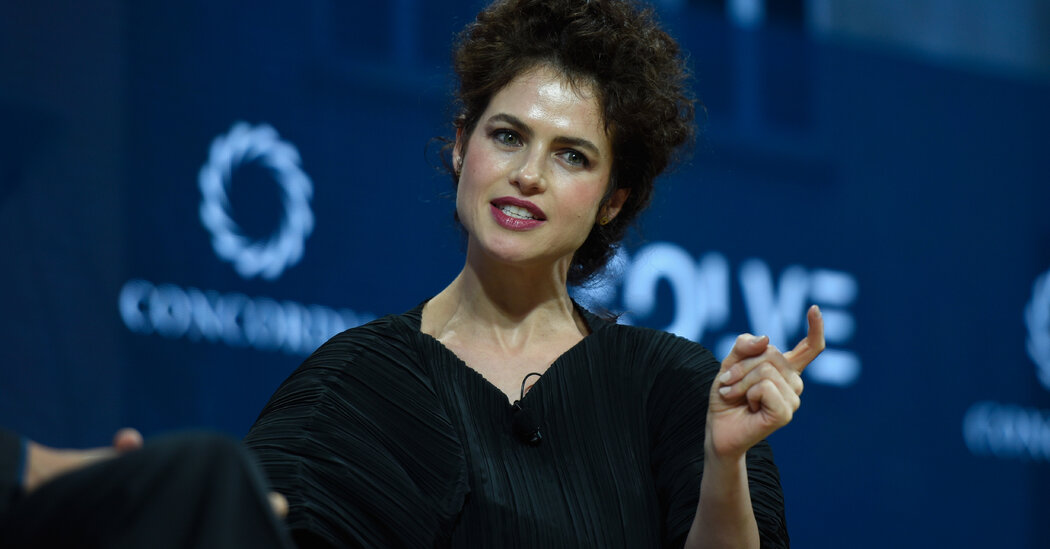
Neri Oxman, a former MIT professor and wife of investor Bill Ackman, has been accused of plagiarism in her academic work, including her doctoral dissertation. The accusations surfaced shortly after Bill Ackman campaigned against former Harvard President Claudine Gay, who resigned amid plagiarism and antisemitism controversies. Ackman has responded by announcing a review of plagiarism across MIT faculty and the work of Business Insider reporters. Oxman has apologized for the citation errors in her thesis, while concerns about the "weaponization of plagiarism" in academia have been raised.
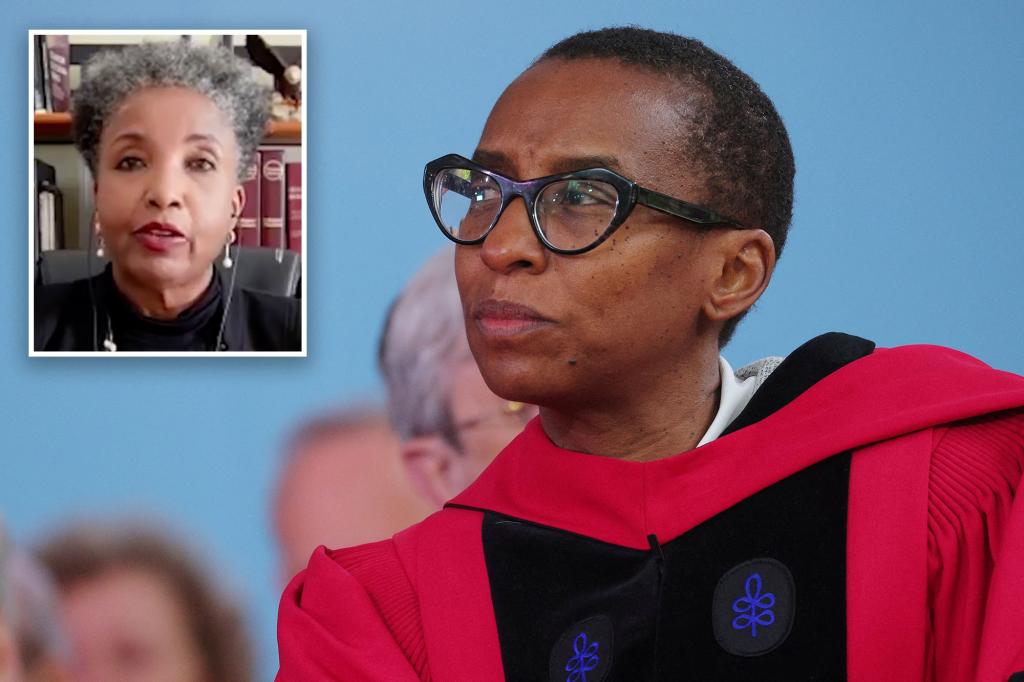
Harvard president Claudine Gay is accused of plagiarism by former professor Carol Swain, who claims that the university won't condemn Gay because she is a "high pedigree" minority. Swain alleges that Gay copied sections of her work without proper attribution and criticizes Harvard for holding minorities to lower standards. An independent review found instances of inadequate citation but no misconduct. Swain argues that Gay's work lacks originality and suggests that she benefited from diversity initiatives. Gay defended her scholarship and academic integrity. The allegations against Gay emerged after she faced backlash for her handling of antisemitism at Harvard.
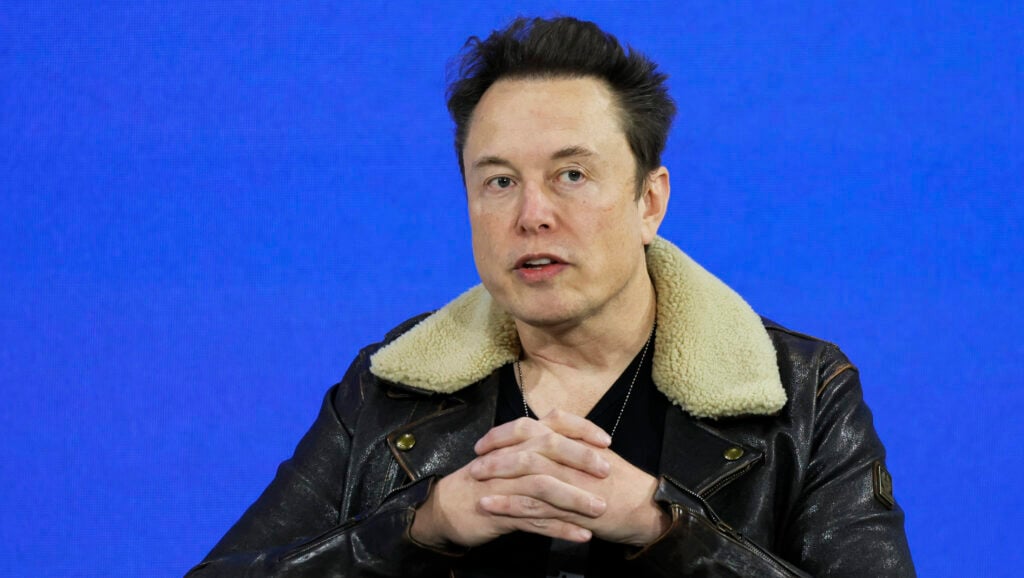
Elon Musk is reportedly planning to establish his own university in Austin, Texas, with a $100 million funding allocation from his charity, "The Foundation." While details about the university are not yet announced, Musk aims to disrupt the academic establishment and challenge the status quo. The move comes amidst growing controversies and concerns about the state of academia, including issues of antisemitism and ideological bias. Musk's university could potentially offer a STEM-focused education, champion academic freedom, and provide students with work experience opportunities within his various enterprises. The aim is to offer a lean and cost-effective academic model that challenges the inflated fees and questionable credentials prevalent in contemporary higher education.
The resignation of the University of Pennsylvania's president, Liz Magill, over her handling of antisemitism has sparked a debate about whether American universities should look outside of academia for their top leadership. With universities now operating as multibillion-dollar enterprises and facing increasing pressure to navigate politically charged environments, some argue that leaders with business backgrounds may be better suited to the role. However, others emphasize the importance of having academic leaders who can protect schools from outside pressure and keep them anchored in their educational mission.
The indulgence of historical revisionism by media, Hollywood, and academia has consequences. The article highlights examples such as the misrepresentation of indigenous history and the false portrayal of the West African kingdom of Dahomey in films. By promoting false histories, we undermine the study of history, perpetuate divisive narratives, and harm the very groups we aim to help. Instead, we should encourage a humble mentality that values truth over delusions.
Universities and educational institutions are grappling with the integration of artificial intelligence (AI) tools like ChatGPT into their classrooms. While some educators see the potential benefits of AI in aiding personalized learning and critical analysis, concerns about cheating, copyright issues, and the limitations of AI's knowledge have been raised. The United Nations Educational, Scientific and Cultural Organization (UNESCO) has released global guidance on the use of AI in education, urging countries to address data protection, copyright laws, and ensure teachers have the necessary AI skills. The speed of technological progress has outpaced the transformation of the education system, and regulations around AI use in education are still being developed in various countries.