
Huayuan soft-bodied Cambrian biota reveals a diverse deep-sea ecosystem after the first Phanerozoic mass extinction
TL;DR Summary
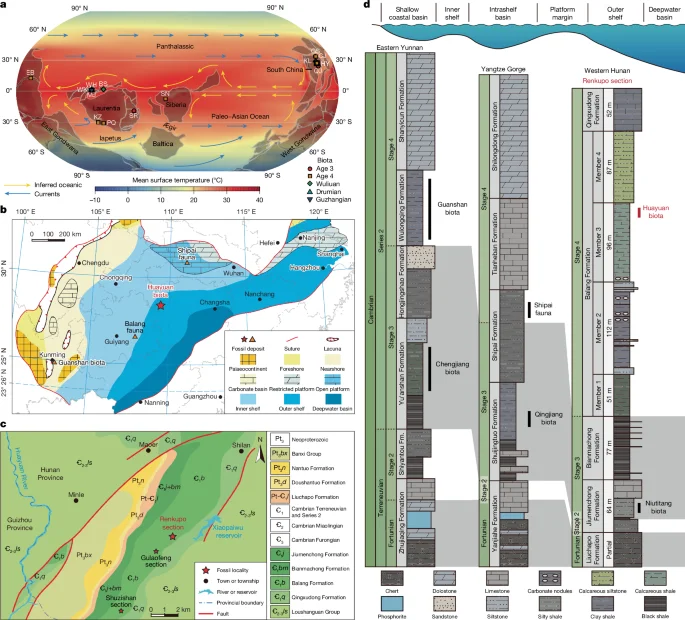
The Huayuan biota, a lower Cambrian Burgess Shale–type Lagerstätte from the Yangtze Block in South China, preserves 153 animal species across 16 phyla—51% or more new—mostly soft-bodied with preserved cellular tissues, including radiodonts and pelagic tunicates. This high-diversity, deep-water assemblage, dated shortly after the Sinsk event, links to Burgess Shale faunas via transoceanic dispersal and illuminates Cambrian ecosystem transitions between Ages 3 and 4 and the differential impacts of the first Phanerozoic mass extinction in shallow versus deep settings.
- A Cambrian soft-bodied biota after the first Phanerozoic mass extinction Nature
- 'Extraordinary' trove of ancient species found in China quarry Yahoo
- Huge fossil bonanza preserves 512-million-year-old ecosystem New Scientist
- Stunning Fossil Site Reveals Life Rebounding After Major Extinction Event ScienceAlert
- Chinese fossils show marine animals thriving half a billion years ago Reuters
Reading Insights
Total Reads
0
Unique Readers
10
Time Saved
31 min
vs 32 min read
Condensed
99%
6,238 → 79 words
Want the full story? Read the original article
Read on Nature