
Galactic Collision Unleashes Powerful Shockwaves Across the Cosmos
TL;DR Summary
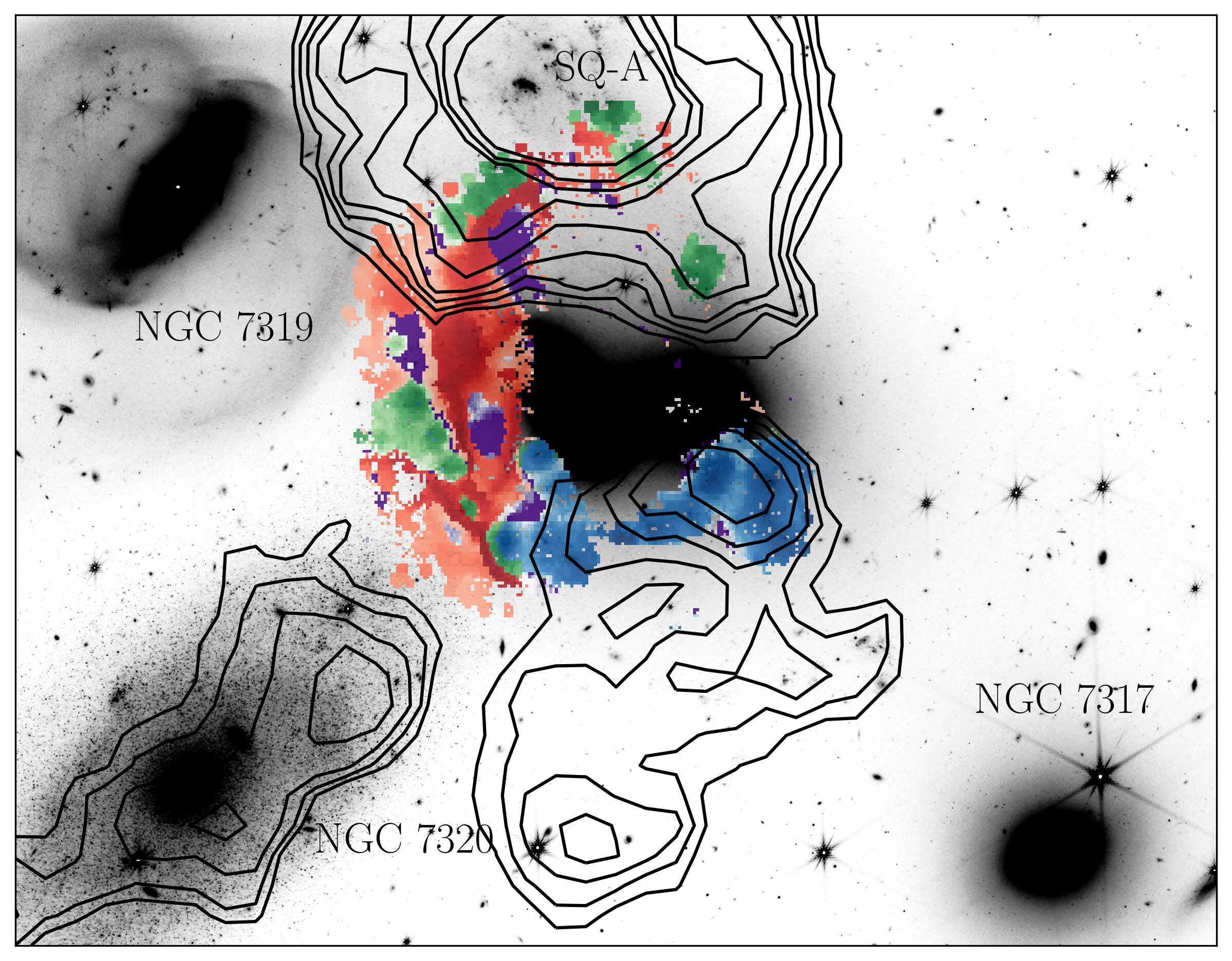
The WEAVE spectrograph on the William Herschel Telescope has provided new insights into the dual nature of shock waves in Stephan's Quintet, a group of five galaxies. Led by Dr. Marina Arnaudova, the study reveals that the shock, caused by a high-speed collision of galaxy NGC 7318b, behaves differently in cold and hot gas regions. In cold gas, the shock travels at hypersonic speeds, ionizing the gas, while in hot gas, it weakens and compresses, emitting radio waves. This research highlights WEAVE's potential to enhance our understanding of galactic interactions.
- WEAVE spectrograph uncovers dual nature of galaxy shock Phys.org
- 2-million-mile-per-hour galactic crash reawakens a dangerous 'cosmic crossroads' Yahoo! Voices
- Astronomers spot 1 of the most powerful 'sonic booms' in the universe as massive galaxy crashes into its neighbors Livescience.com
- A Galaxy Crashes at 2 Million MPH, Creating One of the Most Powerful Shock Waves Ever Seen The Daily Galaxy --Great Discoveries Channel
- The shock sound wave from the collision of galaxies reached the Earth — MNRAS Eurasia Daily
Reading Insights
Total Reads
0
Unique Readers
8
Time Saved
3 min
vs 4 min read
Condensed
88%
759 → 90 words
Want the full story? Read the original article
Read on Phys.org