
"JWST Discovers Exoplanet with Sand Clouds and Sulfuric Skies"
TL;DR Summary
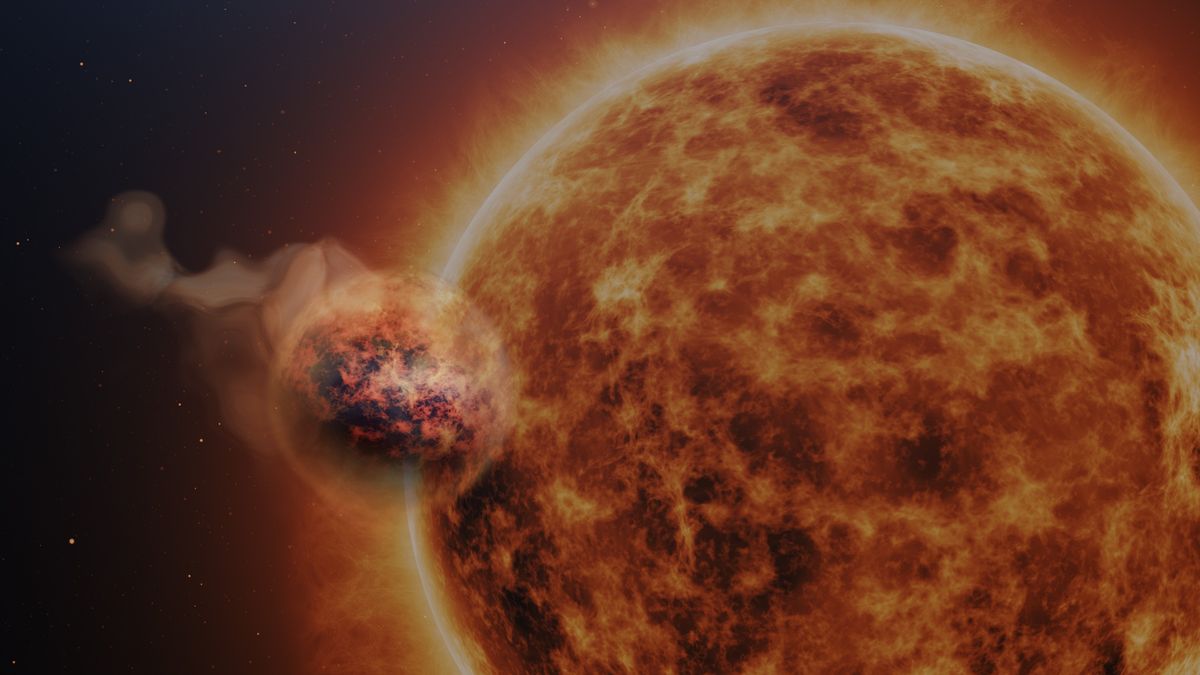
The James Webb Space Telescope (JWST) has revealed the presence of strange sandy clouds high in the atmosphere of the exoplanet WASP-107b. The low density of the planet allowed astronomers to observe its atmosphere in greater detail, leading to the discovery of water vapor, sulfur dioxide, and silicate sand clouds. This finding could have implications for our understanding of the chemistry of distant planets and sheds new light on planetary formation and evolution. The observations were made using JWST's Mid-Infrared Instrument (MIRI) and were published in the journal Nature.
Topics:top-news#atmospheric-composition#exoplanet#james-webb-space-telescope#planetary-formation#science-and-astronomy#silicate-sand-clouds
- James Webb Space Telescope reveals sandy surprise in distant planet Space.com
- Astronomers have found a planet with clouds made of sand NPR
- Planet where it rains sand revealed by Nasa telescope The Guardian
- JWST detects water vapor, sulfur dioxide and sand clouds in the atmosphere of a nearby exoplanet Phys.org
- Webb Telescope Spots World With Sand Clouds and Sulfuric Skies Gizmodo
Reading Insights
Total Reads
0
Unique Readers
1
Time Saved
3 min
vs 4 min read
Condensed
86%
617 → 89 words
Want the full story? Read the original article
Read on Space.com