
Stellar radiation sculpts four young planets into super-Earths
TL;DR Summary
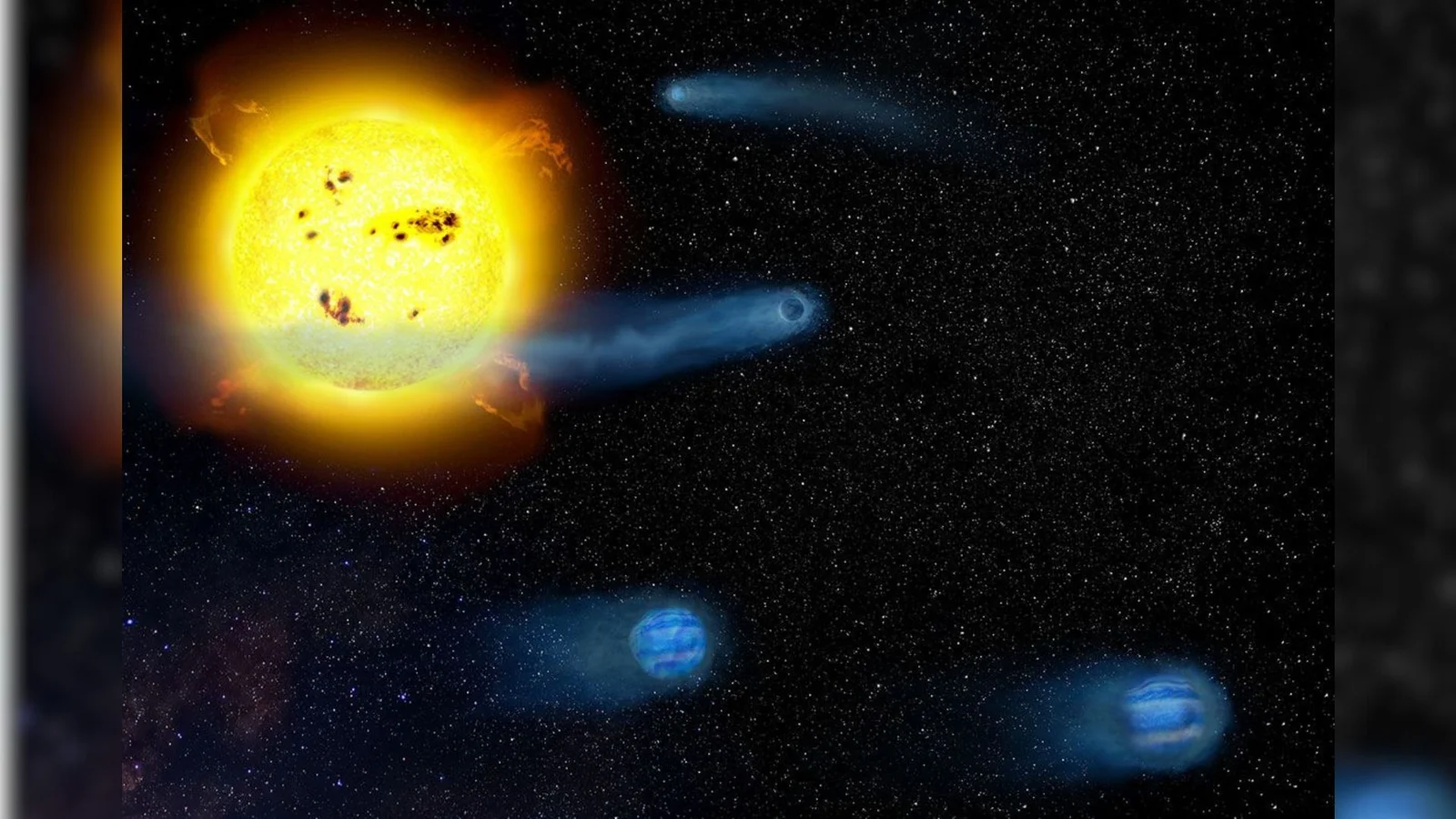
Astronomers weigh four young, bloated planets around the infant star V1298 Tau and find they are extremely low density and actively losing their atmospheres to photoevaporation. Using transit timing variations, the team shows the planets are on track to shed most of their atmospheres, evolving into rocky super‑Earths or mini-Neptunes, suggesting a common outcome for such compact planetary systems.
- How to make a super-Earth: The universe's most common planets are whittled down by stellar radiation Space
- Strange 'missing link' star system 'fundamentally changes' our understanding of planet formation Live Science
- A Young Progenitor For The Most Common Planetary Systems In The Galaxy astrobiology.com
- Astronomers Weigh “Cotton Candy” Planets and Solve a Cosmic Mystery SciTechDaily
- The Galaxy’s Most Common Planets Have a Strange Childhood Universe Today
Reading Insights
Total Reads
0
Unique Readers
5
Time Saved
75 min
vs 76 min read
Condensed
100%
15,139 → 59 words
Want the full story? Read the original article
Read on Space