
Distant Black Hole Fades in a Human-Scale Timespan
TL;DR Summary
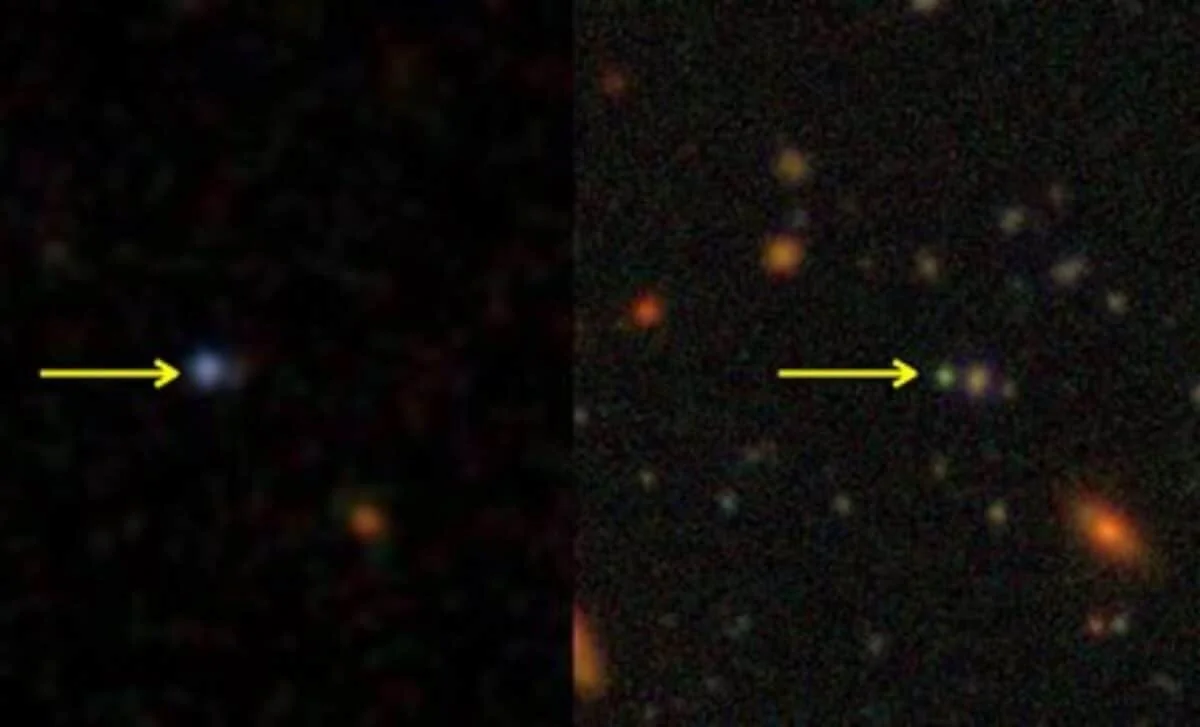
Astronomers tracked galaxy J0218−0036 (about 10 billion light-years away) and found its central supermassive black hole dimmed by about 20x overall and ~50x in the active nucleus from the early 2000s to 2023. Dust obscuration was ruled out, pointing to an intrinsic drop in accretion with the Eddington ratio falling from ~0.4 to ~0.008. The observed e-folding timescale is roughly 2,000 days in the observed frame (~700 days rest frame), far faster than standard models predict, suggesting a change in accretion mode and challenging current black hole growth theories.
- Something Is Killing This Black Hole at Impossible Speed, And Nobody Knows What Indian Defence Review
- Distant galaxy fades 20-fold in just two decades, challenging how supermassive black holes evolve Phys.org
- A cosmic giant runs out of fuel: a supermassive black hole loses brightness drastically lavozdelanzarote.com
- A supermassive black hole dimmed its galaxy 20-fold—in just 20 years starlust.org
Reading Insights
Total Reads
0
Unique Readers
5
Time Saved
5 min
vs 6 min read
Condensed
92%
1,186 → 89 words
Want the full story? Read the original article
Read on Indian Defence Review