
Cyclical Wet-Dry Seasons and Potential Life on Mars
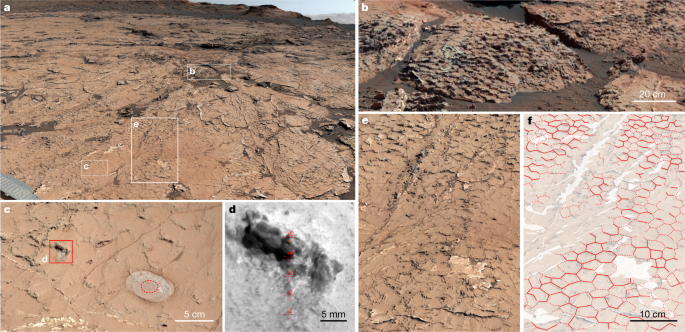
A study published in the journal Nature Communications suggests that early Mars experienced sustained wet-dry cycling, which could have provided favorable conditions for the emergence of life. The researchers analyzed sedimentary rocks from Gale Crater, the landing site of NASA's Curiosity rover, and found evidence of desiccation cracks and salt pans, indicating the presence of intermittent drying and wetting cycles. These wet-dry cycles may have facilitated the synthesis of organic compounds and the formation of habitable environments on ancient Mars. The findings contribute to our understanding of the early Martian climate and its potential for supporting life.
- Sustained wet–dry cycling on early Mars Nature.com
- Curiosity Rover Finds 'Striking' Evidence of Habitable Seasons on Mars VICE
- NASA accidentally killed the only life discovered on Mars, theory suggests BGR
- Mars rover finds signs of seasonal floods Ars Technica
- Scientists Spot Fossil Evidence of a Cyclical Climate on Mars ScienceAlert
- View Full Coverage on Google News
Reading Insights
0
0
14 min
vs 15 min read
97%
2,905 → 97 words
Want the full story? Read the original article
Read on Nature.com