
Ancient Fossil Discovery Questions Human Brain Evolution Theory
TL;DR Summary
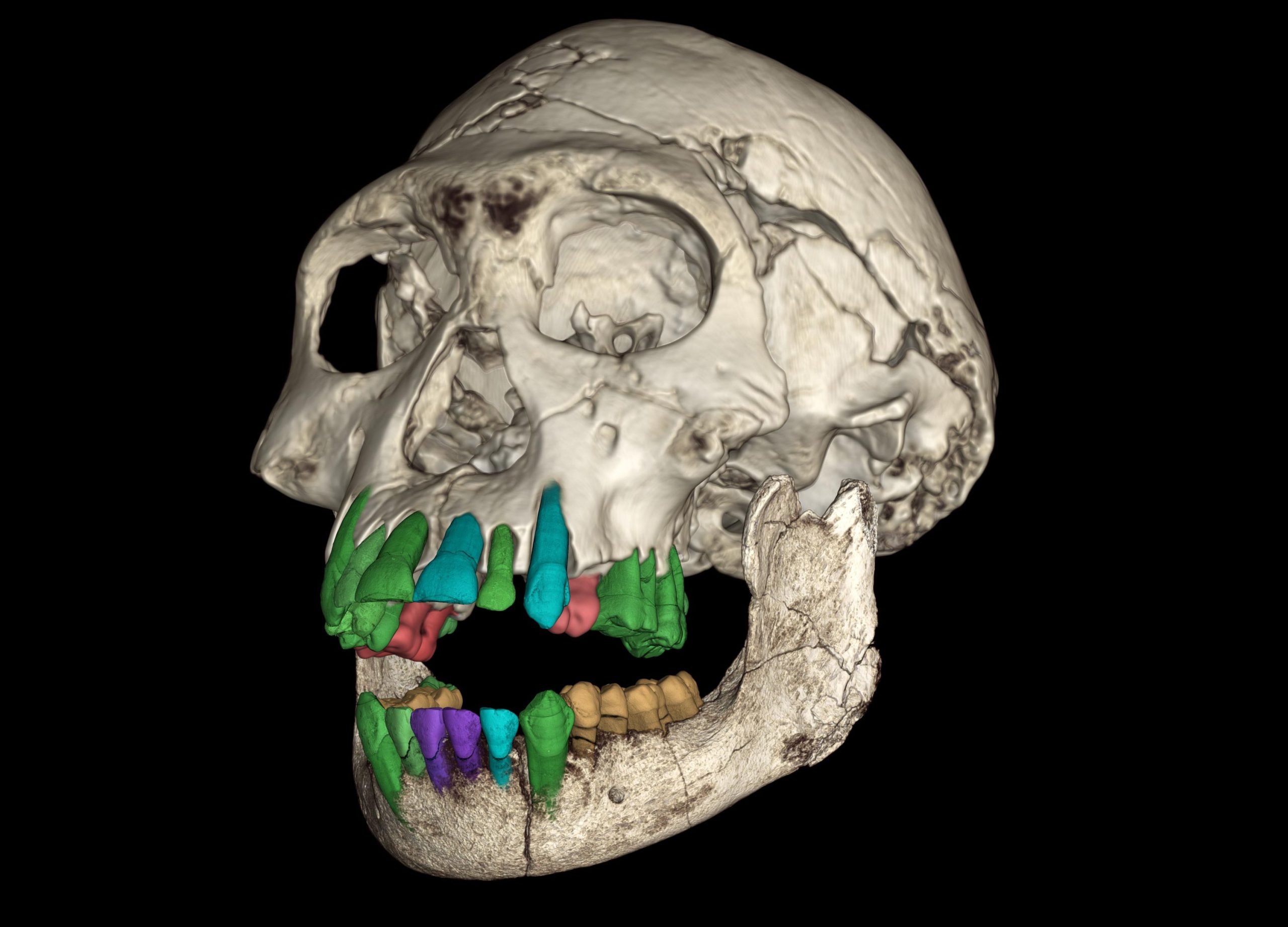
A study of a 1.77-million-year-old Homo fossil from Dmanisi, Georgia, challenges the theory that long childhoods in humans evolved due to large brain sizes. Instead, the research suggests that extended childhoods were crucial for cultural learning and knowledge sharing, which eventually led to larger brains and longer lifespans. The study, using advanced dental imaging, indicates that early Homo species had a prolonged childhood similar to modern humans, despite not having significantly larger brains than great apes. This finding may prompt a reevaluation of human evolutionary theories.
Reading Insights
Total Reads
0
Unique Readers
2
Time Saved
7 min
vs 8 min read
Condensed
94%
1,462 → 86 words
Want the full story? Read the original article
Read on SciTechDaily