
"Revolutionary Porous Materials: Advancing Electronics and Photocatalysis"
TL;DR Summary
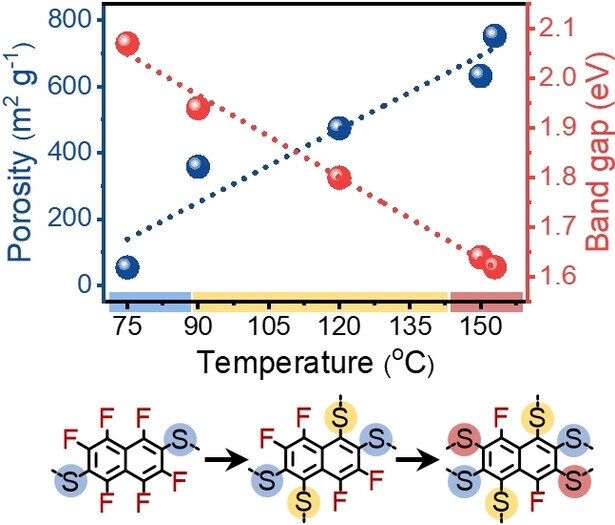
Researchers at KAUST have developed a simple and reproducible technique for creating highly porous poly(aryl thioether) materials, which have potential applications in photocatalysis and optoelectronics. The material, made through a polycondensation reaction, exhibits a high surface area and pore size of less than a nanometer. It has shown promise in removing organic micropollutants and toxic mercury ions from water. The researchers aim to collaborate with the electronics industry and water treatment facilities to further explore the material's potential.
Topics:science#kaust#optoelectronics#photocatalysis#polyaryl-thioethers#porous-materials#science-and-technology
Reading Insights
Total Reads
0
Unique Readers
1
Time Saved
2 min
vs 3 min read
Condensed
86%
540 → 78 words
Want the full story? Read the original article
Read on Phys.org