
"Unveiling the Secrets of Decay: Physics Meets Rock Dating"
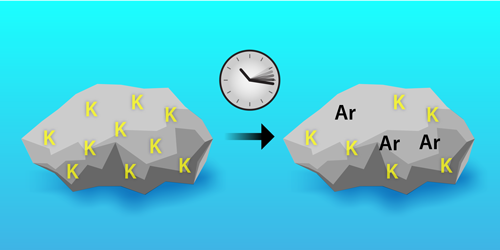
Researchers have made the first direct observation of a rare decay mode of potassium-40 to argon-40, which has implications for fundamental physics and the dating of rocks. Potassium-40 is a common isotope that decays to produce argon-40, and its decays are used in geochronology to determine the age of rocks. The measured decay rate suggests a smaller probability of this decay mode than previously assumed, requiring corrections to some potassium-argon ages. However, the impact on argon-argon dating, a relative technique, will be limited. The findings highlight the need for accurate measurements of decay rates and branching ratios in the decay of potassium-40 to argon-40 for improved geochronology.
Reading Insights
0
1
6 min
vs 7 min read
92%
1,378 → 107 words
Want the full story? Read the original article
Read on Physics