
Lava-World Exoplanet Points to a New Class of Planets
TL;DR Summary
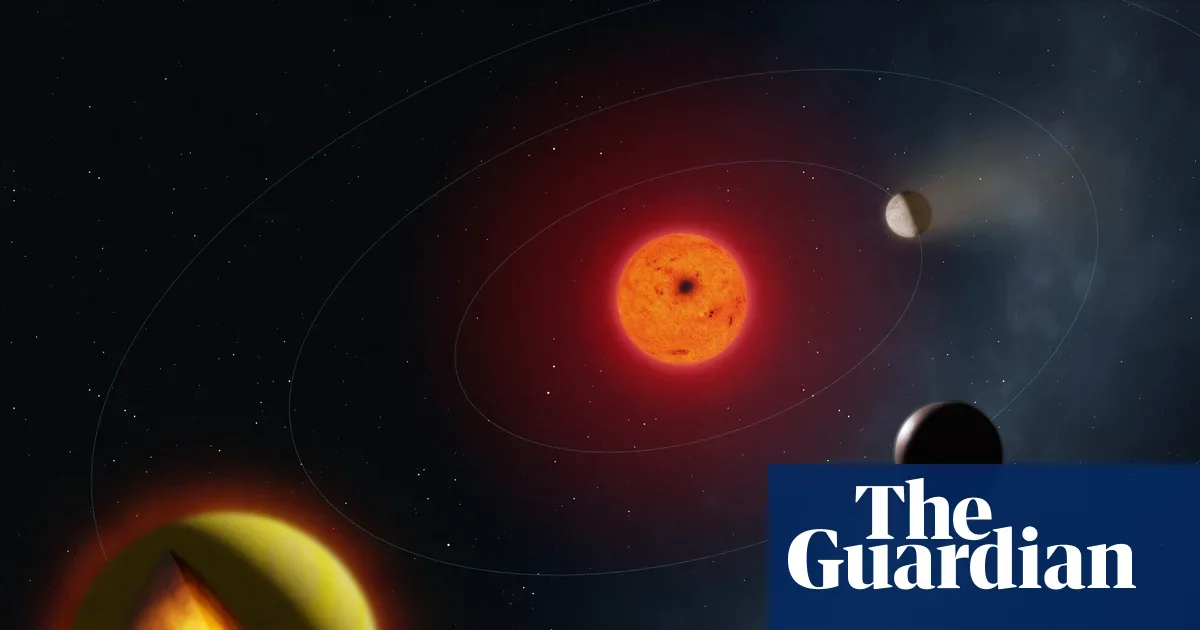
New JWST observations and simulations identify L98-59d as a 1.6 Earth-radius exoplanet with a global magma ocean, a molten core, surface temperatures near 1900°C, and a hydrogen-sulfide atmosphere shaped by strong tidal forces; this suggests molten planets may be more common than thought and that some planets in the habitable zone might not be habitable after all.
- ‘A molten, mushy state’: scientists may have found a new type of liquid planet The Guardian
- New Type Of Planet Discovered 35 Light-Years From Earth Is A Molten World Like No Other IFLScience
- Hellish new planet identified beyond solar system Financial Times
- Volatile-rich evolution of molten super-Earth L 98-59 d Nature
- A new class of molten planet stores abundant sulfur in a perpetual magma ocean Phys.org
Reading Insights
Total Reads
0
Unique Readers
3
Time Saved
2 min
vs 3 min read
Condensed
90%
552 → 57 words
Want the full story? Read the original article
Read on The Guardian