
"Insights from the 2024 Solar Eclipse: Lessons for Earth and Beyond"
TL;DR Summary
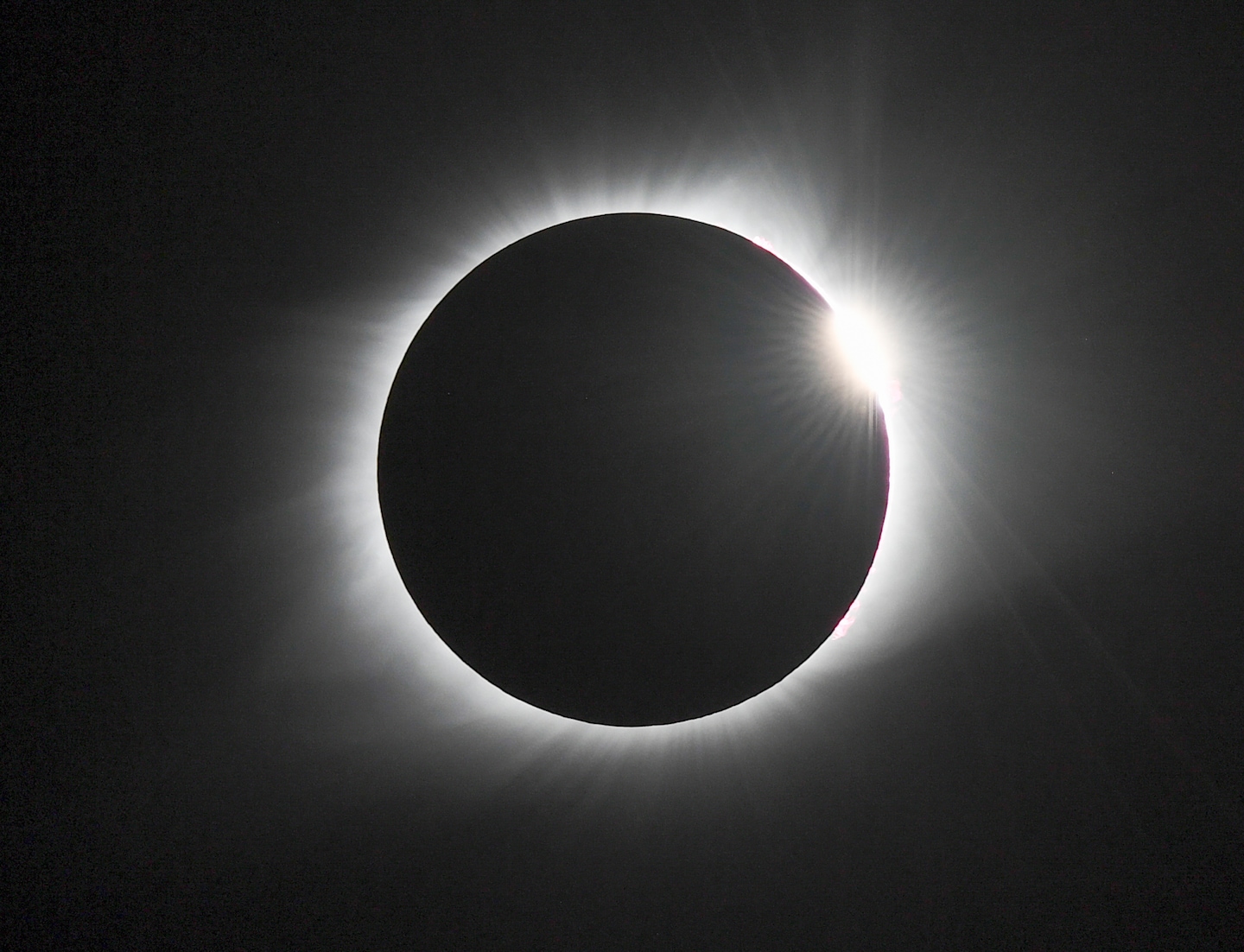
On April 8, a rare total solar eclipse will be visible in Mexico, the eastern US, and Newfoundland, Canada, providing scientists with an opportunity to study its effects on Earth's surface, atmosphere, ionosphere, and the sun. Projects include documenting changes in animal behavior and sounds, measuring temperature and cloud data, studying atmospheric gravity waves, and observing the sun's outer edge and corona. Citizen scientists can participate in various projects to help gather valuable data during this once-in-a-lifetime event.
Topics:nation#citizen-science#earths-atmosphere#ionosphere#science-and-astronomy#solar-eclipse#suns-corona
- What this solar eclipse can teach us about our planet and beyond The Washington Post
- 2024 Solar Eclipse: The 13 Best Cities to See the Phenomenon Architectural Digest
- Solar eclipse 2024: NASA says Illinois in path of totality; Carbondale, IL will see total solar eclipse twice in 7 years WLS-TV
- A chronology of the April 8 total solar eclipse Space.com
- Why your eyes can’t look directly at a solar eclipse The Washington Post
Reading Insights
Total Reads
0
Unique Readers
1
Time Saved
7 min
vs 7 min read
Condensed
94%
1,387 → 78 words
Want the full story? Read the original article
Read on The Washington Post