
"Growing Mini Organs from Fetal Cells: A Breakthrough in Personalized Medicine"
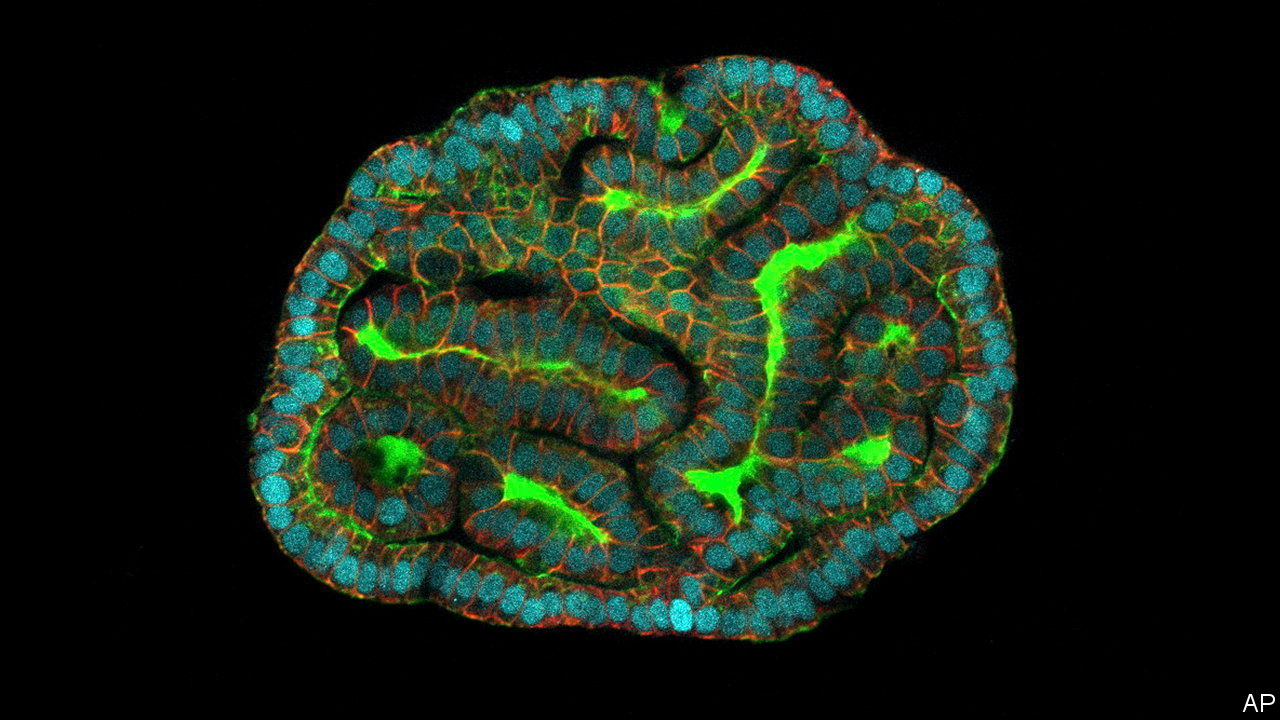
Scientists have developed a method to create simplified versions of a fetus's organs using cells from the amniotic fluid, allowing doctors to study and test treatments without risking the pregnancy. These organoids, resembling simplified organs, can reveal individual features of diseases and their responses to drugs or treatments. The technique has been successfully used to grow kidney, small-intestine, and lung organoids from amniotic-fluid cells, and has shown promise in studying and treating conditions such as congenital diaphragmatic hernia and premature births. While fetal organoids may not be able to replicate all organs and require further research, they hold potential for improving prenatal treatments and understanding fetal development.
- Scientists can help fetuses by growing tiny replicas of their organs The Economist
- Fetal cell organoids grown from amniotic fluid, study finds - STAT STAT
- Scientists grow mini organs from unborn babies in personalised medicine breakthrough BBC Science Focus
- Organoids grown from amniotic fluid could shed light on rare diseases Nature.com
- Cells Shed by Fetuses Have Been Grown Into Mini-Organs Newsweek
Reading Insights
1
2
3 min
vs 4 min read
84%
686 → 107 words
Want the full story? Read the original article
Read on The Economist