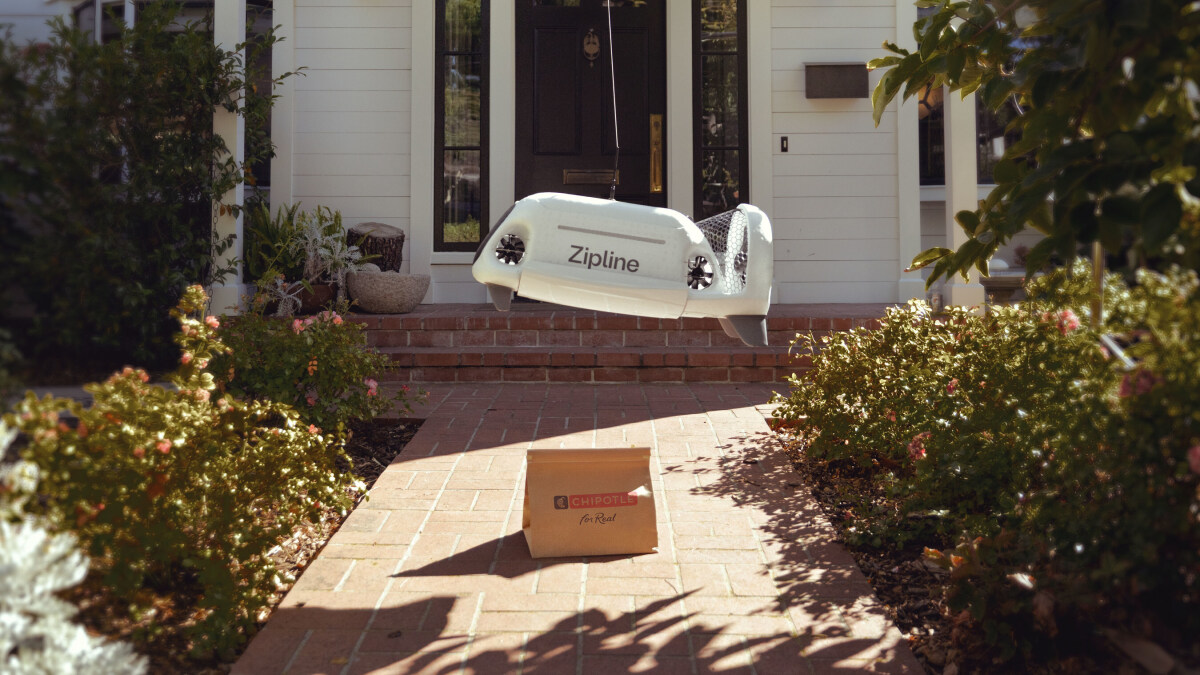
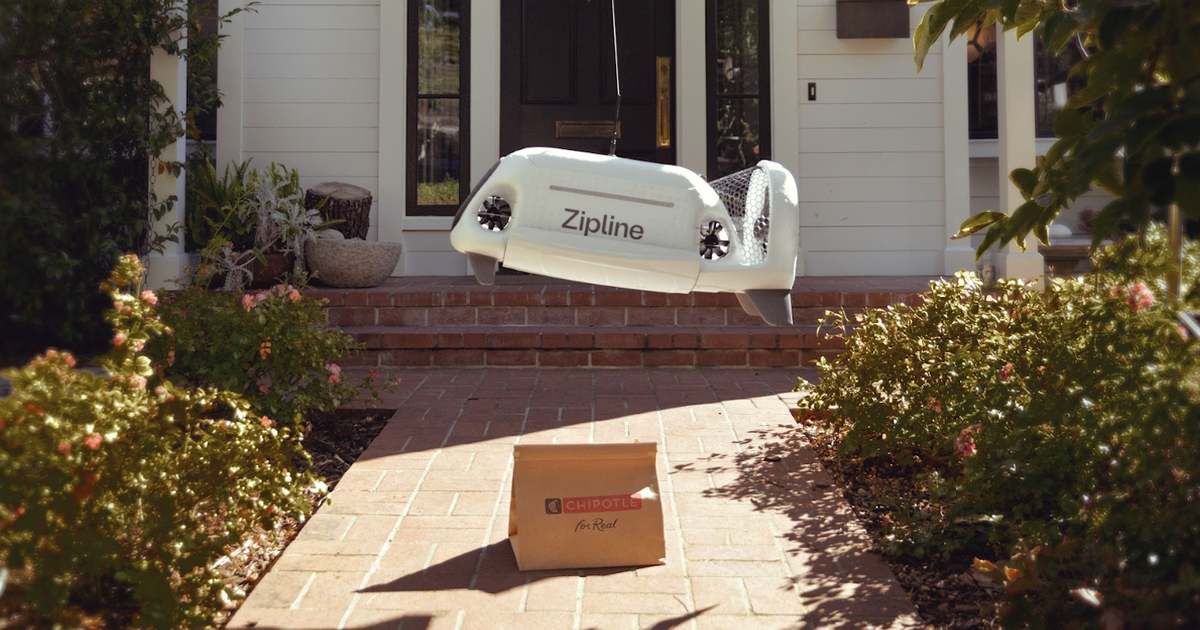
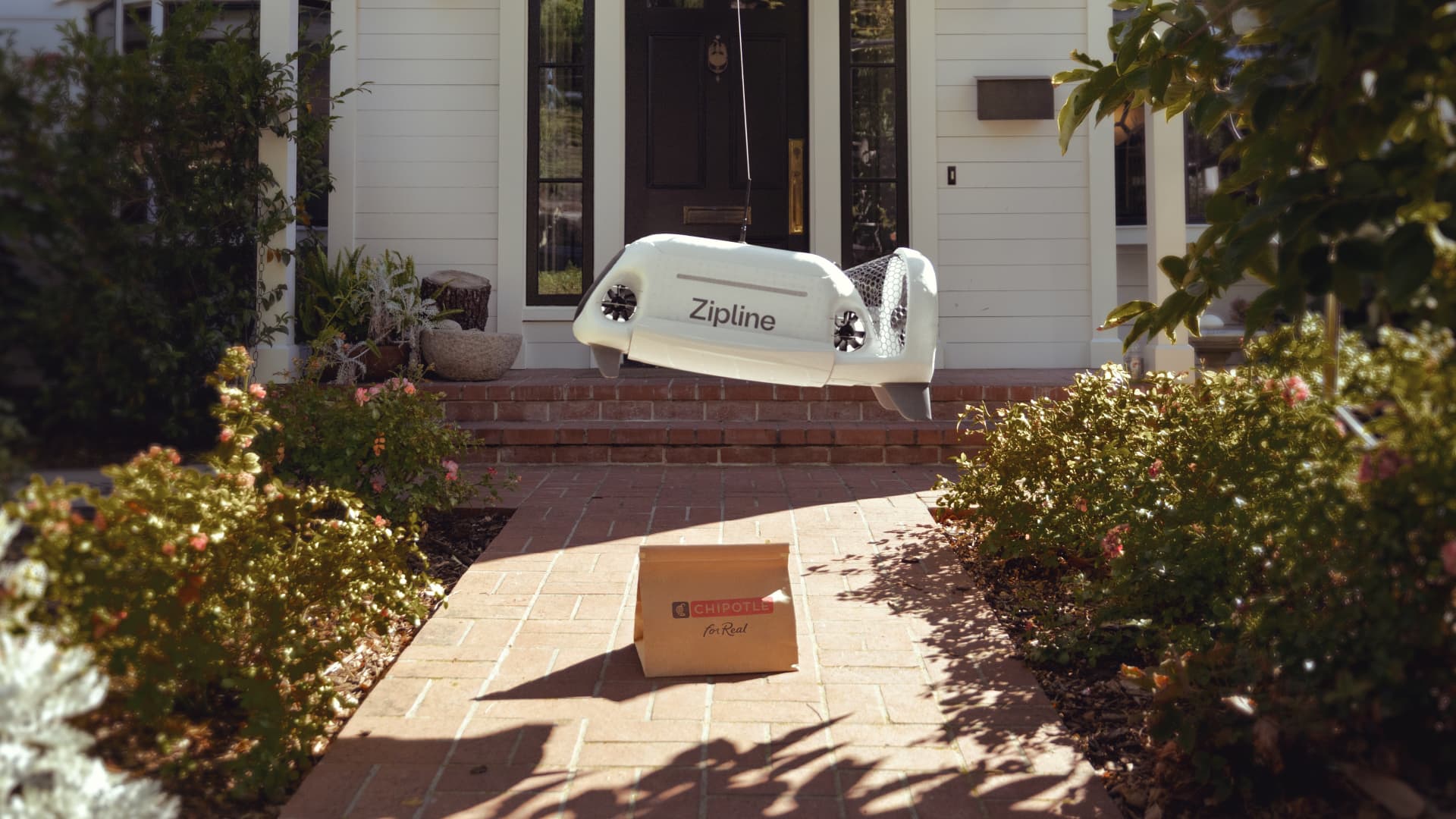
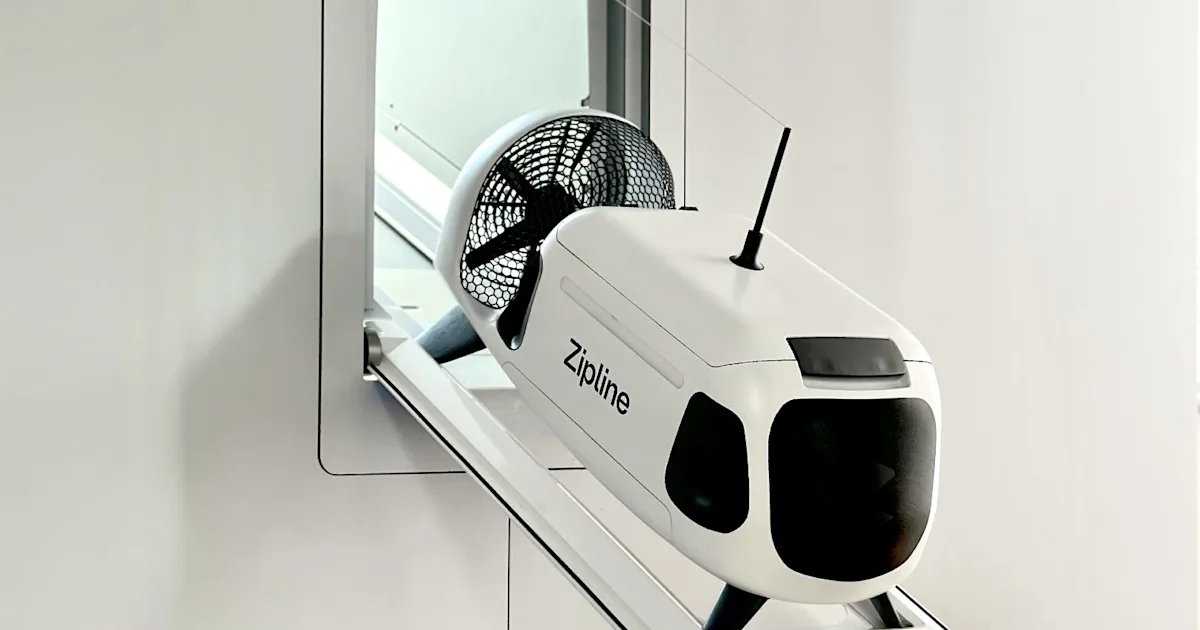
Chipotle is testing drone delivery called 'Zipotle' in Rowlette, Texas, using Zipline's autonomous drones to deliver burritos, promoting an environmentally friendly and convenient delivery method.
Chipotle has launched Zipotle, an autonomous drone delivery service in Dallas, partnering with Zipline to deliver food quickly and efficiently to customers' homes using small aircraft called Zips, initially serving a limited area with plans to expand.
Chipotle is partnering with Zipline to test drone delivery in Dallas, allowing select customers to receive orders via autonomous aircraft from a local restaurant, with plans for broader rollout and potential expansion based on test results.
Walmart is expanding its drone delivery program to cover 1.8 million more households in Texas, reaching 75% of the population in the Dallas-Fort Worth metro area through partnerships with drone startups Wing and Zipline. Customers within 10 miles of a participating Walmart can receive deliveries of small items like cold medicine and eggs in 30 minutes or less. The program, which now uses drones from both Wing and Zipline, has completed over 20,000 successful deliveries and aims to provide fast, emission-free, and quiet delivery experiences.
The Federal Aviation Administration (FAA) has granted approvals to several drone operators, including Zipline, UPS subsidiary Flight Forward, uAvionix, and Phoenix Air Unmanned, allowing them to fly drones beyond the visual line of sight. This milestone paves the way for other companies to receive streamlined approval for their own drone flights and accelerates efforts to deliver goods by unmanned aircraft. The new regulations eliminate the need for human observers along the entire route, increasing accessibility and scalability of drone operations. Zipline, a drone delivery company, expects to serve "hundreds of millions of people" in the U.S. with its expanded capabilities. The FAA approvals demonstrate the U.S.'s commitment to staying at the forefront of the drone industry's technological transformation.
A 6-year-old boy survived a 40-foot fall from a zipline at a Mexican amusement park after his harness snapped. The incident occurred at Parque Fundidora's Amazonian Expedition attraction in Nuevo León. The child fell into an artificial pool below, but was rescued by a nearby tourist. The family blames the park's staff for inadequate training, and the government agency in Nuevo León has suspended various attractions at the park. The boy suffered minor injuries and is recovering, but is psychologically traumatized.
Residents and environmental activists in Rio de Janeiro are protesting the construction of four ziplines on Sugarloaf Mountain, a UNESCO World Heritage Site. The ziplines, which will run over the forest between Sugarloaf and Urca Hill, are aimed at boosting tourism but have been met with opposition due to concerns about noise pollution and potential damage to the environment. The company behind the project, Parque Bondinho Pao de Açúcar, says it has obtained all necessary authorizations and licenses and that sound tests indicate noise from riders will not be perceptible from below.
TikTok is being used by Gen Z to discuss death and the pandemic through the #DeathTok trend, while also showcasing ridiculous trends like eating dog food and plastic candy wrappers. Meanwhile, Zipline is using innovative drone technology to deliver medical supplies to remote hospitals in Rwanda, potentially changing the way we receive deliveries and reducing the number of cars and trucks on the roads.
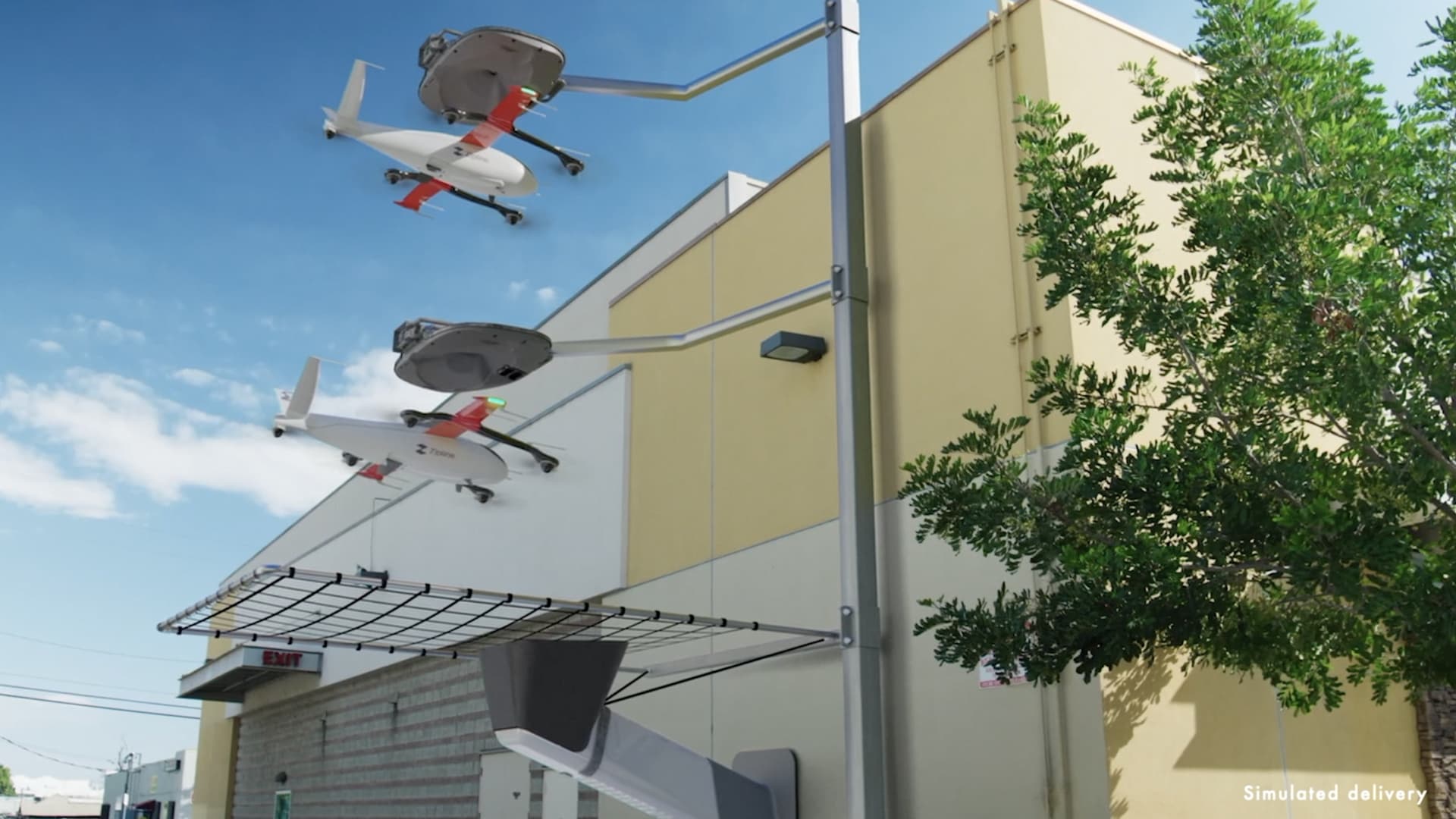
Zipline's next-generation drone, the P2 Zip, consists of two autonomous vehicles that work together to deliver packages up to 8 pounds. The drone can complete a 10-mile flight in about 10 minutes and is nearly silent in flight. It can fly up to 24 miles one way and has a charging station that looks like something from science fiction. Zipline plans to conduct more than 10,000 test flights before allowing customers to use the drone next year.