Tag

Yuan Depreciation

All articles tagged with #yuan depreciation

finance2 years ago

China's Central Bank to Tighten Oversight on Bulk Dollar Purchases - Sources

China's central bank, the People's Bank of China (PBOC), is increasing its scrutiny of bulk dollar purchases by domestic firms as the Chinese yuan faces mounting depreciation pressure. Companies seeking to purchase $50 million or more will now require approval from the PBOC. The central bank has warned some lenders about their significant dollar purchases on behalf of corporate clients. This move comes as the yuan has declined by about 6% against the US dollar this year, reaching levels last seen during the 2008 global financial crisis. China has been taking steps to slow the pace of yuan declines, including setting stronger-than-expected midpoint fixings and increasing the supply of dollars.
finance2 years ago

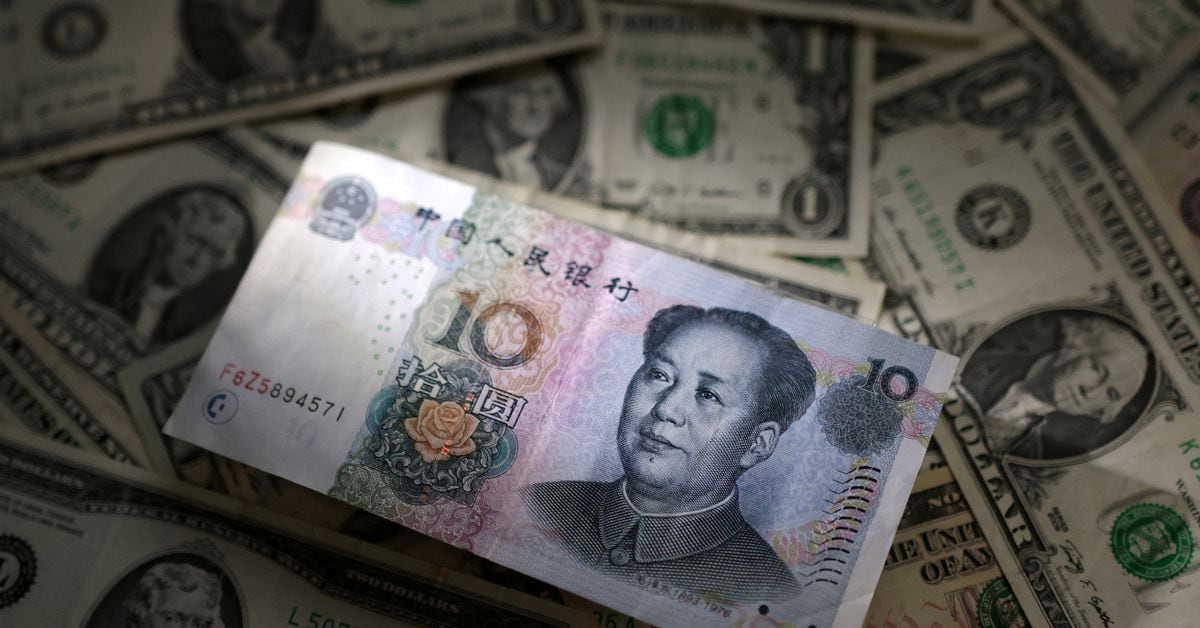
China's State Banks Shift Dollar Reserves to Yuan in London and New York

China's major state-owned banks have been actively selling US dollars to buy yuan in both onshore and offshore spot foreign exchange markets in an effort to slow the depreciation of the yuan. This move comes as the yuan has lost about 2.4% against the dollar this month and 6% since the beginning of the year. State banks have been selling dollars during London and New York trading hours to limit falls in the offshore yuan and prevent it from diverging too far from its onshore counterpart. The recent decline in the yuan is attributed to China's widening yield differential with the US, weak economic growth, rising default risks, and the government's slow delivery of stimulus measures. The People's Bank of China (PBOC) has eased monetary policy to support the economy, but this has put more pressure on the yuan. State banks have been repeatedly selling dollars to slow the yuan's decline, and other tactics, such as limiting yuan lending in the offshore Hong Kong market, have also been employed.

economy2 years ago

China's Request to Banks: Reduce or Delay Dollar Purchases - Exclusive Sources

China's currency regulators have reportedly instructed some commercial banks to reduce or delay their purchases of U.S. dollars in an effort to slow the depreciation of the yuan. This informal guidance comes as China's economy struggles to recover from the pandemic and the U.S. dollar and other major currencies see rising yields. The People's Bank of China (PBOC) and the State Administration of Foreign Exchange (SAFE) have not yet commented on the matter. The yuan has hit an eight-month low and has lost 3.6% against the dollar this year. China's authorities have pledged to let market factors determine the yuan's movements, but concerns about currency stability have been expressed.

finance2 years ago

China Implements Measures to Ease Yuan Pressure by Restricting Dollar Purchases - Exclusive Sources

China's currency regulators have reportedly instructed some commercial banks to reduce or delay their dollar purchases in an effort to slow the pace of yuan depreciation. The regulators specifically emphasized that banks should refrain from purchasing dollars under their proprietary trading accounts. The Chinese yuan has already lost 3.6% against the U.S. dollar this year, making it one of Asia's worst performing currencies. The People's Bank of China (PBOC) and the State Administration of Foreign Exchange (SAFE) have not yet commented on the matter.

finance2 years ago

PBoC's Actions Spark Debate and Confidence Concerns over Yuan's Weakness

The People's Bank of China (PBoC) has allowed a 2% drop in the Chinese currency, triggering a debate over the role of renminbi internationalization. Some Chinese commentators blame countries like Brazil, Argentina, and Russia for accepting renminbi payments but selling off the currency for Western ones. However, financial commentators and economists argue that the depreciation of the yuan is due to various factors, including the United States' rate hikes and China's weaker-than-expected economic recovery. China's total exports fell 8% in May, and foreign direct investment (FDI) also declined. Experts predict that the renminbi will continue to fluctuate but is unlikely to experience a sharp decline.