
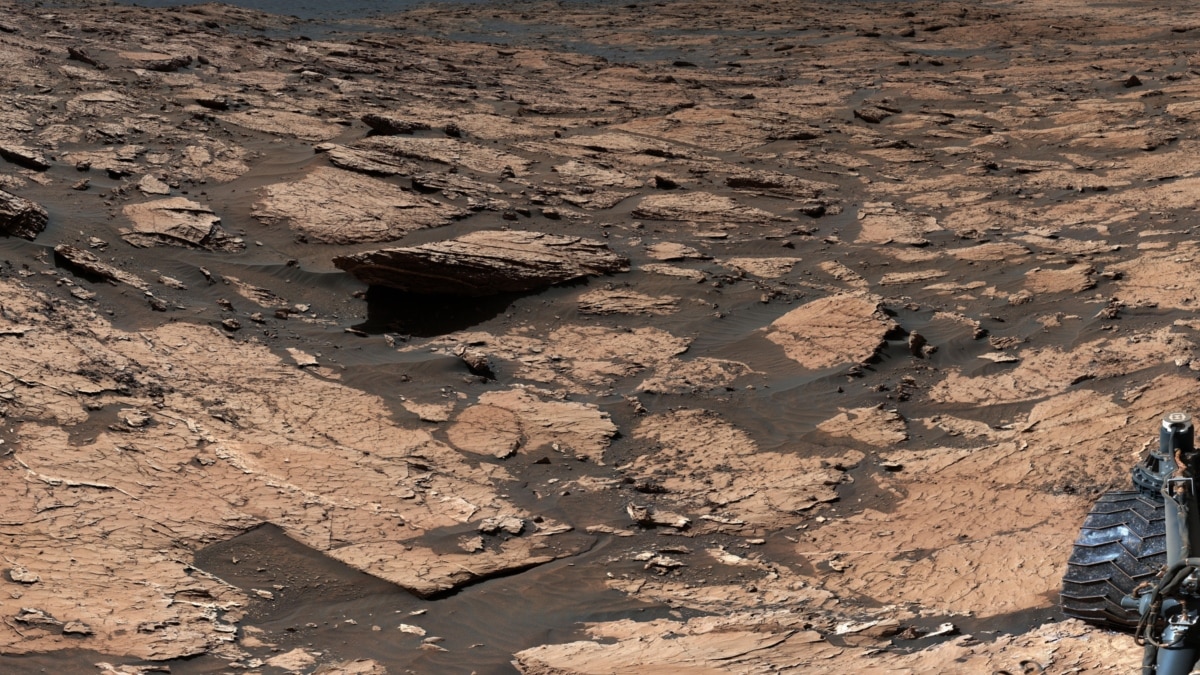
"Intermittent Wet-Dry Cycles on Ancient Mars: Clues to Potential Life"
Researchers analyzing data collected by NASA's Curiosity rover on Mars have found evidence suggesting that the planet experienced both wet and dry climate cycles in the past. The discovery of hexagonal salt remains in dried mud indicates long dry periods in the Gale Crater area, providing the first tangible proof of a wet-dry climate on Mars. This finding supports the idea that Mars may have once had the right conditions to support life, as it had both wet and dry seasons similar to Earth. The study also suggests that studying Mars could help scientists understand how life originated on Earth.