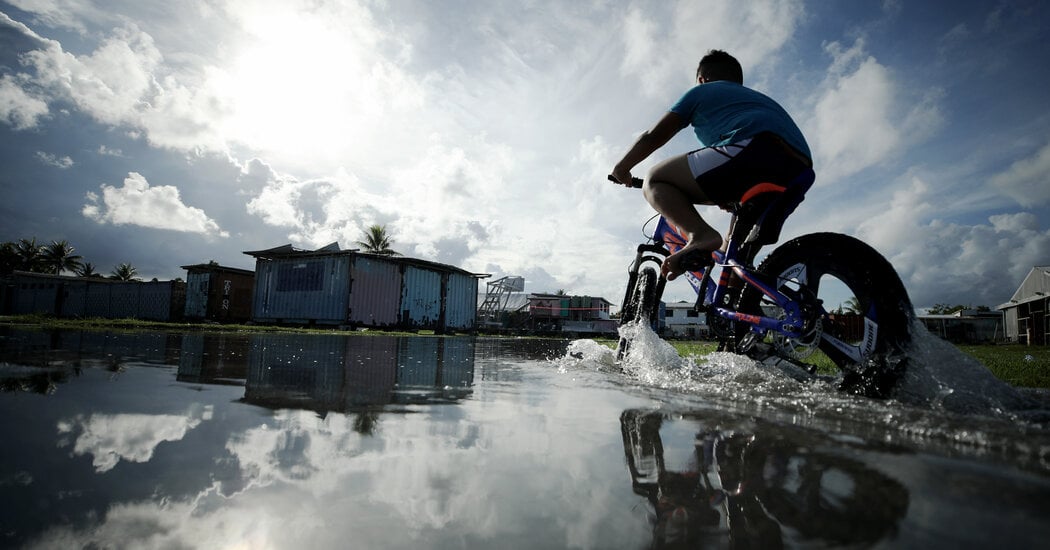
Tuvalu, a small Pacific island nation facing existential threats from rising sea levels, has seen nearly half its population apply for a new Australian 'climate visa' lottery designed to help citizens escape the impacts of climate change.
Tuvalu, a small Pacific island nation facing existential threats from rising sea levels, has seen nearly half its population apply for a special climate visa offered by Australia, highlighting the urgent impact of climate change on vulnerable nations.
The Department of Homeland Security has proposed new regulations to tighten oversight of the H-1B visa lottery, aiming to prevent abuse and fraud. The proposal suggests selecting registrations based on unique beneficiaries, regardless of the number of registrations submitted on their behalf. It also addresses guidelines for work-site visits, requirements for filing new visa petitions, and offers more flexibility for entrepreneurs on H-1B visas. The proposed regulations aim to attract global talent, reduce burdens on employers, and prevent fraud and abuse in the immigration system. The H-1B program, heavily used in the tech industry, allows employers to hire foreign workers with specialized skills. Demand for the program has exceeded the available visas, leading to attempts to game the system. The proposed changes may boost the bargaining power of workers and encourage more entrepreneurship in the program.
Tech companies have allegedly exploited a loophole in the H1-B visa lottery system by entering foreign employees' names multiple times to increase their chances of selection. The US government is investigating several technology companies for trying to circumvent the system, which has raised major concerns. While it isn't illegal for a foreign worker to have several companies submit the H1-B application, the company is required to confirm they have a job in place for the candidate. The government is proposing to raise the registration fee to $215 and further regulate the process to prevent fraudulent applications.
The number of applications for H-1B visas used in the technology industry has increased by 61% this year, raising concerns that some are manipulating the system to gain an unfair advantage. The US Citizenship and Immigration Services has undertaken extensive fraud investigations based on lottery submissions from the last two years, denied some petitions, and is referring some cases to federal prosecutors for possible crimes. H-1B visas have been a lightning rod in the immigration debate, with critics saying they are used to undercut US citizens and legal permanent residents.