Anthropic’s roughly $60 billion in venture-capital backing is under risk as the Defense Department cannot reach a long-term licensing agreement over AI use in weapons and surveillance, prompting political backlash and raising investor concerns about AI’s role in national security.
A handful of tech billionaires are pouring money into longevity startups—Retro Biosciences, NewLimit, Altos Labs and others—hoping to develop therapies that could slow or reverse aging, with Sam Altman, Brian Armstrong and Jeff Bezos leading the charge and smaller players like Mitrix Bio racing to bring treatments to patients sooner.
Miami isn’t the next Silicon Valley; it’s developing as a wealth-driven tech hub that draws finance, legal, and consulting support and even marquee players like Palantir. But it still lacks a large local engineering pipeline and the SF/NY hustle, so funding remains smaller and growth will be gradual, focused on fintech, proptech, and creator-oriented ventures rather than a traditional engineering “factory floor.”
Venture-capital funding is fueling a surge of soonicorns—private startups valued at $500 million to $999 million—with more than 2,000 such firms in the United States by the end of last year. The AI boom is lowering funding barriers and speeding growth, pushing many firms toward or beyond the soonicorn threshold. However, being a soonicorn is a snapshot of current status, not a predictor of future unicorn status: some may later become unicorns, others may remain under that mark, and some could fail. Mega-startups like Anthropic, OpenAI, and SpaceX are reportedly considering public listings in 2026, underscoring a broader shift in the private-to-public market dynamics.
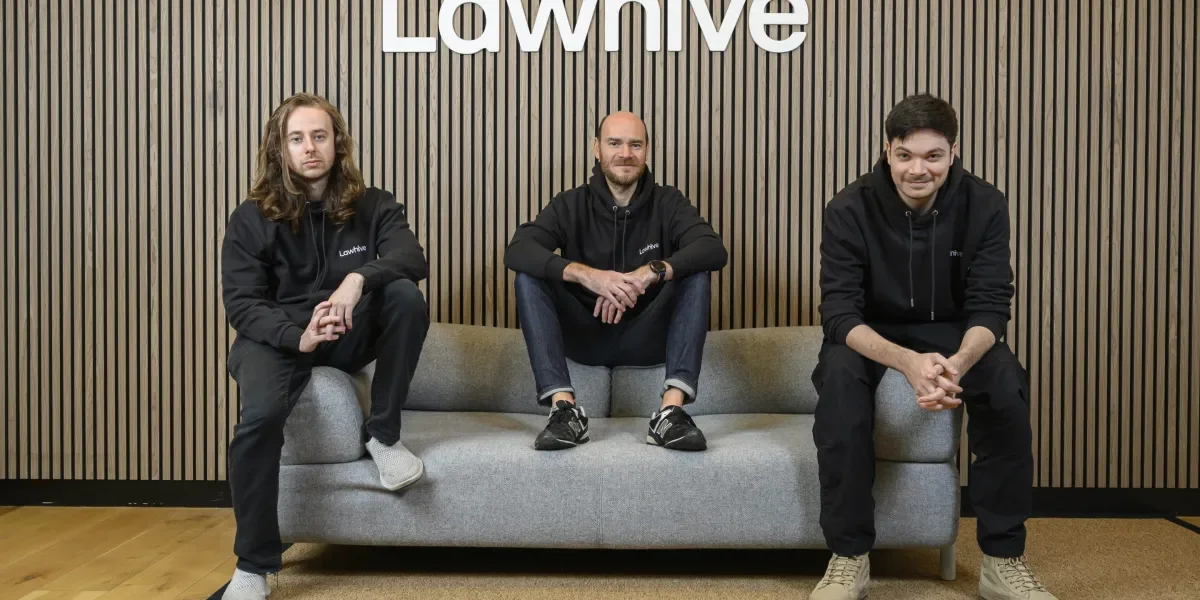
British startup Lawhive, which operates as an AI-enabled law firm handling routine consumer legal matters via a network of about 500 lawyers across three regulated firms, closed a $60 million Series B led by Mitch Rales of Danaher with GV, Balderton, TQ Ventures and Jigsaw participating. The funding will fuel U.S. expansion (now active in 35 states with offices in Austin and a new New York HQ) after revenue exceeded $35 million as the company grows quickly. Lawhive’s platform automates drafting, research, case management and client onboarding, with human lawyers reviewing work, a model the company says reduces costs and expands access to legal services, aiming to grow five- to sevenfold this year.
Ultra-rich investment arms kicked off January with buzzy bets, including funding a motorcycle racing team, even as family offices cut direct investments by 32% year over year, according to Fintrx; despite the dip in direct bets, demand for mega-round VC financings remains strong.
2025 marked a turning point for health tech as six IPOs added $36.6B and Health Tech 2.0 firms posted profitable growth, narrowing the trust gap with cloud peers. The report introduces the Health AI X Factor — four pillars (continuous velocity, durable revenue, AI productivity, and platform expansion) — to explain why a subset of Health AI companies can command premium valuations by scaling faster and more durably than prior generations. Seven 2026 predictions cover payer-provider AI adoption, clinician-in-the-loop clinical AI, CMS experiments with AI payment codes, cash-pay AI adoption, a budding health AI data infrastructure, AI-native value-based care, and the rise of digital CROs that could reshape pharma R&D.Private markets show stronger deal sizes and AI-driven funding shifts, suggesting a lasting, if not bubble-like, transformation toward AI-enabled healthcare growth and infrastructure.
Andreessen Horowitz raised over $15 billion for new funds, marking a significant boost in U.S. venture capital amid a recent slowdown in fundraising, with the firm emphasizing the importance of pro-tech policies for America's global leadership.
True Ventures co-founder Jon Callaghan predicts that smartphones will become obsolete within five to ten years, as new, more natural interfaces for human-computer interaction are developed, based on the firm's investments in innovative technologies like wearables and smart home devices.
China has launched three venture capital funds, each with over 50 billion yuan, to invest in early-stage startups focused on hard technologies such as semiconductors, quantum tech, biomedicine, and aerospace, with a total emphasis on strategic technological development.
China has launched three venture capital funds, each with over 50 billion yuan ($7.14 billion), to invest in early-stage startups focused on hard technologies like integrated circuits, quantum tech, biomedicine, and aerospace, with no single investment exceeding 50 million yuan.
A group of former SpaceX employees, dubbed the SpaceX Mafia, have founded startups that have raised over $3 billion in venture funding, backed by top firms like Andreessen Horowitz and Founders Fund, shaping a new legacy similar to Elon Musk's PayPal Mafia.
Biotech venture capitalist Bruce Booth predicts a significant increase in IPOs for drug companies in 2026, following two years of low activity, signaling a potential sector recovery.
Dragoneer raised $4.3 billion for its seventh VC fund, surpassing expectations in a slow fundraising year, bringing its total assets under management to over $30 billion, with notable investments including OpenAI, Airbnb, and Uber.
Pfizer's $10 billion acquisition of Metsera, a company developing experimental weight loss drugs, highlights significant activity in biotech mergers and investments, with venture funds like Population Health Partners and ARCH Venture Partners poised to profit greatly. The deal underscores both opportunities and cautionary lessons in biotech M&A and investment strategies.