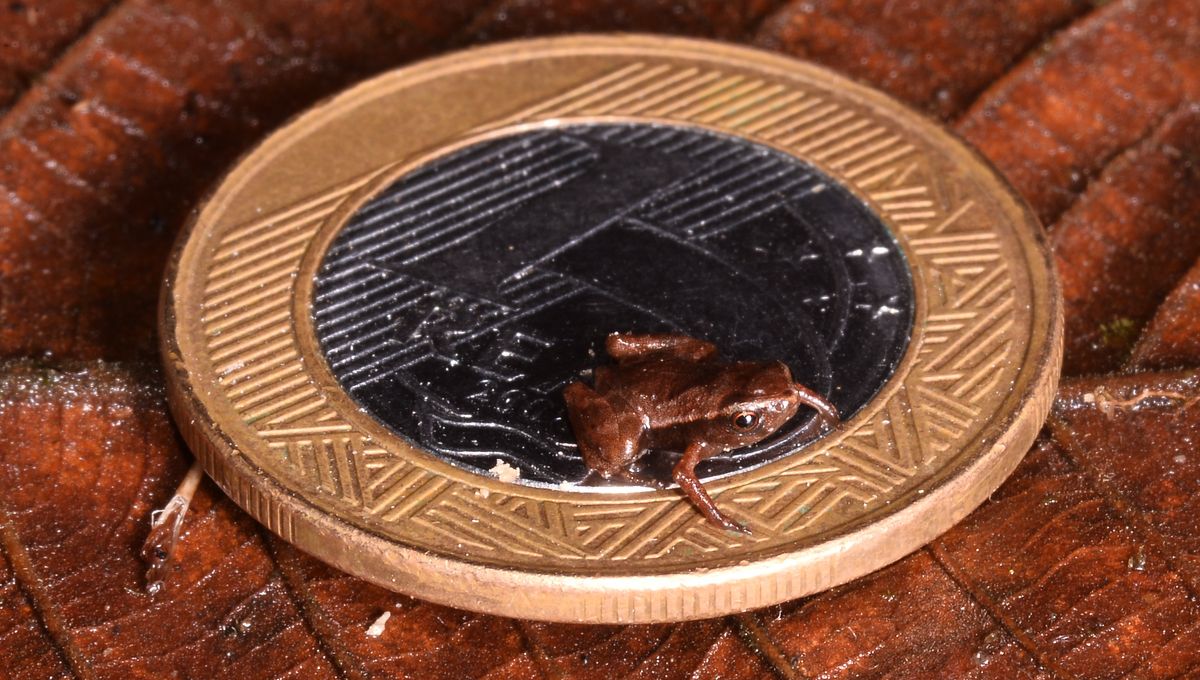
Researchers have confirmed that the flea toad, Brachycephalus pulex, found in Brazil, is the tiniest frog and vertebrate species in the world, measuring an average of 7.1 millimeters for adult males. This discovery challenges the previous record held by Papua New Guinea's Paedophryne amauensis. The extremely small size of these frogs presents physical limitations for vertebrates, such as the inability to fit enough cell types to create vital organs and the loss of common frog features. Despite these limitations, the flea toads continue to thrive in their mountainous forest habitats.
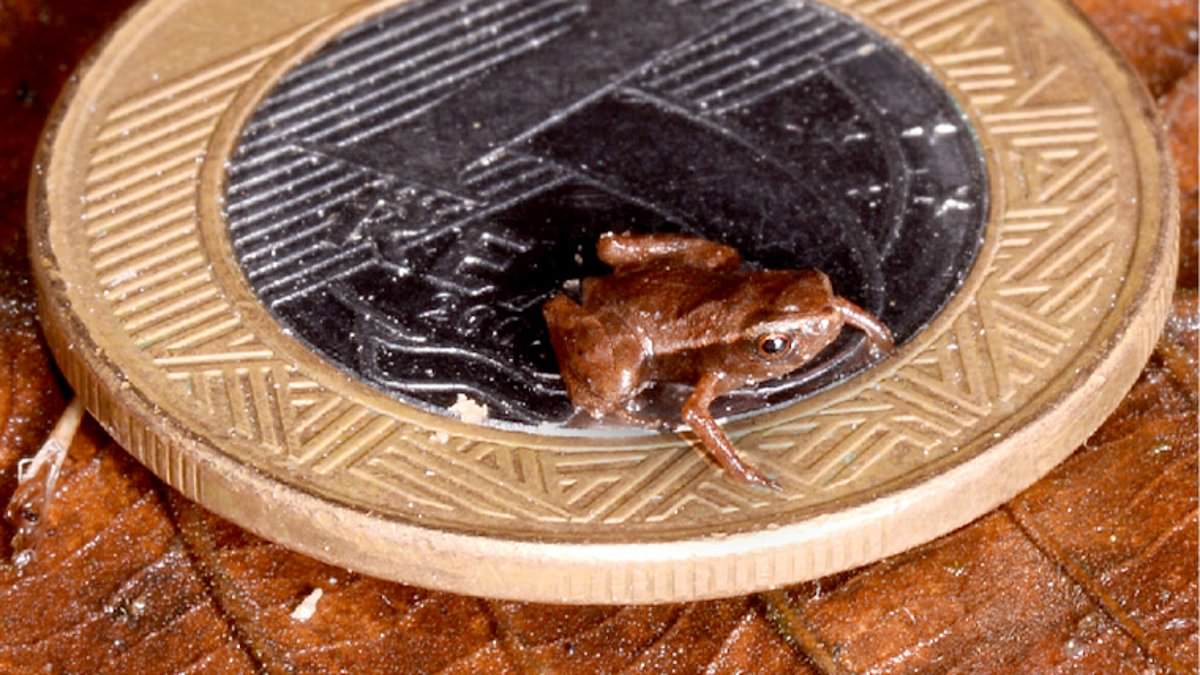
Scientists have discovered a frog the size of a pea in a Brazilian forest, measuring just 7.1 millimeters on average, making it the world's smallest vertebrate. The 'flea toad' was confirmed as the tiniest after researchers measured 46 specimens in its hilltop forest habitat in southern Bahia, Brazil. The male flea toads are even smaller than the females, showcasing sexual dimorphism. The discovery raises questions about the lower limit of vertebrate size and the potential for even smaller species to be found.
A tiny frog species, Brachycephalus pulex, from Brazil may be the world's smallest vertebrate, with males averaging just over 7 millimeters long and females a little over 8 millimeters. New research confirmed their adult status and measured their body lengths, concluding that they are potentially the smallest extant frogs in the world, surpassing the previously-identified "tiniest frog in the world."