Michael Burry, known for his role in "The Big Short," has increased his bets on Chinese tech giants Alibaba and JD.com despite a deepening stock rout. Scion Asset Management's recent 13F filing revealed a 50% increase in their stake in Alibaba and a 75,000 share increase in JD.com. However, these wagers have struggled as Alibaba is down 5% year-to-date and JD.com has tumbled almost 20% amid global money managers unwinding positions in Chinese stocks due to an ongoing property crisis and slowing growth. Despite this, Burry's firm has dropped all its bearish positions and instead invested in industries including health care, financials, and tech.
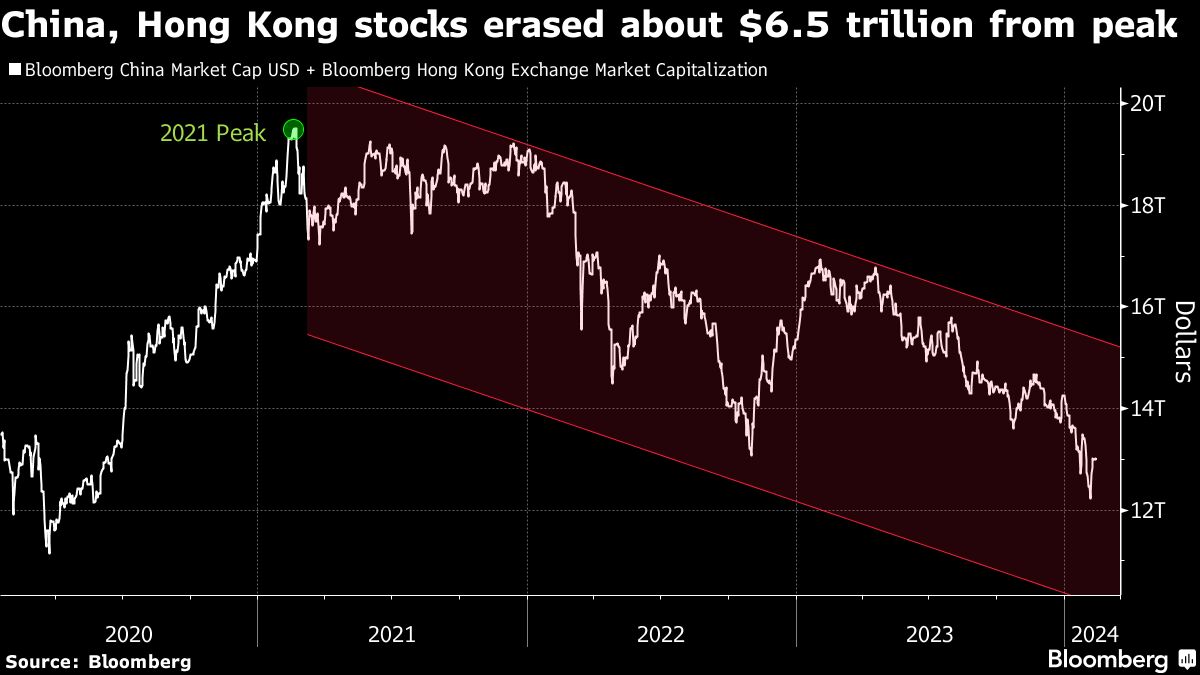
Chinese stocks listed in Hong Kong plunged, widening their discount to mainland peers to the deepest in fifteen years, reflecting growing pessimism among international investors. The Hang Seng China Enterprises Index fell 2.4%, nearing a level last seen almost two decades ago, while the onshore benchmark CSI 300 Index finished 1.6% lower. The steeper losses in Hong Kong, where influential Chinese firms are listed and Beijing’s interference is less felt, paint a worrisome picture of global investor sentiment toward the world’s No. 2 economy. The slump is attributed to a confluence of factors, including a deepening housing slump, deflationary pressures, and uncertainties about US interest rates. The mood is similarly fragile in the mainland Chinese market, with the benchmark CSI 300 hitting a new five-year low.
India's banking sector, particularly HDFC Bank, experienced a significant stock rout, resulting in a $21 billion erosion in market value, marking the worst week for the country's top 12 largest banks since January. This decline was attributed to HDFC Bank's quarterly performance, which revealed decreasing net interest margins and weaker deposit growth, signaling a potential end to the sector's heyday.