
Tag

Stellar Companions

All articles tagged with #stellar companions

astronomy2 years ago

"Spider Pulsars: Stellar Destruction Captured by Chandra"

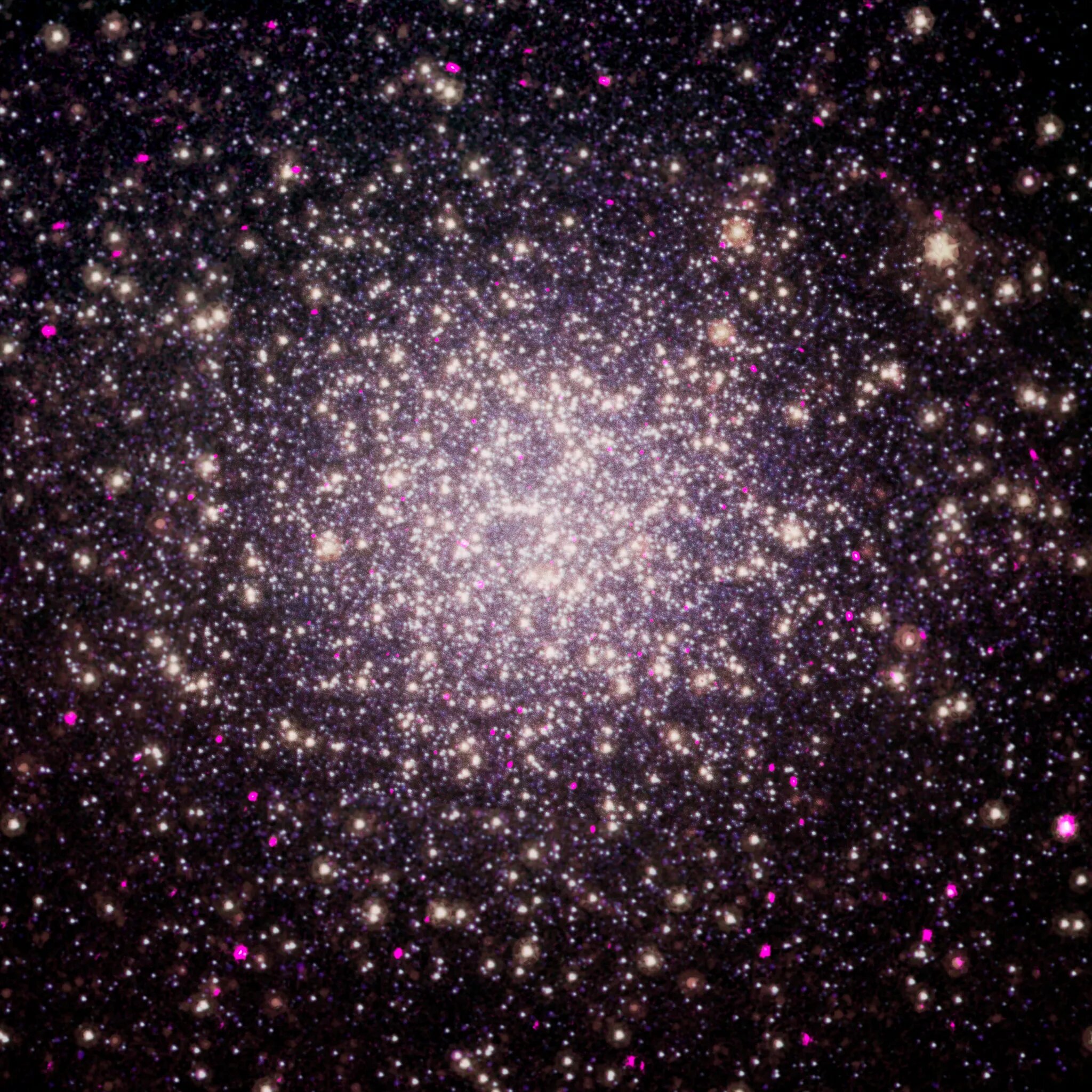
NASA's Chandra X-ray Observatory has captured data revealing that spider pulsars, a type of millisecond pulsar, are destroying their companion stars through winds of energetic particles. Astronomers discovered 11 millisecond pulsars emitting X-rays in the globular cluster Omega Centauri, with five of them being spider pulsars. The study found a correlation between X-ray brightness and the mass of the companion star, confirming previous work. The close proximity of the companion stars to the pulsars causes significant damage due to the energetic particles. Chandra's sharp X-ray vision is crucial for studying these pulsars in globular clusters.
astronomy2 years ago

Unveiling the Mystery of 'Ghost Stars' in the Milky Way's Core

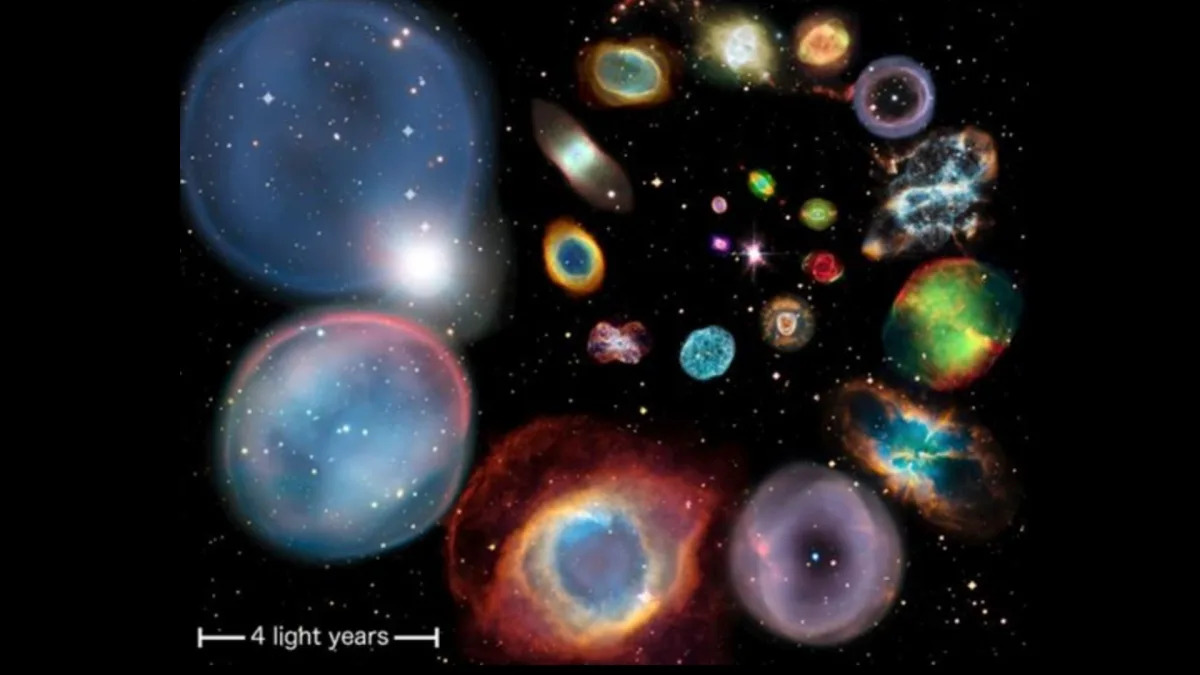
Scientists have discovered the reason behind the mysterious alignment of planetary nebulas in the galactic bulge at the center of the Milky Way. Using images from the Hubble Space Telescope, researchers found that the alignment is only present in planetary nebulas with a close stellar companion. The alignment is absent in planetary nebulas without a companion star, suggesting that the rapid orbital motion of the companion star creates the alignment. This finding provides insight into the complex process of star formation in the Milky Way's bulge region.

astronomy2 years ago

Hubble Captures Cosmic Chaos at Pegasus Supernova Afterparty

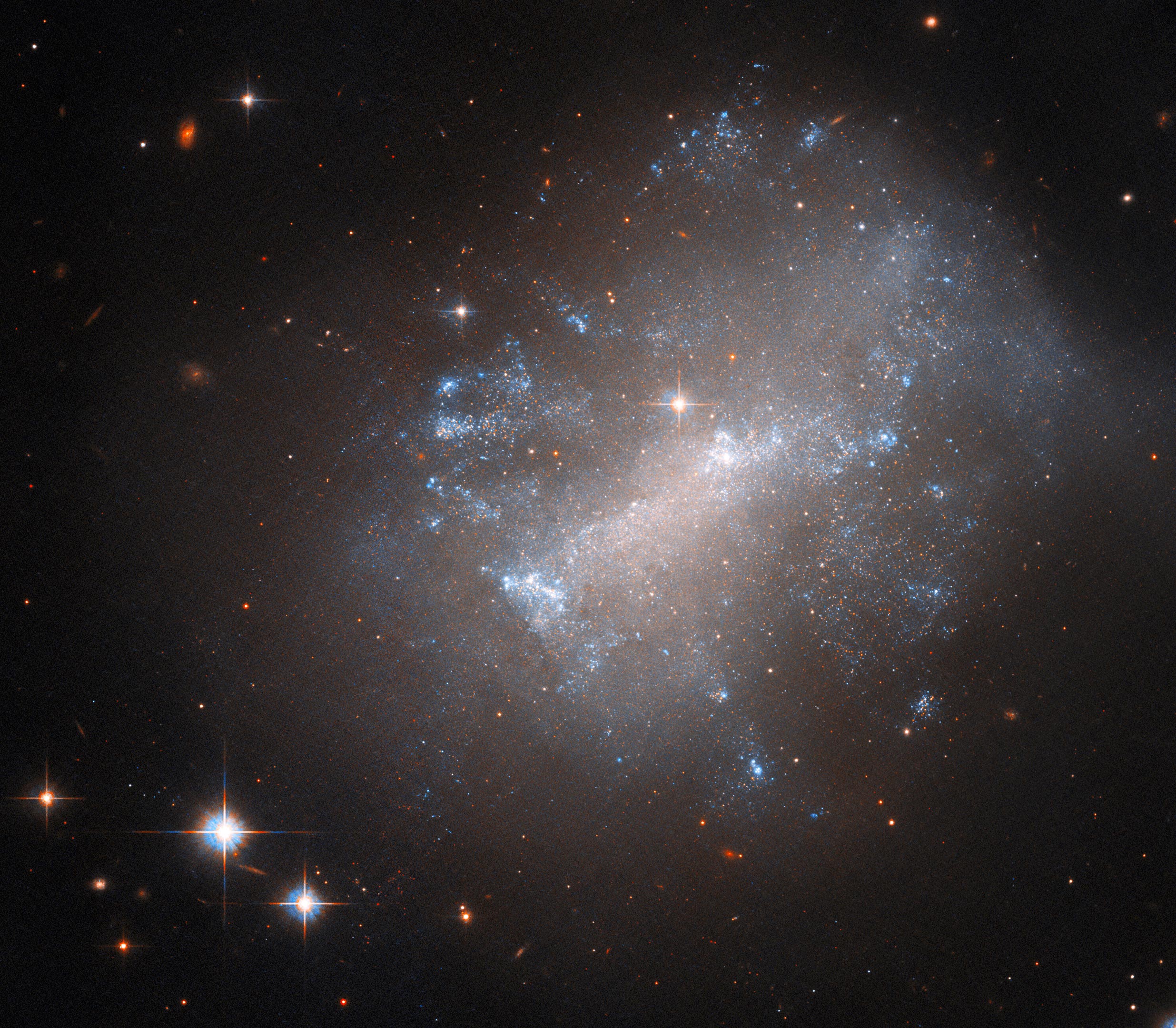
The Hubble Space Telescope has captured an image of the irregular galaxy NGC 7292 in the Pegasus constellation, which is known for its stretched-out core and classification as a low surface brightness galaxy. The study focuses on the aftermath of its supernova, SN 1964H, to better understand Type II supernovae and the potential surviving stellar companions. Astronomers hope to learn more about the diversity of Type II supernovae they have observed by scrutinizing the aftermath and remaining nearby stars of a large sample of historical Type II supernovae.