Qualcomm announced the Snapdragon 8 Elite Gen 5, a new flagship mobile processor built on a 3nm process with a third-generation Oryon CPU, offering 20% performance gains and 35% efficiency improvements, along with advanced AI, video, and audio features, to power upcoming Android smartphones from major brands.
MediaTek's Dimensity 9500, a third-generation all big-core SoC built on a 3nm process, offers significant improvements in efficiency, multi-core performance, AI processing, and gaming capabilities, with flagship devices from Vivo and Oppo expected to launch by the end of 2023.
Qualcomm announced the Snapdragon 8 Elite Gen 5, its next flagship mobile chipset, which continues the Snapdragon 8-series with a new naming scheme to clarify its generational progression, aiming to rival Apple's A19 Pro and power upcoming flagship Android phones like Samsung Galaxy S26 and OnePlus 15.
The upcoming Snapdragon 8 Elite Gen 2 processor is expected to deliver a minimum 20% performance boost over its predecessor, despite continuing to use TSMC's 3nm architecture, specifically the N3P process. This new chip is anticipated to power high-end smartphones like the Realme GT 7 Pro and iQoo 13, achieving impressive benchmarking scores. Qualcomm's reliance on TSMC's technology suggests a shift away from Samsung's SF2 process for this generation.
Qualcomm has introduced the Snapdragon 7+ Gen 3 processor, designed for higher mid-range and flagship killer smartphones, featuring on-device AI processing, Wi-Fi 7 connectivity, and a Cortex-X4 CPU core. The processor, fabricated on TSMC's 4nm process node, offers improved CPU and GPU performance, supports up to 24GB LPDDR5x RAM and UFS 4.0 storage, and includes advanced camera features. It also boasts the Snapdragon X63 5G modem, FastConnect 7800 for Wi-Fi 7 support, and Quick Charge 5 for fast charging. Expected to be used in phones priced between $400-$600, it is likely to be popular in China, India, and Southeast Asian countries.
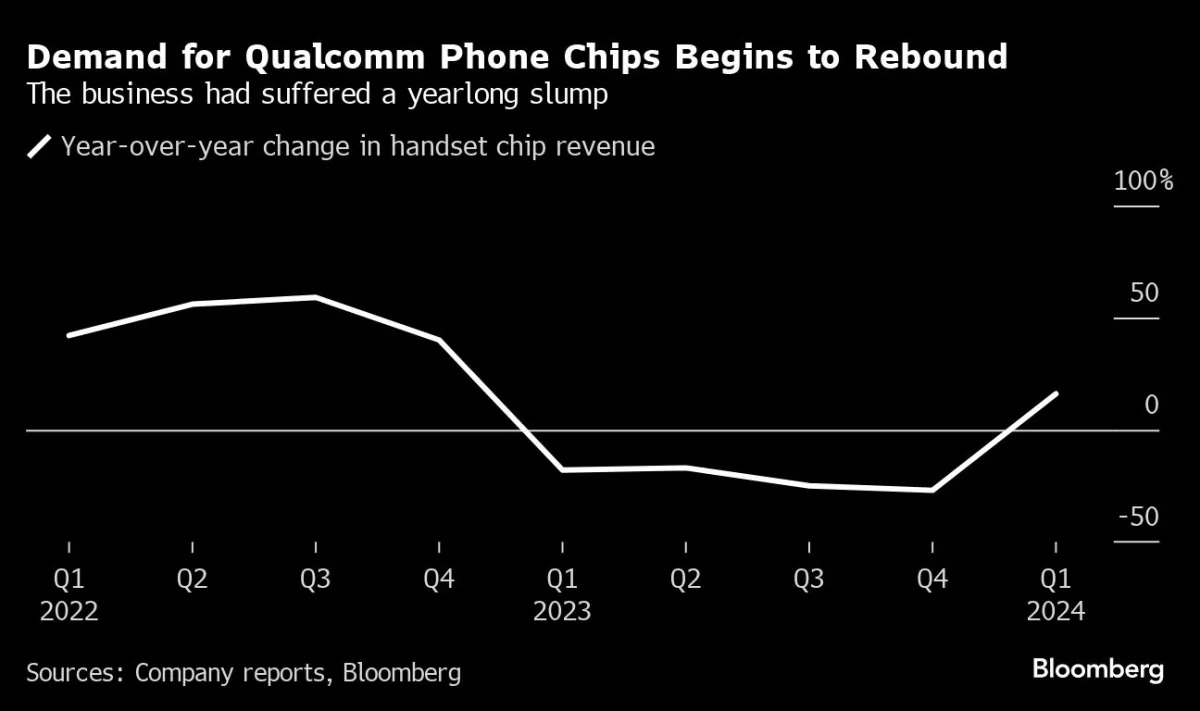
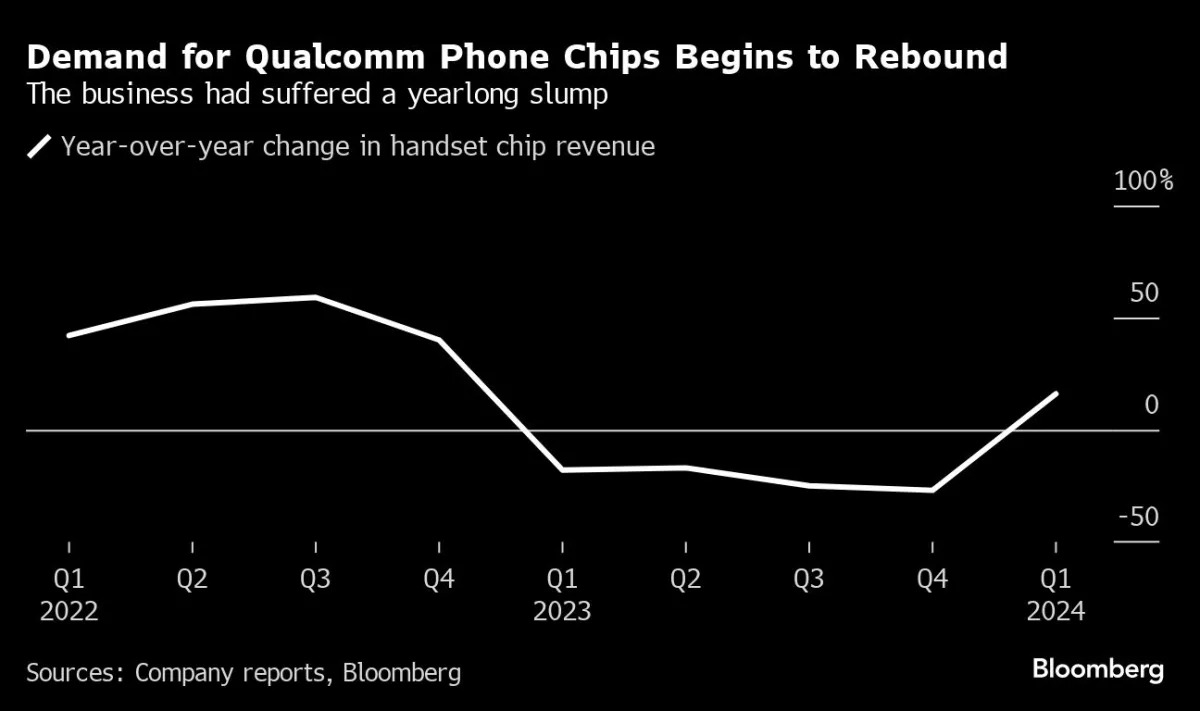
Qualcomm Inc. anticipates a modest recovery for the smartphone industry in 2024, with phone shipments expected to strengthen while the market for internet-connected appliances remains sluggish. Despite a decline in phone shipments in 2023, Qualcomm foresees a flat to slightly upward trend in 2024. The company's shares fell following the announcement, but CEO Cristiano Amon reassured that concerns about inventory were exaggerated. Qualcomm's earnings are still heavily influenced by demand for handsets, particularly in China, and the company is seeking to diversify into automotive and personal computer chips. Additionally, Apple extended its patent licensing agreement with Qualcomm by two years, and the chipmaker signed a new agreement with Samsung Electronics Co.
Qualcomm, the leading seller of smartphone processors, anticipates a modest recovery for the industry in 2024, with phone shipments expected to strengthen while the market for internet-connected appliances remains sluggish. The company reported that phone shipments, which declined in 2023, are projected to be flat to slightly up in 2024. Despite oversupply issues in its connected devices business, Qualcomm is aiming for growth and navigating industrywide inventory drawdown. Additionally, the company announced extended patent licensing agreements with Apple and a new agreement with Samsung, with the latter agreeing to base future devices on Qualcomm processors.
MediaTek's upcoming flagship chip, the Dimensity 9300, is rumored to be 10% faster than Qualcomm's Snapdragon 8 Gen 3 processor. However, the Dimensity 9300's unconventional CPU structure, which lacks power-efficient cores, raises concerns about its power efficiency and potential impact on battery life compared to competing chips from Qualcomm and Samsung.